PIREP: my first “real” cross-country

Last weekend I took my first “real” cross-country flight. Executive summary: this is the one of the major reason I got a pilot’s license: fast travel, on my schedule, to do things that otherwise would be prohibitive. It’s been a lifelong dream of mine, but one with a practical side.

I recently earned my high-performance endorsement and got checked out in the Redstone Arsenal Flying Activity (RAFA) Cessna 182. This plane is bigger and faster than the Cessna 172 I’ve been flying. RAFA’s C182 is an older model, and the interior shows it, but it is mechanically in great condition, and it’s nicely equipped with a moving-map GPS and a decent autopilot. It can travel at up to about 145 knots, and its endurance is about 5 hours when fully fueled… longer than mine!

All of my XC time so far has been within California (with the exception of two short legs in the Mobile/Pensacola area early on in my training). The longest leg I’ve flown so far was Palo Alto-Bakersfield and back, a distance of about 220 miles. However, all of my flying so far has been casual. This was my first “real” XC: I had a defined mission, a longer distance, a time window to hit, and all my sons aboard. I’d aborted a previously planned trip on a similar route because the weather was just awful, so I was eager to make this trip if possible.

We’d planned to depart sometime Saturday morning. The forecast was for IFR until around 11am, gradually clearing. Sure enough, the morning started with IFR here in Huntsville, with low IFR (meaning even worse weather) further to the west along our planned route: direct from Redstone Arsenal Army Air Field (KHUA) to Jackson, Mississippi (KJAN) and then on to Alexandria (KAEX). By about 1pm it had cleared enough for us to head to the airport, but actually getting there took 3 tries as various kids remembered that they forgot important things such as contact lenses.

By the time we got to KHUA, visibility had improved to around 5mi but ceilings were still 3500′, which is low but manageable. I’d planned the flight to take place at 6500′, but that wasn’t gonna happen; however, the forecast called for higher ceilings further west, and I had a brand-new Stratus aboard for inflight weather, so we fueled and launched. After takeoff, we turned west on course and climbed to 2500′, where there were a few light bumps but nothing too serious. I noticed right off that the Stratus was connected but not displaying GPS or ADS-B data. Turning the iPad’s WiFi off and back on fixed it; it did this periodically throughout the trip, so I’ll have to figure out what’s going on. About halfway to KJAN were were able to climb up to 4500′, and things smoothed out considerably. There was a line of storms about 45nm to the south of our course, but they were moving NNE fast enough so that they were never a factor. Being able to see radar and METARs for en route airports on this leg was absolutely invaluable. At every point I had a good picture of what my options looked like if I needed them. Here’s what the Stratus data looks like when displayed in ForeFlight; The airplane icon displays our position from the Stratus onboard GPS; the green and blue dots represent airport weather results (tapping on the dot displays the detailed information), and the weather radar data is just like you’d see from a NEXRAD display.

IMG 0029

We landed at Jackson, taxiied to Atlantic Aviation, parked, and went inside. Nice FBO, friendly people… but key learning #1: check fuel prices beforehand! I am used to flying out-and-back legs from a single FBO, where I rent wet, and it didn’t occur to me that there might be dramatic price differences. After filling up at $6.90/gallon (with a club rental reimbursement rate of $5.11/gal), I now know better.

After a quick snack and a pee break, we loaded back up and took off for Alexandria. We were able to stay at 3000′ until about Vicksburg, when we asked for higher. Our arrival and descent into KAEX was smooth, but I had a sterile cockpit problem: the kids were bantering and I got distracted enough to begin an approach to runway 36 when I was cleared to runway 32. I caught the mistake in time, went around, and was lucky to have an understanding controller, but key learning #2: shut your passengers up as part of your descent checklist.

We parked at Million Air. They treated us like we’d rolled up in a Gulfstream. I am now a huge fan.  Unlimited soft drinks, popcorn, and soft serve ice cream? Why, yes, thank you. We needed it because, like a doofus, I’d neglected to pack any water for the flight. Key learning #3: if you pack snacks, pack drinks too, duh.

Our visit with the family was superb; we had a feast of BBQ chicken, got some great visiting time in with my mom, grandmother, uncle, and cousins, then got a good night’s sleep. Sunday we just relaxed and visited, at least until the 32 pounds of boiled crawfish arrived. After a delightful meal underneath a big tree in the backyard, it was time to head back to Million Air.

I’d planned a single leg back, without the Jackson stop, but on preflight noticed that the oil was lower than I’d like, and none of the Alexandria-area FBOs had 15W50. That necessitated another stop, and since I was familiar with Jackson I planned to stop there. (Key learning #4: carry spare oil. ) This worked out OK because the kids all needed a bathroom stop. I had filled up with fuel at Million Air ($4.81/gal), so I didn’t buy any fuel at Atlantic… so they charged me $20 for stopping by. I don’t think I’ll be back.

Coming back we were able to fly at 3500′ to just east of Alexandria, then 7500′ from there on out. Great, smooth ride with a beautiful view of the Mississippi River crossing, the flooded bottomlands near it, and all sorts of farm and agriculture happening beneath us. I started teaching David how to work the radios, and he did a creditable job (although I think there are some guys at Memphis Center wondering what kind of aircraft a “Skyliner” is).

I used the return legs to get some practice in driving the 530W and the autopilot; I am used to flying a G1000/GFC700 172 so the knobology is quite different. This particular 182 doesn’t have electric trim so I had to do a bit of trim wheel judo to keep the autopilot happy in altitude hold mode but it was good practice. While I love hand-flying, learning to use an autopilot effectively, in the right modes at the right times, is critical to safe single-pilot IFR operations, so I want to start getting better at it ASAP.

The eastern approach to KHUA crosses several restricted areas (some for drone flights, some over propellant storage areas), so we had to turn north, fly past the Decatur airport, then remain north of I-565 until we passed Huntsville International. We landed, refueled, hit Taco Bell, and poof! A trip for the books. 

The 182 burned about 13gph and gave me an average groundspeed of 133kts over 7.5hrs on the meter. While this isn’t exactly exciting compared to faster aircraft, it beats the hell out of driving, and it let the four of us deliver a great Mothers’ Day surprise. The kids enjoyed the visit and tolerated the cramped quarters pretty well, so we’ll be doing this run again soon.

Leave a comment

Filed under aviation

Exchange 2013 Inside Out enters “early release” period

NewImage Lately I have been busy working on Exchange 2013 Inside Out: Clients, Connectivity, and Unified Messaging. More precisely, I’ve been dividing my time between performing technical review on Tony’s book, Exchange 2013 Inside Out: Mailbox and High Availability, and writing new content for my book. It’s all Exchange, all the time! To be more precise, right now I am about 55% done with the book: the chapters on unified messaging, Lync integration, message hygiene, client management, and mobile device management are done, and I’m working on the transport chapter now. That leaves me with chapters on CAS, load balancing, and Office 365 yet to do– certainly enough to keep me busy!

Microsoft Press is offering an early access program for these books (and a number of others). If you buy the ebook now, you get immediate access to the parts of the book that have been completed (meaning they’ve been through at least the first part of the editorial pipeline), with access to the remaining chapters as they’re finished. When the entire book is released in its final form, you get an electronic copy of it as well. I’m excited to see Microsoft Press offering early access to the book, because all signs point to gathering interest in the practical aspects of deploying Exchange 2013– something both books talk about quite a bit. We are targeting the final version to cover SP1 when it’s released, so there will be updates to the early access versions as well.

Now, back to writing!

Leave a comment

Filed under General Stuff, UC&C

Taking pictures in the air

Last week, Doug Mahugh posted this great blog entry on taking pictures from commercial airplanes. He’s done some excellent work. I don’t usually take my real camera on commercial flights, but I think I’m going to have to start. In the meantime, here are two of my favorite airborne pics. I have some other great ones but my iPhoto library is so disorganized that finding them would take more time than I can spare at the moment.

DSC 0251 

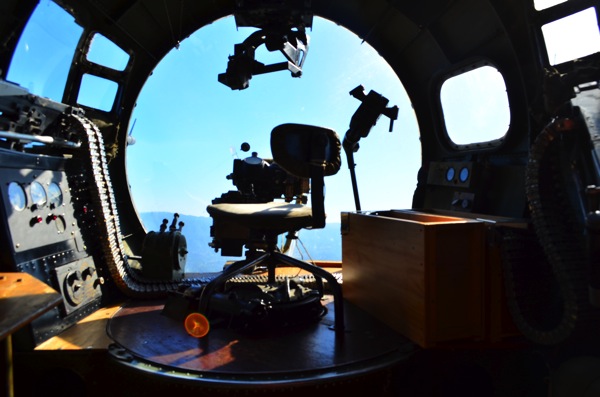
the business end of a B-17


DSC 1188

en route to Petaluma; that’s Alcatraz in the foreground


Leave a comment

Filed under aviation

Thursday trivia #93

Wow, lots of catching up to do. I’ve been writing a weekly set of notes for students at Acuitus’ school for veterans, and that’s taken all my Thursday material for the most part. It just dawned on me that I could have been posting those notes here too. Oops.


Leave a comment

Filed under General Stuff

“There is always room for improvement” in aviation

Bonus double Flying Friday post today. Why? Because this article is too good not to share.

…these NASA pilots were always at 350 when needed. It wasn’t 349 or 351. They always flew on-speed. For me, sitting in the backseat for my first couple of missions in ACTIVE, a whole new skill level was revealed. They flew this way all the time. They were always on parameters. They were always on-altitude. No 34,900 ft or 35,100 ft for them. It was 35,000 ft and not a foot higher or lower.

The author goes on to talk about how this precision inspired him to fly more precisely– “Why not,” he asks, “endeavor to fly as perfectly as possible? In fact, why not endeavor to fly as well as you possibly can all the time, versus ‘just good enough’?”

Exactly. That’s what I want, and what I try to do.

1 Comment

Filed under aviation

Dealing with partial loss of power

Andy, my primary flight instructor, has always described a pilot’s license as “a license to learn”. This may sound trite, but it’s true… if you’re doing things the right way.

This week’s FLYING LESSONS newsletter contained an interesting factoid: the Australian Transport Safety Bureau says that partial loss of power is three times more likely than complete engine failure. After reading the report, I am forced to agree with Thomas Turner that partial-power operation is under-taught; I know that in my relatively limited experience none of the instructors I’ve flown with mentioned how to deal with it or even how to recognize it.

Recognition, of course, sounds like it should be pretty easy: is the engine making as much power as it should? In a car, you can tell by your forward speed and/or acceleration: does the car accelerate normally when you push on the accelerator? There are also audible cues that may tell you whether the engine is working normally. In an airplane, the same audible cues may exist, but airspeed and climb performance are just as useful as the sounds you hear. If you have fancy engine instrumentation, then it may give you information such as cylinder head temperatures that tell you what’s going on.

The ATSB report calls out a fairly straightforward procedure for dealing with partial power loss: lower the nose to maintain best glide speed, find a place to land, and do so as soon as practical. No turns under 200′, and no troubleshooting the engine unless you have sufficient altitude to do so. It also goes into some detail about potential causes of partial power loss, including spark-plug fouling, fuel contamination, and problems with carburetor heat. All of these are things I will be more mindful of as part of my preflight and in-flight operations.

Always something new to learn…

Leave a comment

Filed under aviation

PC reliability: Apple, Dell, and lessons for servers?

Via Ed Bott, a fascinating article on real-world robustness from Windows 7 and Windows 8 PCs: Want the most reliable Windows PC? Buy a Mac (or maybe a Dell). You should read the article, which outlines a report issued by Soluto, a cloud-based PC health and service monitoring company. Their report analyzes data reported to their service by customers to attempt to answer the question of which manufacturer’s PCs are the most reliable. Apple’s 13″ MacBook Pro comes out on top, with Acer’s Aspire E1-571 coming in second and Dell’s XPS 13 in third. In fact, out of the top 10, Apple has two spots, Acer has two spots, and Dell has five. Ed points out that it’s odd that Hewlett-Packard doesn’t have any entries in the list, and that Lenovo (which I have long considered the gold standard for laptops not made by Apple) only has one.

The report, and Ed’s column, speculate on why the results came out this way. I don’t know enough about the PC laptop world to have a good feel for how many of the models on their list are consumer-targeted versus business-targeted, although they do include cost figures that help provide some clues. There’s no doubt that the amount of random crap that PC vendors shovel on to their machines makes a big difference in the results, although I have to suspect that the quality of vendor-provided drivers makes a bigger difference. Graphics drivers are especially critical, since they run in kernel mode and can easily crash the entire machine; the bundled crapware included by many vendors strikes me as more of an annoyance than a reliability hazard (at least in terms of unwanted reboots or  crashes.)

The results raise the interesting question of whether there are similar results for servers. Given that servers from major vendors such as Dell and H-P come with very clean Windows installs, I wouldn’t expect to see driver issues play a major part in server reliability. My intuition is that the basic hardware designs from tier 1 vendors are all roughly equal in reliability, and that components such as SAN HBAs or RAID controllers probably have a bigger negative impact on overall reliability than the servers themselves– but I don’t have data to back that up. I’m sure that server vendors do, and equally sure that they guard it jealously.

More broadly, it’s fascinating that we can even have this discussion.

First of all, the rise of cloud-based services like Soluto (and Microsoft’s own Windows Intune) means that now we have data that can tell us fascinating things. I remember that during the development period of Windows 2003, Microsoft spent a great deal of effort persuading customers to send them crash dumps for analysis. The analysis revealed that the top two causes of server failures were badly behaving drivers and administrator errors. There’s not much we can do about problem #2, but Microsoft attacked the first problem in a number of ways, including restructuring how drivers are loaded and introducing driver signing as a means of weeding out unstable or buggy drivers. But that was a huge engineering effort led by a single vendor, using data that only they had– and Microsoft certainly didn’t embarrass or praise any particular OEM based on the number of crashes their hardware and drivers had.

Second, Microsoft’s ongoing effort to turn itself into a software + services + devices company (or whatever they’re calling it this week) means that they are able to gather a huge wealth of data about usage and behavior. We’ve seen them use that data to design the Office fluent interface, redesign the Xbox 360 dashboard multiple times, and push a consistent visual design language across Windows 8, Windows Phone 8, Xbox 360, and apps for other platforms such as Xbox SmartGlass. It’s interesting to think about the kind of data they are gathering from operating Office 365, and what kind of patterns that might reveal. I can imagine that Microsoft would like to encourage Exchange 2013 customers to share data gathered by Managed Availability, but there are challenges in persuading customers to allow that data collection, so we’ll have to see what happens.

To the cloud…

1 Comment

Filed under General Tech Stuff, UC&C

Blacklist blacklist blacklist: the forbidden word

I just got chapter 6 of Exchange 2013 Inside Out: Clients, Connectivity, and Unified Messaging back from Microsoft Press. Like most other major publishers, Microsoft Press has a strict process to try to catch potentially offensive, libelous, slanderous, or sensitive terms before they appear in print. In this particular chapter, the editors requested many changes because of the odd vocabulary associated with message hygiene. For example, it’s OK to say “spam” to mean “an unwanted commercial e-mail message,” but it’s not OK to say “ham” to mean “a legitimate or desired commercial e-mail message” because in some book markets, ham is either unheard of or regarded as offensive.

However, they also busted me for using “blacklist,” as in “real-time blacklist.” This is the accepted term of art for a DNS-based system that allows an e-mail server to look up IP addresses of senders in real time to decide if they appear on a list of known or suspected spammers. Apparently “blacklist” is an offensive word in some contexts, although I’m having a hard time figuring out where or why.

Imagine my surprise when I fired up my Xbox tonight and saw this:

NewImage

Now, to be clear, I get it– Microsoft Press is not the same as IEB, Microsoft’s behemoth of a business unit. I’m sure they have different rules or something. And my editor, bless her heart, is only enforcing the rules forced on her by some clique of zampolits…but seriously?! Xbox LIVE has tens of millions of worldwide customers who are seeing this forbidden word. On the other hand,  my book, if I am very lucky, may sell as many as 25,000 copies (that would make it a runaway hit by computer book standards), and yet I can’t use a well-known and commonly accepted term in context.

Sheesh…

3 Comments

Filed under FAIL, UC&C

Exchange OWA IM integration and Lync trusted application pools

I am a bit ashamed to say that I wasted most of a day on this, but I’m posting this in the hopes that I can help someone else avoid the same mistake I made.

I just spent about five hours troubleshooting why I couldn’t get Exchange 2013 Outlook Web App to display IM and presence data from a Lync 2013 standard edition server. I had carefully followed the integration steps in the documentation, including the part that says this:

If you have installed the Microsoft Exchange Unified Messaging Call Router service and the Microsoft Exchange Unified Messaging service on the same computer then there is no need to create a trusted application pool for Outlook Web App. (This assumes that the server in question is hosting a SipName UM dial plan.

So, having read that, I didn’t set up a trusted application pool or trusted application… and IM didn’t work.

I fussed with certificates. I read a ton of documentation. I swore. I drank too much diet Coke. I ran OCSLogger and found errors about an unknown peer. “AHA!” I thought. “There must be an error in the docs and you really do need to create a trusted application pool.”

So I created the pool and the trusted app. Two quick lines of PowerShell, a quick login to OWA, and voila:

NewImage

As much as I would like to claim that it was a documentation error, this was pure fail on my part: the problem was that my Exchange 2013 server doesn’t host a SIP dial plan, so Lync doesn’t automatically add it to the Lync known servers table. It will have a SIP dial plan when I get to the next section of this chapter, but that’s a post for another day.

So, in summary: yes, you do need to create a trusted application pool and application for your Exchange servers even if they are multi-role unless they are hosting a SIP dial plan. 

Now, time for another diet Coke…

5 Comments

Filed under FAIL, UC&C

Go or no-go revisited

Thomas P. Turner is a flight instructor and businessman who publishes an exceptionally useful weekly aviation newsletter called Flying Lessons. Recently he’s been focusing on trying to help pilots understand what’s truly risky about flying, and to provide some standards to help improve proficiency in those situations. As part of that process, in this week’s newsletter he linked to a matrix of go/no-go rules that I really like: the Categorical Outlook Flying™ matrix. The basic point of this matrix is to provide a simple, clear set of guidelines to help pilots of all experience and skill levels make good decisions.I don’t want to reproduce the entire matrix, but here’s a snippet:

If the outloook is… …and you’re flying… over   during… then suggest:
  VFR VFR   flat land   day GO  
        flat land   night GO  
        unfamiliar area day GO  
        unfamiliar area night GO  
        mountains or water day GO  
        mountains or water night NO-GO  
    IFR   flat land   day GO  
        flat land   night GO  
        unfamiliar area day GO  
        unfamiliar area night GO  
        mountains or water day GO  
        mountains or water night GO  

This doesn’t seem that instructive– after all, all but one of the suggestions are “go”. However, the real beauty of this approach is that it breaks down the go/no-go decision into multiple factors, including weather, time of day, terrain, and flight rules. These factors correspond pretty well with some of the major risk factors associated with flight. Night VFR over mountains is more risky than day VFR over mountains– not because of the airplane, which doesn’t know it’s dark, but because of the difficulty of finding a safe place to land if there’s a problem.

The full set of matrices is well worth looking at. I like this approach and plan to incorporate it into my own personal minimums; the matrix above is already pretty much how I plan, but the “marginal VFR” matrix, which I haven’t shown here, is where things start to get a bit more interesting…

2 Comments

Filed under aviation

Palo Alto-Petaluma and back

Tuesday afternoon I was working and decided to check out LiveATC.net, a web site that plays air traffic control audio for a huge range of airports worldwide. Soon enough I had fired up the Palo Alto tower, which led to looking out the window, which led to me reserving an airplane for a quick flight to Petaluma. Why there? It was just over 50nm away from Palo Alto, meaning that I could log the flight as cross-country time towards my instrument rating.

I got to the airport, preflighted the airplane, and enjoyed a smooth takeoff; departure had me do a right 45° departure and head towards the Oakland airport. I got on the radio with NORCAL Approach, who routed me over the runway 29 numbers at Oakland International and then cleared me further to the north. The sun was lowering in the western sky, which gave me a few pretty nice photo opportunities:

DSC 1167

Approaching KOAK rwy 29 from the south; the numbers are just out of frame on the lower right

DSC 1179

the city of San Francisco; that’s the Bay Bridge in the foreground

DSC 1192

the Golden Gate Bridge, with bonus freighter

DSC 1178

Both bridges, plus shafts of light through the city fog (you might need to see the full-size version to see them)


The Petaluma airport was easy to see, and I had a good landing on runway 29. Sadly, the diner there closes at 3pm, and I got there about 7:30pm. So, my key learning for this flight: verify the status of your proposed dinner destination before takeoff. I got out, stretched my legs, and fired the plane back up to return to Palo Alto; the night view was absolutely stunning, but I didn’t take any pictures.. maybe next time. Since it was dark, I went ahead and shot 3 landings to update my night currency; my last landing was a power-off, short-field squeaker that would have pleased even my  picky CFI.

An evening well spent…

Leave a comment

Filed under aviation

MEC 2014: Austin, 31 March-2 April 2014

This is pretty darn exciting: Microsoft has announced the official date and time of the Microsoft Exchange Conference (MEC) in 2014. It will be held in Austin, home of at least one of the original MECs (the first one, maybe? I wasn’t there so I’m not sure) from 31 March to 2 April 2014. 

I am sure that nothing bad will come of Microsoft’s decision to include April Fool’s Day as part of the conference. Nope, not at all.

On a personal note, I am excited that the conference will be in Austin. It’s one of my favorite cities, and I’ll be making side trips to see family (Hi, Lee Anne!) and friends while there. I also believe that we should have an Exchange-themed visit to the Salt Lick BBQ. Stay tuned for details!

Leave a comment

Filed under UC&C

A beautiful meditation on flying

I grew up reading Flying magazine. There always seemed to be copies around the house, along with books written by stalwart columnists such as Gordon Baxter (“File IFR even if you’re just going to the men’s room.”) and Dick Collins. I learned a great deal (mostly about what not to do) from reading the “I Learned About Flying From That” series, and I’ve happily enjoyed the magazine as it’s evolved to its present form, with a few minor nits that I’ll talk about another time.

Dick Collins is still writing. A couple of years ago, Sporty’s relaunched “Air Facts,” a magazine once run by Dick’s father, Leighton Collins. It’s now a web site and not a print magazine, but I still read and enjoy it. Earlier this week, Dick wrote a beautiful piece on a lifelong romance. No, not him and his airplane… him, his airplane, and his wife Ann, who sounds like a marvelous woman.

Read it.

Leave a comment

Filed under aviation

Thursday trivia #92

Leave a comment

Filed under Friends & Family, General Stuff, Musings

Exchange 2013 Cumulative Update 1 released

I don’t have time to write a lengthy post detailing the changes and improvements in CU1, so go read this and this instead. Pay particular attention to the section in the Exchange team blog post about mailbox sizes. Happy installing!

Leave a comment

Filed under UC&C