Let’s start with the bad news. Here’s what I said at the end of last year’s post:
In 2025, my goals are to fly at least one Angel Flight mission per month; to go up to the FAA headquarters in Oklahoma City and do their aviation physiology training seminar; to fly myself to Oshkosh and the American Bonanza Society convention; and to get at least one additional rating or qualification. Onwards!
Soooo… I didn’t accomplish any of those. For Oshkosh and the ABS convention, work conflicts prevented me from attending, the confluence of the FAA’s scheduling and my own work schedule prevented me from going to OKC, and I was overall too busy to follow through with getting another rating, although I did start studying for the first two exams required to become a flight instructor.
But! It’s a new year! The possibilities are limitless. And overall, 2025 was a pretty good flying year. I flew 102 hours, all throughout the southeastern US, including four Angel Flight missions, as shown below:
Highlights of the year included a pop-up trip to visit my mother and sister on their own trip to Galveston, taking Erica and the girls to see Lady Gaga in Miami, several flights to Starkville to pick up, drop off, or visit Anna, and work trips to Orlando and Dallas. I also got to do a few discovery flights with people interested in becoming pilots, and those are always terrific fun.
Overall the plane performed and flew beautifully. I added a second Avidyne IFD440 GPS in the spring, so I now have flight instruments, navigation, and a flight management system (FMS) roughly comparable to what United and Delta have, which is nice. I also have made heavy use of Starlink in the plane, including writing about it for Aviation Consumer. Speaking of writing, I had my first article published in AvWeb, too, and there are several more in the queue.
There were a few lowlights, too. My annual inspection took six weeks (until mid-February), which I didn’t love– winter in the southeast is often great flying weather thanks to abundant high pressure. Maintenance problems killed my planned flights to Las Vegas and The Bahamas, both of which I had looked forward to for quite a while. And planning for engine upgrades is looming as a depressing and expensive topic for 2026.
What about the rest of 2026? I’m still very much enjoying my Angel Flight missions; besides the four I did fly, I had five others scheduled but cancelled by the patient, which often happens. There are often long stretches when either no one needs to go anywhere or where other volunteers snap up the flights first, too, but I’m recycling the same goal of an average one mission per month for 2026. I want to make some progress on my flight instructor rating by passing the first two exams (Fundamentals of Instruction and Flight Instructor-Airplane) And, by god, I am going to fly myself to The Bahamas in 2026 if I have to flap my arms the whole way!
Every year, my wife’s daughters have a school break the first or second week of October. Last year, we’d planned their first visit to Canada, but work intervened and instead we all went to Denmark. Sorry, not sorry. This year, we’d planned a makeup trip to visit Niagara Falls, plus a side trip to Vermont to see my sister and her family. It ended up being a terrific trip that vividly demonstrated the value and utility of GA airplane travel.
Our parameters were pretty simple: we had from Saturday morning until Thursday evening, bookended by football games, to do whatever we were going to do. The Baron has about 5 hours flying range (including IFR reserves) but, for everyone’s comfort, I prefer a maximum stage length of about 3.5 hours. That meant a fuel stop somewhere in the mid-Atlantic region. We went through several iterations of plans, based on the availability and cost of lodging in Niagara and Montpelier, before we arrived at our final plans. For example, originally we wanted to fly up and stop overnight at the Flying W Airport to take advantage of their unique pool… but it closes for the season on Labor Day, and there’s no hotel there anyway. Here’s how the trip went.
Day 1: Huntsville to Hagerstown to Jersey City
Our first leg was easy: Huntsville to Hagerstown, 526nm in 3:17. The weather was clear and ATC sent us direct. We landed and parked at Rider Jet Center so we could have lunch at their restaurant, The Grille at Runways. In fact, we picked Hagerstown specifically because of this restaurant, and it lived up to expectations. I also bought a can of Prist glass cleaner, and I’m glad I did: it worked far better than Plexus, which is hard to find nowadays anyway.
Erica had booked us a room in Jersey City at a Hyatt that’s right on the Hudson River waterfront. I had been debating whether to fly into Linden or Teterboro. This was a fun planning exercise. The diagram below helps to illustrate why. Teterboro is in the upper-right corner; Linden is at the bottom left. Our hotel was right near the green flag labeled “CLOCK”– so from a ground transport perspective, either would do. Teterboro is much busier, but Linden is often more difficult to use because of its position next to Newark’s airspace. What finally decided me in favor of TEB was that their fuel was significantly cheaper. I filed and briefed to Teterboro while the Rider crew topped off the tanks and we took off.
I had filed a direct routing because I know the secret: in complex airspace, it doesn’t matter what you ask for in your flight plan. The FAA’s computers will spit out a route based on a bunch of factors, including letters of agreement between adjoining ATC fiefdoms, expected traffic, terrain, and weather, and you may end up flying a different route anyway (more on that later!) The route they assigned was actually KHGR SCAPE ETX FJC STW KTEB–we actually approached Teterboro from just north of the Essex County airport shown above. We ended up flying that route. Teterboro typically uses different runways for arrival and departure, so they were having all arrivals fly the ILS Z approach to runway 6.
Every little blue arrow is an airplane. Note how many of them are around the area we’re going to.
Although the NYC airspace is super busy and the controllers talk fast, the en route, arrival, and approach were all straightforward. We parked at Meridian, where I’d made us a reservation, and grabbed a Lyft to the hotel. I snapped a quick photo showing the hundreds of millions of dollars of business jets parked just on one side of us– my whole airplane costs less than the landing gear on that plane directly behind me.
The hotel was perfectly nice; by far the best thing about it was its location. As promised, it was right on the riverfront, with easy walking access to restaurants and a few shops. We dropped our bags off and went out to go wander around and explore.
view from the sidewalk outside our hotel
nighttime view across the river
We walked down to the Colgate clock, took a bunch of selfies and photos with the city in the background, and then went to bed.
Day 2: Teterboro to Niagara International
Erica had booked tickets for the pedestal tour at the Statue of Liberty, but with the threat of a government shutdown looming we decided to cancel the advance tickets to make sure we didn’t lose out. As it turned out, there weren’t any pedestal tickets available, so we settled for the standard tour of Ellis Island and the Statue of Liberty island. Both were fantastic– I thoroughly enjoyed Ellis Island and learned a great deal from the museum exhibits. (Example fun fact: between 1896 and 1924, there was 3x as much immigration to the US from Canada as from Mexico.)
We had a late lunch at the White Horse Tavern, then headed back to Teterboro, where sadly the airplane wasn’t ready as promised. There were three or four uniformed security guards milling around, and our suspicion was that they were there because Taylor Swift was due in town for the Jets-Chiefs game. Unfortunately we left before she got there. I wasn’t too sad, though, because I had planned to fly the Hudson River corridor on the way out.
The FAA has defined two routes that you can take to overfly the river (along with a required training course you have to do before you fly it!) The low route (“Hudson River exclusion”) doesn’t have air traffic control services, and it’s quite busy with sightseeing helicopters. The slightly higher route (“Skyline route”) keeps you in contact with ATC. You’re allowed to do either route, as long as you follow the rules. Because we were leaving Teterboro, which is in controlled airspace, the easiest arrangement was to depart Teterboro with VFR flight following, fly the Skyline route while talking to the various air traffic domains, and then pick up an IFR clearance for the flight to Niagara. I had planned for us to leave Teterboro to the north, fly to the Alpine Tower, and then follow the river south down to the bay, turn around, and fly north on the east bank of the river. I attached a GoPro to the tail tiedown to capture it, and that was a great decision– the video looks terrific. The segment below is midflight– just before overflying the Verrazzano bridge and making the turn in the bay.
Originally, I wanted us to fly to the St Catherine’s airport on the Canadian side of the falls. I got a US customs sticker and did all the CANPASS paperwork (pro tip: send the paperwork to the British Columbia office, they’ll turn it around in a couple of days) in anticipation, but then I found out that St. Catherine’s is a limited-service airport. No rental cars, no real Uber service, and no tie-downs. Reluctantly, I instead planned to go to Niagara Falls International (KIAG), which turned out to be a perfectly nice airport. I had filed an IFR plan from Newark to Niagara, which I activated once we were off the Hudson skyline route. 1.9 hours of flying time total got us there just as the sun was setting, then we picked up our rental car and headed across the border.
Days 3-4: Niagara Falls
Since this is Flying Friday, I’ll confine my recap of our time in Niagara to the real highlights: seeing the falls from Maid of the Mist, eating donuts and wonton soup at Country Fresh, doing the free walking tour at Niagara-On-the-Lake, and touring the Niagara Parks Power Station. By design, we completely avoided all the tourist-trap stuff on Clifton Hill. We did an all-day bus tour that included the boat trip, a visit to the Skylon Tower, and lunch at the (I am not making this up) Hungry Moose.
apparently this is one of the most-photographed sights in the Niagara region
the views from the Skylon Tower were breathtaking
One thing I didn’t do: overfly the falls. You have to be at or above 3500′, and there’s a steady procession of sightseeing traffic right at 3500′. I didn’t think the sight would be all that great, so we skipped it.
Day 5: Niagara to Montpelier
When it was time to go, we crossed back over to the US side, handed the keys to our rental car to the friendly FBO staff, and headed out. Remember earlier how I talked about how ATC will just assign you whatever they want to? I had originally filed a route that I thought would keep me out of the military operating areas (MOAs) along my route (those brown polygons in the map extract below). What did ATC clear me for? A direct route. As soon as Niagara Approach handed me off to the next sector, guess what I heard? “N421BJ, I have an amendment to your route…” We ended up flying up and over the MOAs, but the girls were all heads-down reading and fiddling with their phones, and we had a nice tailwind, so no one except me cared.
Montpelier is an interesting little airport. It’s sited in some fairly high terrain, and if the weather had been IMC I probably would have just flown into Burlington instead. As it was, I passed Burlington just as an F35 was arriving, and there was quite a bit of other traffic in the area, so Montpelier worked out really well. We parked, shut down, and took off with my sister for lunch and some sightseeing, including the Ben & Jerry’s factory tour. (For discussion another time: our hilariously weird AirBnb in Montpelier and the steady parade of tour buses carrying leaf peepers.)
Day 6: Montpelier to Latrobe to Huntsville
I posted on BeechTalk to ask for route suggestions, and a couple of people recommended stopping at Latrobe, PA to eat at DeNunzio’s, the restaurant there. So we did! Our first leg was about 3.1 hours with a noticeable headwind, but nice clear skies and no hassle from ATC. After landing, we walked over to the restaurant and, reader, let me tell you: it was fantastic. I had the lasagna, and it was more than I could finish– which is pretty rare. The airplane and pax were both full, so off we went back into the headwinds, with increasing cloud coverage. The leg home took a little over 3 hours; we landed, unloaded, and gratefully made our way home to see the dogs.
Summary
This trip is a terrific example of how well GA can work for travel. It would have been both expensive and inconvenient to do a similar itinerary by commercial air, and I don’t even want to think about the hassle (and exhaustion) incumbent on driving a trip like this. In the end, I logged 14.2 hours total. I didn’t total up my fuel costs (which is a good thing; avgas is significantly more expensive in the northeastern US than it is where I usually fly), but I’d guesstimate it was probably about $1500. For that price, maybe I could have gotten us all to and from NYC. I’ll call this one a win, and I’m already looking forward to our next trip.
Do you like touring vineyards? Then this stage of the hike will be perfect for you. I think we saw every vineyard in this part of Slovenia, plus a goodly number of churches. (It seems like every single ridge in Slovenia has a church on top of it, which is certainly scenic!) This route had some decent hills, with a mix of shade and full sun; combined, I’d have to say the en route segments felt like a bit more of a slog but the views and breaks were well worth it.
After a delicious breakfast buffet at the Koren Apartments, we set out through the town of Vipava, walking past a grocery store, a small car dealer, and some other trappings of industral civilization that had mostly been absent on our other routes. It wasn’t long before we were off the road and crossing a meadow which led to… a vineyard.
representative vineyard shot– I honestly disremember if this was the first one we saw that day or not
nice sample of the day’s terrain
vineyards love hills
We climbed through the small village of Lože, then walked into the slightly larger and fancier village of Goče. Our directions encouraged us to wander through the village (“it’s impossible to get lost!” it promised), so we did, walking up the hill to the 17th-century cemetery (which features a lovely garden, a welcome water faucet for refilling, and a set of kid-size soccer fields across the narrow street), then back down to Saint Andrew’s church in the village. Like most of the churches we saw on this trip, it was closed and we weren’t able to go in.
St Andrew’s of Goče
After Goče, it was over (and up!) to Erzelj. Along the way, we made another detour, with accompanying climb, to the Church of St Maria of the Snow, which featured some terrific views back over the valley (and its vineyards) over towards Goče. The church is about a kilometer off the road, so the out-and-back added a little distance but it was well worth it.
We briefly stopped in Erzelj, which had some kind of government building, with a small playground next to it, and a smattering of houses. Like the vast majority of the other villages, we saw no signs of life– no people, no cars, no roaming pets, nada. We did find a faucet to refill our water bottles, so we relaxed in the shade of the playground trees, had a small snack, and then set out for the next leg to Tabor, where we got some great views from the old village church.
After that stop, we just walked a bunch more, passing through a few small sub-villages. We passed through Kodreti, which is where our stop for the night was: Hiša posebne sorta, which is Slovene for “a special sort of house.” The hostess warmly welcomed us and showed us to our room, where I promptly cranked up the AC and sat for a few minutes to cool off before a quick shower, a cold beer on their shaded terrace, and an excellent 3-course dinner of soup, pork stuffed with plums and cheese, and some kind of magical dessert.
It’s true that hunger is the best sauce, but it’s also true that every dinner we had on this trip was a highlight. Then to bed to rest up for the next day’s hike.
The big attraction of this day’s hike was the ability to climb up the ridge on Mount Nanos, which is actually a big limestone plateau and not a proper mountain. On one side it’s a huge mostly sheer set of cliffs, sort of like parts of Yellowstone, but those don’t photograph all that well with a cellphone camera. Here’s a small sample– note the exposed rock up at the top.
We didn’t climb all the way to the top, I regret to say
The hike started at a small church but, after a short walk to the trailhead, we were quickly headed uphill. We saw lots of people hiking down the trail, which explained the full parking lot at the trailhead. This made sense once we realized that it was still early and most of the hikers we saw had clearly gone out for a quick hike before it got too hot.
the initial trail was nicely wooded
The route instructions called for us to climb up to one of the designated waypoints, then decide if we wanted the main route or the one that went up on the ridge for better views. The trail was marked both with yellow arrows and small red-and-white marks that look like the Target logo, which were super helpful, and the turn-by-turn directions were also very detailed.
gorgeous smile, but also, did you see that little red-and-white trail marker?!
I was using the GPS map on my phone for route guidance, and Erica was cross-checking with the printed directions. This system worked pretty well for us, except in this one specific case. See, the directions basically said “for the main route, do X, Y, Z” for, oh, maybe 8 pages. At the end of that section, it then said “and if you want to climb the ridge, instead of Y, do P, D, and Q.” So we missed the turn onto the ridge route at first, and didn’t realize it until we were well along the main route.
Erica kept the printed directions handy
We didn’t notice because of two reasons. First was that we were hearing voices… really. Somewhere in the valley below is a motorsports track, and we could hear roaring engines and the track announcer. There was too much foliage alongside the trail for us to directly see the track but we could definitely hear it. The other is that the trail we were on was marked; I just didn’t notice the aforementioned split in the before/after directions until we were quite some distance in.
Luckily, the AllTrails map showed all of the trails in the area, not just the ones we were on. We found a side trail that angled off about 45º to our track and that joined the marked route for the ridge. This trail didn’t have as many of the trail markers as I would have liked, so we made a couple of wrong turns. Sadly, each of those wrong turns involved a steep climb, followed by puzzlement, swearing, and backtracking. Eventually we found the correct path, which linked up with the ridge route, and we got some of the promised amazing views.
off to the right is our destination, the village of Vipava
The path eventually ran alongside a small road, with lots of switchbacks; in one of those switchbacks we found a shaded bench to sit on for lunch. There I had one of the best lunches I can remember: there was a small water trough with fresh, and extremely cold, water, an amazing view shared with my lovely wife, and a delicious lunch consisting of farm-fresh fruit and sandwiches, on homemade bread, of local cheese, uncured ham, and… wait for it… donkey salami.
Yes, you read that right.
It was very tasty. Sorry, Eeyore.
Anyway, after an amazing lunch, it was back onto the trail. We moved into a more forested area, with the highlight being a stop at the Church of St. Niklaus, which dates back at least to 1608. We couldn’t go in, but I did manage to ring the church bells. At first I tried using a tree branch, but after a little research, I found the bamboo rod, with a convenient hook on the end, that was meant for bell-ringing, so I gave it a try. (annoyingly, I can’t make WordPress uncrop the video, the dirty rats. Watch it full-screen if you actually want to see the bells.)
Ring out, wild bells. Or something.
That probably isn’t allowed, so we fled the area fairly quickly, only to find out that we were in an old artillery range that used to be used by the Yugoslavian army back in the day. We didn’t think it was in time of shooting, so we pressed on.
This part of the trail was neat because to our right we had the sheer faces of Nanos, and between that and the trail were large fields of scree and gravel. Clearly rock had fallen down off the face and been weathered into smaller and smaller pieces before it ended up underfoot. You could see spots on the face where a large rock had broken off and fallen, then the fallen rock itself… sort of like those maps of Pangaea that show the primordial continent evolving into today’s arrangement. The path was mostly trending downhill, and soon enough we came out of the forest and found a lovely oasis in the form of Kamp Tura. This is, essentially, a Slovene KOA, with spots for tents or campers, a shower house and bathrooms, sports courts, and a nice little cafe where I drank two brain-freezingly cold Coke Zeros while we chatted with Bojena, one of the owners.
Pro tip: on the entire trip we found approximately zero public restrooms. That turned out not to be a problem because it was so hot that we didn’t need any pee breaks en route, but you should plan accordingly if you do this route in less-sweaty conditions.
After Kamp Tura, it was an easy downhill leg through some vineyards and past what looked like a Soviet-era industrial complex (but which turned out to be a winery!) before we got into Vipava itself. Vipava’s a real town, with a few restaurants and bars on the town square. On Foot had booked us into a very nice little tourist apartment; after checking in, cranking up the AC, and doing a little sink laundry, we headed out to try to find a wine tasting. The only problem is, the nearest winery was a couple of miles away uphill– and there are no taxis in or around Vipava. So that was right out. Luckily, the family that operates the apartments also runs a small winery, Wipach, and there’s a small wine shop on the ground floor. We had an amazing tasting hosted by one of the winery owners, a charming schoolteacher who runs the winery with her husband. She’s the grand-daughter of one of the winery’s two founders and her husband is the grandson of the other founder… so it’s absolutely a family concern.
After the tasting, we got cleaned up for dinner. Our apartment hostess had asked if we liked pizza; when we said “yes,” that’s what we were expecting. Instead…
what kind of soup is that? wrong answers only.
…she booked us a table at Gostilna Podfarovz, where we had an amazing dinner consisting of, well, I’m not really sure. The photo above is our soup: cucumber and zucchini cold soup with kefir on top, and some kind of little puffy thing with raspberry balls on it. There was a course of trout tartare and beef tartare; there was lamb; there were various other odd combinations of ingredients that I would never have ordered but which I was happy to eat. In fact, they fed us so much that we had to decline dessert. All throughout dinner we saw people walking by with ice cream, and we kept joking about how good ice cream would be before bed… except we just didn’t have room.
Full of lamb-trout-mystery-food, we went back to the apartment to make an early-ish night of it; the next day’s segment was going to be hilly and hot without a lot of shade so we wanted an early start.
Not surprisingly at all, we both woke up before the alarm– neither of us wanted to be late to meet our driver. Our B&B had the convenient feature of allowing you to pre-order breakfast, so promptly at 0730 we went out to the terrace and had an amazing breakfast of fresh-baked bread, local meats and cheeses, local honey, and locally-farmed eggs. This set the pattern for our hiking, where I can only think of one store-bought or processed item (a pot of fruit yogurt) that we were even offered. Plus, the coffee was delicious.
For this hiking route, On Foot had arranged a driver to take us to Landol, the first waypoint on our hike. We’d prearranged with the driver to divert and stop at the famous cave system at Postojna. To tour the caves, you ride an underground railway for 10 minutes or so, then take a walking tour through the cave system itself. I do love a good cave, and this one was fantastic– the cave system itself goes on for kilometers, as a result of the limestone terrain that’s easily infiltrated and undercut by water. As with our other cave visits, cellphone pictures don’t really do justice to the sights, so I didn’t take a lot of pictures.
From our dropoff point in Landol, our first waypoint was the castle at Predjama, which was good because we both wanted to see it. Predjama is about 10km from Postojna and maybe 4km from Landol, so the first leg was pretty easy. Predjama literally means “in front of the cave,” and when you look at the pictures you can see why. The castle itself is built into the side of a cliff and extends into a pre-existing cave system.
Predjama is uniquely sited in the side of a cliff
The castle definitely has a tourist-y vibe; there’s an available audio tour, lots of placards, and some samples of armor, weaponry, etc. The presented history emphasizes the role of Erasmus, the robber-baron-knight of the area, which was a nifty story I didn’t previously know.
Rapunzel, Rapunzel, let down your hair… oops, wrong castle
After the castle visit, we had lunch at one of the restaurants– I had a giant schnitzel and a half-liter of Union beer, just to make sure I was getting enough salt, fat, and alcohol on board before the real hike started. Then… we started walking.
The hike itself was just under 7.5 miles, all over mixed terrain: some meadows, some wooded trails, some climbs, a few descents, a little gravel. The below route map from Strava should give you some idea; this was a relatively flat course that didn’t have a lot in the way of stunning views, but it did have some lovely scenery.
a quiet forested trail is good for the soul
It was a lovely day to be out in the countryside
One thing the On Foot guide had prepared us to expect was the presence of monuments in each village. When you think “village” you may be assuming something larger than the typical Slovenian village– the entire country has only about 2 million people, half of whom live in Ljubljana and other cities. A village there might be no more than half-a-dozen houses clustered near each other, but I think every one we went to had at least one shrine, plus a monument to partisans killed resisting the Nazis in World War II.
Another welcome feature of the villages: they usually had someplace to refill our water bottles. Erica had gotten us a pair of collapsible LifeStraw bottles for our Belize trip, and they were perfect for this trip. We didn’t need the filtering, since Slovenian tap water is as safe to drink as in America, but being able to collapse them was handy. Our day pack weighed maybe 15 lb and contained the two LifeStraw bottles, an extra 1.5L of bottled water, our lunches, snacks, a small first aid kit, rain jackets, maps, and a few other odds and ends.
On the drive to Postojna, our guide said that Slovenia is famous for having more tractors than cars. I can’t assess whether that’s true but we did see rather a lot of tractors, including this beauty. We saw plenty of them, both parked in barns but also working in the fields.
After a pleasant, but hot, hike, we made it to Hudičevic, which means “the hidden devil.” There’s a local legend about a mean old washerwoman who was taken ill. As she lay on her deathbed, the local priest dressed up as the devil to try to frighten her into accepting last rites. Thinking he was the actual devil, she shot him. (coolStoryBro.jpg) Hudičevic is a tourist farm operated by the son and daughter-in-law of the original founders, the Simčič family, who opened in 1970 as an inn to feed the workers who were building the nearby motorway. The couple’s 10 kids all live and work at the farm, which was pretty neat. Our room was small and nicely furnished; although it didn’t have air conditioning, as the evening cooled it was quite nice. Dinner, and the next day’s breakfast and lunch, were all locally produced. Although the menu offered both donkey salami and horse salami, we decided to stick with more traditional fare. I had pork loin stuffed with cheese and plums, along with a thick vegetable soup and a delicious berry dessert with fresh homemade ice cream. Erica had lamb.
We both slept very well and enjoyed a fantastic breakfast buffet; whichever kid was working in the kitchen also packed us each a sack lunch, then Klara drove us into the village for the day’s route.
that wasn’t the mountain we climbed but it’s a decent stand-in
There’s no great way to get from Venice to Ljubljana by air or train, so I decided to book us on Flixbus. The bus left from the Venice central station, which wasn’t far from our hotel. We took a taxi after the first two city buses we wanted didn’t show up. When we got to the station, it was like being in an anthill– tons of people, all milling around in unpredictable patterns. I was getting a little panicky because the bus wasn’t anywhere to be found at the specified location, but we eventually found a queue of other people who were waiting for the same bus, and it showed up about 15 minutes later.
Pro tip: Italian train/bus stations have pay toilets. Take a couple of €1 coins, just in case.
For about €40, we had a clean, safe, quiet, and comfortable 3-hour bus ride. Both of us were surprised at how quiet the atmosphere on the bus was– much quieter than a typical commercial airline flight. Flixbus bought Greyhound in the US, which I didn’t know, so maybe “riding the dog” will come back. It’s hard to beat the price. When we arrived in Ljubljana, we quickly found our way to Pension Slamič, our lodging for the night. It was much nicer than I had expected– a modern, clean, quiet hotel only a few blocks’ walk from Old Town. After checkin, we headed out to see some sights and immediately fell in love with how walkable that area of Ljubljana is. Big, wide sidewalks, with bike paths and plenty of trees, make it easy to get around comfortably. We found a post office and bought some postcard stamps, then found a Spar and bought a few extra bottles of water for the hike. Because we’d missed lunch thanks to being on the bus, our first important stop was dinner at Patrón for tacos. This might seem like a weird choice but having tacos in foreign lands is kind of our thing, and I’m really glad we did it here. The fish taco I had was one of the best I’ve ever enjoyed anywhere, and the carnitas taco was as good as anything I’ve cooked myself. We enjoyed sitting out on the street and people watching for a while, then set out to go hit our major objectives.
wish I’d noticed how blurry this was before I ate the tacos
Ljubljana has (at least) two well-known bridges: the Dragon Bridge and the Triple Bridge. You can probably guess how they got their names…
here there be dragons
The old city itself isn’t that large, so we made a circuit across the bridges and then climbed the hill to the castle, which is a really interesting tourist-ized version of its former self. There are several exhibits and museums in it, including a really interesting section dedicated to Slovenian history, a topic as complex as you’d expect from a central European country that’s been passed around from empire to empire over the centuries. There’s a nice mix of original and restored structures and artifacts, and you can climb the clock tower to look out over the city.
the castle overlooks Ljubljana and the surrounding area
After our castle visit, we only had one more planned stop: the rooftop bar at the Nebotčnik. This was lively, even at 6pm, and we had to wait a few minutes for a table, but the views were worth it. I had some kind of cocktail which appeared to be a glass of Windex, and we split two delicious pieces of cake.
After our rooftop visit, we headed back to Slamič to make sure our day pack was ready for the following day’s hike, then hit the bed early.
Yes, that’s right… in one of the most romantic, most iconic cities in the world, we weren’t even staying in the fun part, and were in a chain hotel to boot. But before you get too out of sorts, consider that the stay was free (thanks to Hilton points) and that there’s a bus stop within about 25′ of the front door. At that stop, you can take a €1.50 bus ride for 10 minutes and be in Venice, or at the central station downtown, or at the airport, all of which we needed. Overall I was really pleased with the hotel, although it was absolutely jam-packed with tour and cruise-ship passengers. It was exactly what you’d expect from a Hilton property: clean, well-maintained, with decent amenities and a friendly, competent staff. We weren’t going to be there much anyway!
After dropping off our bags and a quick shower, we grabbed the bus to Venice and started, well, just wandering around. Let me stipulate once that it was super hot (88+ ºF) and very crowded the entire time we were in Venice. That way I don’t have to repeat it. Neither of us loves crowds, but that’s par for the course when traveling in Europe now. Anyway…
One of many bridges
Pretty much exactly what you’d think Venice looks like
Traffic, Venice-style
We didn’t have a real plan, so we just walked around. We managed to find some gelato for a mid-afternoon snack, as one does, and it was just as good as we both had imagined real Italian gelato would be. However, we had bigger plans for dinner– Erica had booked us a cichetti tour. If, like me, you have no idea what cichetti are, or is, or whatever: think “Italian tapas.”
The tour was superb. Our guide, Sylvia, was both a certified sommelier and an art historian; she moonlights as a tour guide. As we walked, she explained that Venetian nightlife centers around meeting your friends for small-plate snacking and drinking, in a sort of progressive-dinner style… thus the tour.
Sylvia with a tray of baccalà
Each of the places we stopped had a different specialty. At the first stop, we were served small fried-tuna balls, fritto misto (mixed fried seafood), and squid cooked in squid ink (not a favorite for either of us.)
fritto misto in the front, squid-in-ink in the back
At other stops, we had baccalà (shown above– basically, dried fish which is then boiled to make a sort of cream and served on toast; I liked it, but Erica didn’t as much); a sort of Uncrustable-like sandwich whose name I forget, risotto, and the best tiramisu I’ve ever had in my whole life. The risotto and tiramisu were at a place called Sepa, where I would 100% return if I were to find myself in Venice again. Each place served us prosecco, wine, or some other kind of drink, too. Our tour group was mostly Americans, along with an Australian mother-and-daughter pair, but it was fun to see the varying levels of adventurousness as we tried different types of cichetti.
I’m not normally a big tiramisu fan, but this was one of the best desserts I’ve ever had in my life, and I eat a LOT of desserts
By the time we got done with the tour, it was twilight, we were jetlagged, and we were stuffed full of food, so we headed back to the hotel (again on the bus) and called it a night. HAHAHAHAHAHAHA NO. What we really did was take the bus to the airport to get Erica’s suitcase, an adventure in forced wakefulness and Italian standards of customer service that I won’t detail here to spare your delicate eyes, dear reader. Then we went back to the hotel to sleep.
The next morning we bolted down a quick hotel breakfast and grabbed the bus again for what would prove to be a super full day of sight seeing. The weather had changed a little overnight– it was overcast and occasionally raining, but we grabbed our rain jackets and headed to the bus stop anyway. This turned out to be a great decision, because the rain kept a lot of the tourists off the streets (at least at first).
not about to let the rain… uh, dampen… our fun
I am told that this boat is a Venice landmark
We had a very pleasant time just walking around but the rain intensified. Coincidentally we were near Ca’ Rezzonico, billed as the only museum dedicated to 18th-century Venice, so we went in to tour. It was fabulous! Paintings by Tiepolo, Tintoretto, and more; amazing frescoes; statuary; sumptuous decorations; and lots more. I didn’t expect to enjoy it, or find it as educational, as I did, and it hadn’t even made our short list of must-do items. We wandered around until we had seen everything we wanted to, then headed over to St. Mark’s Square, where we had timed tickets for the bell tower and the basilica.
Pro tip: St. Mark’s is always going to be crowded. Just mentally prepare yourself. It didn’t help that there was construction all over the place, but that’s also part of the price to be borne for being able to see centuries-old monuments in situ; sometimes they need maintenance.
I didn’t take many pictures inside St. Mark’s proper, knowing that a cellphone camera wouldn’t do them justice. I did take several from the campanile and the balcony with the four horses, though.
well, OK, maybe just one…
The campanile from the outside
Pro tip: 100% do not go to St. Mark’s unless you have bought tickets with the “skip the line” option, in advance. Don’t count on tickets being available same-day.
After St. Mark’s, we headed some distance away to have lunch. Erica had previously found recommendations for Osteria Alla Staffa, which was superb. The food was excellent and the service was warm, friendly, and fast. We chatted with a couple from LA who were in Venice as part of their honeymoon, and it was fun to compare notes. Then it was off to the Contarini del Bovolo (Italian for “snail”), where we had a 4pm ticket, for more unique views.
St Mark’s campanile from atop the Bovolo staircase
We hadn’t planned it in advance, but we decided to take a water taxi over to San Giorgio Maggiore. This requires us to go back through St. Mark’s, which was even more crowded than before lunch, then figure out which boat to take. Long story short, we took a bit of a detour to Giudecca before ending up at the desired spot. The views were very well worth it, though.
After another water taxi ride back to Venice proper, we stopped at a handy cafe for, you guessed it, more gelato. On the way back to the hotel, we decided to have a proper dinner, by which I mean “pizza,” during which we were serenaded by an honest-to-goodness accordionist. That was a first. The pizza was great though. Then we caught the bus back to the hotel to pack up and get ready for the next day’s trip to Ljubljana.
note the musician in the background
Venice has a view like this around practically every corner.
Erica and I do love a good adventure. After doing the Bermuda Challenge and Ragnar New England, we decided maybe it would be fun to have an active vacation that wasn’t focused on running. “How about a multi-day hike?” she asked me one day. “Suuuuure,” I said, envisioning a week-plus of sleeping in a tent (something I got my fill of in the Marine Corps). She did some research and came back with a terrific suggestion: On Foot Holidays, a UK company that arranges cross-country hikes with lodging at each point. In particular, she suggested we look at their route in Slovenia, which covered six nights starting in Ljubljana and ending in Trieste. This was especially attractive since neither of us had been to either Italy or Slovenia before. Each day was a separate point-to-point hike, with lodging arranged, and On Foot would handle moving our luggage for us.
We signed up and started digging into the logistics of traveling from Huntsville to Ljubljana. Let’s just say that the process wasn’t entirely straightforward. Erica had built up a great stash of Chase Ultimate Rewards points and wanted to use them, so she started hunting for flights. We ended up with great points deals to go from Miami to Venice on Air France, and from Venice direct to Newark on United. I booked Delta mileage tickets from Huntsville to Miami and from JFK back home, and then the real fun started. First Air France cancelled the Miami-Paris leg and moved it a couple of days, so I got to call AF and get that all straightened out. That change necessitated changing our Delta flights too, but when the dust settled, we had a fairly simple Huntsville-Atlanta-Paris-Venice routing.
On Foot provided us a thick packet of maps and guidance well in advance of the trip. Each day of the hike had its own topographic map and printed set of very detailed turn-by-turn directions, along with a summary itinerary telling us where we’d be staying and what to see/do in each location and a detailed packing list. They also gave us a single GPX file that had all of the GPS routes in it (more on that in a future post!) The On Foot team communicated frequently and clearly throughout the pre-game process, including assigning us a local contact that we could use if we got lost, stuck, or puzzled. That left us free to concentrate on planning the Venice and Trieste stays, since we could trust that On Foot had arranged lodging and food. As usual, Erica did an amazing job of identifying things we might want to do and organizing and arranging them. We had nearly two days in Venice on arrival, followed by a day in Trieste and two more days in Venice after the hike, and that led to a jam-packed schedule of things to do, see, and eat.
Our travel started out as completely unexceptional. The friendly Delta ticket agent figured out that he could check our bags straight to Venice even though we had separate Delta and Air France tickets; once that was done, we flew to Atlanta, had a snack at the Sky Club, changed planes, and settled in for the long-haul flight to Paris. The flight featured a toddler in the row in front of us who cried, whined, and, at one point, spit a mouthful of cracker over the two of us. It was just exactly as much fun as you’d expect, but we got to Paris undaunted, changed planes again, and then arrived in Venice.
Delta had a large, and rather patriotic, display in the Atlanta Sky Club
Of course, when we got to Venice, only one of us got a suitcase. We’d checked two bags. Mine went from Huntsville to Atlanta to Venice, all on Delta flights. Erica’s went from Huntsville to Atlanta to Paris to Venice, also all on Delta flights. Notice that we didn’t take those flights. Why did our bags take different flights from us? Why were they different from each other? Heaven knows. We filled out the you-lost-my-bag form, stood in an interminable line, and learned that Erica’s bag would arrive that evening but after the cutoff for bag delivery, meaning that if she wanted it that night, we’d have to go back to the airport to get it. Resigned to that fate, we grabbed a cab to our hotel to get ready for visiting Venice proper…
(note: this post contains no jokes about Boston accents or use of the word “wicked.”)
Back in 2017, I ran my first long-distance relay race, American Odyssey. Then this year, I did it again. Instead of Gettysburg-to-DC, this route was from Groton, CT to Quincy, MA, but it featured some of the same players.
See, what had happened was: Erica and I were just finishing our beer 5K and she got a text from her friend Kim, who’s captained multiple Ragnar teams before and got our team recruited into American Odyssey. She had some openings for Ragnar New England, and were we interested? Erica certainly was, but I had a business trip to Copenhagen planned that weekend. However, a little poking around on Google Flights showed that I could combine the two, so off we went.
Ragnar races are typically about 36-hour events. The team size can vary, but it’s most common to have a team of 12, divided into two vans of 6 runners each. Each run leg varies from about 4 miles to 7 or more; the idea is that runner 1 from van 1 runs, and van 1 drives to the exchange point at the end of that leg. When runner 1 arrives, runner 2 starts out, and so on. While 1 van is running, the other can be sleeping, sightseeing, etc.
Van 1 consisted of team captain Kim and her husband Tim, plus multiple-Ragnar veterans Travis and Ciri Corbin and their son Devin (another multi-Ragnar finisher), an active duty airman. Van 2 was me and Erica and two other couples from Huntsville, Megan and Zach and Amanda and John. I knew Amanda, and Erica knew Megan, and Amanda, John, Megan, and Zach all knew each other.
We arrived in Boston on Thursday midday and Kim and Ciri picked us up at the airport. Kim had arranged an Airbnb in Plymouth with enough sleeping space for the 11 of us, so after a quick stop for a sandwich and a beer, we headed to the house to drop off our bags. Some teams sleep in their vans but that just sounds (and smells!) terrible. The house was terrific– big kitchen, 4 bathrooms, 6 bedrooms, a hot tub, and full-size arcade games in the basement. Better yet, it was located so that the van that wasn’t running could drive there in a reasonable time between legs.
After the bag drop, we walked around Plymouth proper, including visiting Plymouth Rock (which is a lot smaller than I expected) and taking some pictures of the Mayflower II, a full-size replica that is still terrifyingly small.
The Rockets in our Pockets team, minus Devin, plus the Mayflower II
Imagine crossing the Atlantic in that thing
Kim had booked us dinner at a nearby restaurant, which was great for team socialization.
This time Ciri got to have selfie-arm and stand out in front
Of course I had to have lobster, in this case a delicious lobster mac-and-cheese. Extra credit to Sea Dog Brewing for their blueberry ale and their hilarious logo. Both the beer and the entree were delicious.
It’s traditional to decorate team vans, so after we walked back to the house, we got started on that. Our van was labeled “VAN HALEN” across the front (team 1 was “VAN MORRISON”) and then we started adding random pictures and text, each according to our own artistic abilities.
Megan is really excited that I’m writing “Слава Україні!” on the van
Erica carefully drawing the Rockets In Our Pockets logo
After the decorations were finally done, we all trooped off to bed. The race start was 9a Friday for van 1, but the start point was about a 90-minute drive away. Van 2 needed to be at the exchange point (“exchange 6”) around noon to check in, pick up our road-safety flags, and stage runner #7 (that would be me) for the run leg. This gave van 2 a little extra leisure time, but we’d be paying for it overnight Friday.
nearly the full team, including Kim’s rocket costume, at exchange 6
We met up with everyone at exchange 6 and checked in. You may notice in the picture above that we’re missing someone– that would be Travis, who was out running leg 6. As soon as he came in, I started out on my first leg, which was #7 overall. Because the race segments are built around 12-person teams, I also had legs 19 and 31. Erica got to be our anchor runner, so she had 12, 24, and the finishing leg, 36.
The exact start time for each subsequent leg would vary according to the runner’s pace; Ragnar provides a pace calculator sheet but it was pretty quickly evident that we had some sandbaggers. Both Devin and Zach ran much faster than predicted, and most of the rest of us were a little faster (at least on some legs). Shout out to Kim for being precisely on her predicted pace, even though she ran double legs to make up for us being one runner short.
My first leg started at Misquamicut State Beach in Rhode Island and covered a little over 7 miles. I ran right on-pace and enjoyed the sunshine enough that I took off my shirt about halfway. It was mid-60s with a nice breeze– the perfect weather for a leisurely run along the coast.
it feels good to be a gangster
After I tagged our next runner out, we went in search of lunch, first stopping for a quick coffee pickup at one of the ubiquitous Dunkin Donuts found everywhere throughout New England. Rural Rhode Island isn’t exactly overrun with restaurant options, and we didn’t have a lot of time, so we found a small grocery store with a deli and bought sandwiches, then ate them in the van while heading to the next exchange point.
van #2, on the go to pick up Zack
This pattern continued until we met up with van 1 again at exchange 12– Erica finished her leg, tagged Tim with the relay wristband, and then the rotation started over. That left van 2 free to go back to the house; we had about 3.5 hours before the projected start time for my next leg, but about 1.5 hours of that was eaten up by driving from exchange 12 to the house. When we got back, after a quick shower, I went immediately to sleep with an alarm set for 1120pm. When it went off, I blearily got up, got dressed, and met the team in the kitchen for our departure to exchange 18, where I would start on leg 7.
If you haven’t ever run in the middle of the night, let me tell you… it’s weird. It’s not just the darkness, nor the reduced activity in your surroundings. At least for me, it’s like my body knows it’s supposed to be asleep and just acts uncooperatively. My leg started at a middle school and ended at a high school, which meant I was running through mostly neighborhoods. The night was quiet, still, and cool, and in some spots the only real light was what was coming from my headlamp. It was a little spooky. After my exchange, we continued through the night, with Erica taking the last leg that finished a little after dawn.
one of our exchanges was this lovely little church
After Erica finished leg 24, we loaded up the van for the short drive back to the house. Because our team had put another ~30 miles on the odometer since the start of my leg 19, we were quite a bit closer to the house. After another turbo shower, I was sound asleep until the alarm went off, at whatever time that was, and we loaded up for the drive to exchange 30. That whole process was a little bit of a blur.
Unsurprisingly, my third leg was the most difficult– I was tired, of course, but it was also hillier than either of the first two legs, and I didn’t love the course. For much of the 7 miles, I was running on the side of the road with no shoulder or sidewalk, with lots of hills and blind curves. There were some fun sights to see en route, though.
but why?
the real ones know
moments of beauty and tranquility in the midst of all the sweat
After the exchange, we found a small coffee shop for breakfast and went on with our pickup routine. The skies continued to darken and it became clear that it was going to rain– the forecast had called for rain after 3pm, but the forecast time of the rain’s start varied throughout the weekend. The bottom line is that our last three runners got rained on, and poor Erica was inundated. She had to run the finishing leg in a hard, steady, chilly rain, and she did it without a word of complaint. This didn’t surprise me, since she’s the same athlete who ran the last leg of American Odyssey on a bothersome knee in 85° heat, but I was proud of her.
Finally, the finish… I wish I could write about how great the finish-line ceremony was, but it was lame. Because it was still raining heavily, there were no spectators; every team that had already finished got their medals and took off. There was no free food or beer, as promised (I guess the vendors took off?) but we didn’t mind, because we didn’t want to hang around anyway.
that’s one for the books!
the idea of a waterside finish was great, but the implementation, not so much
Instead of going out to celebrate, we made the consensus decision to order pizza. This turned out to be a brilliant choice– everyone had time to get a hot shower and dry clothes, plus hot tub time, and then we sat around visiting and eating pizza. I don’t think anyone stayed up very late; Erica, Tim, and Kim had early flights on Sunday, and I carpooled with them since I was flying to Copenhagen later. I figured I could drop my luggage and go see some sights.
As it turns out, Sunday morning is a terrible time to see sights in Boston because things are either closed because it’s Sunday or closed because it’s early. For example, the Old North Church has services all morning, so you can’t tour it; the Boston Fire Museum is closed, and so on. I walked around a bunch in the sunshine, had Mexican street cod at Legal Sea Foods, and then went back to the airport for my flight.
Overall, the race was a blast. I got to meet some interesting and fun people, listen to some great new music (thanks to John and Zach), run in some places I hadn’t been before, and have yet another adventure with my favorite adventure partner. All in all, a great weekend, and I’d do another Ragnar with this group any time, anywhere.
Erica and I had planned a trip to visit Belize in March 2020. This, obviously, did not happen; we tried postponing it to December 2020, which also didn’t happen. We postponed a couple more times and then decided to “do it later.” Well, now it’s later.
Getting there was fairly straightforward: Delta flies to Belize City, and they had frequent-flyer seats available. It’s about a three-hour flight from Atlanta to Belize City, with one flight per day. We booked tickets and then started on the detailed planning– 90% of which Erica did– for a weeklong trip. Our flight down was uneventful and we arrived in Belize City about noon. Delta only operates a 737-800 on this route, so it’s not fancy by any means. The airport is small and noisy, with lots and lots of duty-free space relative to its size. (Liquor is expensive in Belize, so if you’re a heavy drinker, stock up at the airport.)
We’d booked a shuttle to take us up to San Ignacio, close to the border with Guatemala. It was US $120 and a roughly two-hour drive; for the first hour, there’s not much to see, but it gets more interesting as you go further west. Erica had used a stash of Chase Ultimate Rewards points, which she transferred to Hyatt, to book us at the Ka’ana in San Ignacio, a small but extremely nice resort that served as our base for the first part of our trip. The resort is about a 5min drive outside San Ignacio proper– a little too far to walk. It’s beautifully landscaped, with about two dozen rooms laid out around a central area with a pool and a combined reception/bar/restaurant. There’s a helipad (seriously… but don’t get too excited, it’s a stone “H” laid into a grass field) and a small organic farm that provides much of the produce used in the restaurant.
After checkin, we hit the pool, which is small but lovely, and ordered a poolside lunch. Spoiler alert: the pool has iguanas, and they will steal your lunch if given the chance. We saw the first iguana as we lounged, but as soon as the food came out, there were suddenly more of them, and they weren’t shy at all about climbing on tables or lounge chairs. Erica eventually finished her sandwich in the middle of the pool to keep it safe from their depredations.
this guy was not dissuaded by being threatened with a flip-flop
Dinner was at the hotel restaurant, which was oddly empty– there were only 2 other couples dining. We ate there each night; as you’d expect there were a few staple dishes (grilled stuffed chicken breast, various steaks) and some daily selections. All of them were quite good; none of them were so good that I’d rave about them here.
The next morning, we were up early for breakfast. Our room included continental breakfast, which you can pre-order, but the selections were a little different than a US hotel: oatmeal, sure, and a fruit plate, but also what the hotel called johnnycakes but what an American would call biscuits, served with delicious local cheese and refried beans.
Breakfast delivery meant we had time to eat before leaving for our tour of the Actun Tunichil Muknal (ATM) cave, which we’d booked with MayaWalk. They picked us up from the hotel, and after a short wait at their office in San Ignacio we met up with the rest of our group and headed out on the 45-minute drive to the cave.
Summary: ATM is an amazing experience. It was made all the better by our guide Magdaleno, who was both knowledgeable and passionate about the history of el mundo Maya. He did a fantastic job of explaining the significance of the artifacts and remains in the cave itself, outlining what is known (versus what’s conjectured) about Mayan culture and civilization, and guiding us through the cave. The tour itself starts at a parking lot, where after a very short walk you ford a chest-deep river.
Crossing the river at the start of the ATM tour
Getting to the cave entails two more shallow river crossings and about a 1.5mi hike on a mostly-flat, mostly-dirt, mostly-shaded path. Once you get to the cave, you swim in and the real fun starts.
This is where you swim into the cave
We’d read tons of reviews of the cave experience, many of which highlighted how difficult it was. In reality, though, it was about a 5 on a scale of 1-10 for us. There was some climbing on and over rocks, and a few tight passages that required gyrations and contortions, but all easily managed. We saw one small clutch of roosting bats and one really impressive spider, plus all the usual beauty and grandeur of a large cave system. What sets ATM apart is its history as a sacred ceremonial space; there are multiple sets of human remains along the path, along with lots of ceremonial pottery. The tour culminates with climbing an extension ladder to the Cave of the Crystal Maiden, which is an unforgettable sight that unfortunately I couldn’t capture on my own. Cameras aren’t allowed in the cave because of damage caused by prior clumsy visitors, so the cave pictures we have come from MayaWalk’s archive. There are other restrictions (part of the tour must be done in socks, without shoes, for example) but nothing onerous.
After the tour, MayaWalk had catered a lunch of stewed chicken, rice, and beans, which we eagerly ate before the ride back to the hotel. Then it was time for another visit to the pool, as one does. Because of Erica’s status with Hyatt, the hotel offered to upgrade us a slightly nicer room that had its own private patio and tub, so we moved our stuff over and unpacked our $5 Walmart pool floats for the afternoon before enjoying dinner in the hotel again.
Our upgraded back deck
What did we do the next day? Not a darn thing except floating in the pool. I read two books, took pictures of some birds, drank several local beers, watched the iguanas, and generally just relaxed.
The hotel had a pretty good assortment of local birds to watch, including this collared aracari.
The two predominant local beers are Belikin and 501. I liked both, but liked their stout better than their lager.
OK, so maybe I wasn’t only looking at the birds, but can you blame me?
Wednesday morning we had an earlier wakeup so that we could take a tour of the ruins at Tikal. This required more driving than ATM, so we needed an earlier start. The MayaWalk driver picked us up as before and took us to the office to meet up with our group, and off we went. It was just us and one other couple (two lovely Brits now living just outside Quebec City). We made one stop en route at a local shop, which had a pretty impressive scale model of the Tikal complex. The model below shows the full extent of the complex, but not all of it is visible when you get there– more on that in a bit.
scale model of the Tikal complex as it might have looked when inhabited
The total drive there took about 90 minutes. Part of it is inside the boundaries of the park; you pass through a big gate that looks, no kidding, much like the famous gate from Jurassic Park. After we parked, we started exploring the complex. It covers an area of about 16 square kilometers; as you walk through on the provided paths, you can see the tops of some of the larger buildings, but many of the smaller buildings just look like tree-covered mounds.
as you walk through the complex sights like this are common
This is on purpose; if you remove the trees and vegetation from these structures, you’d also be removing some of the support that holds them together, not to mention exposing them more to erosion and water damage. The complex has been thoroughly mapped using both radar and lidar, which is where the layout in the diorama above came from. Some of the structures are open to the public, including Temple IV and most of the complex known as the Mundo Perdido (“Lost World”).
view from high up in the main plaza
view from inside a dwelling room, featuring the characteristic triangular “Mayan arch”
you can’t really judge the scale of these monuments until you’re there
It’s pretty astonishing to wander around the complex and picture the amount of effort and knowledge that went into building these structures: all by hand, with very limited tools, in a place with no nearby rivers or lakes (so limited supplies of water). There was a lot of specialized knowledge involved, too. Our guide told us the story of one structure that was restored by a team from the University of Pennsylvania but that had to be re-restored– the UPenn team made the structure too straight and level, so it was eroding much faster than expected because rainfall pooled instead of running off the side of the uneven original structure.
The tour took about 3 hours all told, then we piled back into the van for the trip back. En route we stopped at a restaurant, where we’d stopped on the inbound leg to preorder lunch. My plate of barbecued chicken, rice, and beans was simple but delicious. As with the inbound leg, we stopped at the border to walk through the customs checkpoint, which entailed having our passports checked and stamped. Since we’re both used to clearing customs and immigration at airports, this was a mildly novel experience but nothing too exciting. Once we got back to the hotel, we enjoyed a pleasant evening at the pool and a tasty dinner.
Saturday morning we got up, packed, and caught the shuttle we had booked back to Belize City. Our driver, Lucy, was a great conversationalist and told us all about life in Belize (summary: go to Guatemala if you need surgery; don’t trust politicians; if you want to live in Belize, rent before buying). Our destination was the water taxi terminal at the southern end of the city, where we wanted to take a water taxi to Caye Caulker. Tickets were around $20 each, and after a short wait we boarded the water taxi for the ride.
(Intermission: let’s talk about dollars. Belize uses the Belizean dollar (BZD), which is pegged at a 2:1 exchange rate with US dollars. Some places show prices in USD, but most are in BZD. We found that USD was accepted everywhere, and most places would accept USD and return change in USD. Lots of places don’t take cards, and none of the places we went to throughout the whole trip would accept American Express.)
The water taxi ride took about 45 minutes and deposited us at the tiny terminal at Caye Caulker. Luggage handling is a bit of a mess– the ferry was too full for us to carry on our small luggage, so we checked it; after arrival we had to wait for 45min or so for the luggage to be unloaded and sorted out. This was made less pleasant by the stink of rotting seaweed. At the moment, Caye Caulker’s eastern shore has been collecting an unusual amount of seaweed, which mostly sits there in the sun and decomposes. Crews come and shovel it away every so often, but not fast enough… thus the smell.
Apparently every vacation spot in the Caribbean is legally required to have a decorative sign
Caye Caulker is not a large island– it’s long and narrow, so you can easily walk from the western side to the eastern in five minutes or so. We’d booked at the Colinda Cabanas, and I can’t say enough good about the property– easy to get to, quiet, clean, with a small but very pleasant waterfront and beach area. Our bungalow was set towards the back of the property, with a small front porch with a water view. It was small but neat on the inside. Like Ka’ana, they provide filtered bottled water, which is important– I did get a touch of Belize belly at one point, probably due to ice cubes, and it wasn’t a whole lot of fun.
I loved the Belizean hardwood ceiling and trim
One of the reasons we wanted to visit Caye Caulker was its laid-back vibe. San Pedro is larger and more like a mini-Cancun, but Caulker is super slow-moving. In fact, “Go Slow” is their official island motto, and people take it seriously. There are no cars on the island, which is fine because you wouldn’t need them anyway. Instead, there are golf-cart taxis, plus lots of bikes. Colinda included two bikes with our cabin, but we didn’t use them because it was easy enough to walk. There are plenty of restaurants and bars, and a few shops. Interestingly, most of the grocery trade in Belize is controlled by Taiwanese immigrants, so you’ll see lots of grocery stores with Chinese surnames or poorly translated English phrases.
At the north end of the island, there’s an area known as “The Split”; in 1961, when Hurricane Hattie blew through, the storm surge washed away part of the island, leaving a ~100′ wide channel. We mostly stayed on the south part of the island. The Lazy Lizard is a famous bar right at the Split, and we walked past it a few times, but it looked like the kind of loud, heavy-drinking stupidity that we generally avoid. We did take a ferry across to the north side one afternoon to hang out at a secluded beach; the hotel on site is closed but they’ll still sell you beach access for BZ$10, which was well worth it.
Caulker has a reputation as a cheap destination for backpackers, and there were plenty of ’em. However, overall the island wasn’t nearly as busy as I expected. It is more busy during the summer. One note: lobsters aren’t in season until June so we didn’t get to have any. #firstworldproblems
We’d scheduled two activities while in Caye Caulker. First was overflying the Blue Hole. This is a legendary scuba destination, but since we don’t dive, a flight was the next best thing. There are two primary tour operators who provide flights from the small Caye Caulker airstrip: Tropic Air and Maya Air. Both operate air service to the mainland and other islands with Cessna Caravans, but only Tropic has Caravan flights over the Blue Hole.
A TropicAir Caravan on its way
The TropicAir website is absolutely awful, so save yourself some hassle and call them if you want to book a flight. The flight takes about an hour overall. Tropic Air has a very nice new terminal building at the airport; after a brief wait, the C208 landed and we joined the passengers who had already flown from San Pedro to pick us up then departed for the tour. The flight out was at 3500′, then we descended to 1000′ over the Blue Hole, and went as low as 700′ to see the shipwreck. Whether or not you enjoy flying in small airplanes, the scenery is absolutely stunning; watching the pilot and silently judging his airmanship was just an added bonus for me.
aerial view of the Blue Hole
note sadness on my face because I am not the one flying the plane
most shipwrecks are underwater… not here
Because we are who we are, of course we had some unscheduled activities while at Caulker, too, including taking one of the Colinda kayaks out for a paddle. The wind was steady the whole time we were there: out of the east at 15 to 20 knots. This made kayaking a little more difficult than it would have been if we’d gone to the west side, but being able to take a few steps from our cabana and be in the kayak made up for that.
we should be keeping a list of “places we have been kayaing”
Our other big adventure was snorkeling. Caye Caulker sits about a 5-minute boat ride away from the edge of a large reef system and marine preserve, so we were eager to get out in it and snorkel. Caveman is the best-rated tour operator on the island but they wouldn’t return Erica’s emails, so we booked with Anwar Tours and had a superb experience. Our guide, Jian, was born on the island and has lived there his entire life, so he was a wealth of information and guidance about the area. At the first stop, we fed rays and nurse sharks; the other two were actually inside the reef boundaries, so we got to see a gorgeous selection of marine life, including the biggest, ugliest moray eel I’ve ever seen.
A few other Culker highlights:
The coffee at Ice and Beans is terrific. We made it a regular morning stop.
There’s a local food called “fryjacks”. Think of it like a super-sized empanada– a fry-bread shell stuffed with goodies. Errolyn’s was our favorite fryjack place, but we had good ones at Ka’ana and at a couple of other places.
The local animal shelter lets their charges run around the island during the day. You will often find friendly dogs, and occasionally cats, just walking around spreading joy.
One morning we did a yoga class at Namaste. It was jam-packed, but it was a good class.
Every day at sunset, the staff at the Iguana Reef Hotel feeds the stingrays, which means you can get as close to them as you want.
If you can’t find a dog to pet, a stingray will do
Although I would happily have stayed longer, eventually we had to go back home. Sad, right? On a whim, I decided to book us on Maya Air for the 8-minute flight back to the Belize City airport. The small price premium (compared to buying water taxi tickets plus a taxi from the ferry to the airport) was far outweighed by the time savings, and buying the ticket could not have been easier– show up at the Maya Air counter, tell them your name, hand them a credit card, and walk away 5 minutes later. It was faster to buy these tickets in person than it usually is to buy tickets from the websites that American or Delta offer.
Our view on departure– Colinda is the third dock from the bottom
Anyway: as advertised, the flight was about 8 minutes long, then we were on the ramp at BZE. Customs and immigration was again straightforward, and after a short wait we were back on another 737-800 headed home.
Overall, Belize was an amazing place to visit and I’m eager to go back.
This post should have been titled “Bermuda 2021” but hey, what can you do?
Back in ancient times, Erica found a race called the Bermuda Triangle Challenge that looked like fun, so we signed up for it with the intent to run it in 2021. I booked a hotel, got plane tickets, and then… it was postponed twice because of COVID. We finally made it there to run it this year, thus this trip report.
The first challenge: getting there
The BTC is a three-race series: a one-mile race down Front Street on Friday night, a 10K around the island on Saturday morning, and either a half- or full marathon Sunday morning. As the race weekend fell over the Martin Luther King Day holiday weekend, we decided to arrive Thursday and come back Monday.
Sad fact: there is no 100LL aviation gasoline to be had in Bermuda, so I couldn’t fly us there. Carmen carries 136 gallons of usable fuel, which equates to about 5 hours of flying time, less a one-hour reserve. I could get us to Bermuda easily, but I wouldn’t have enough fuel to get back. That meant we were going to have to take a commercial flight, and that turned out to be surprisingly difficult to schedule. We ended up flying HSV-ATL-BDA on Delta on the way out and then BDA-JFK-DCA-HSV on American for the return, both booked with frequent-flyer miles. The routings were weird because of seat availability, but the timing worked out OK.
The race organizers had designated the Hamilton Princess as the official hotel, so originally that’s what I’d booked us into. Tourists are generally not able to book rental cars, and so I wanted to minimize the amount of travel required for packet pickup etc. I had paid a deposit equal to the room charge for 4 nights when originally booking, and the hotel agreed to apply the full amount to the 2023 race weekend, so we were all set.
Day 1: arrival, lighthouse, and fish
After a completely uneventful flight, we arrived at the Bermuda airport to a lovely sunny afternoon. Bermuda is long and narrow, and there are really 3 major roads: the North Shore Road, the South Road, and (wait for it) the Middle Road. The airport is on the northeast corner of the island, and our hotel (and downtown) are right under the “H” in the word “Hamilton” in the map below. I had pre-booked airport transfers with CEO Transport, so our driver met us at baggage claim and off we went. Taxis are plentiful, and the drivers all have to pass a London-style exam on island geography and street names before they get licensed, but they only take cash. There’s no Uber or Lyft, but there’s a local app called Hitch that serves the same purpose.
thanks to Apple Maps for this view of the islands (Bermuda is a bunch of islands, not just one)
After about a 20-minute drive, we arrived at the hotel and found our room ready. They’d unexpectedly upgraded us to a room with a water view– I say “unexpectedly” because they had tried several times to sell me expensive pre-arrival upgrades. When I say “expensive,” I mean “the upgrade was 1.5x to 7x the actual room rate”, so I certainly didn’t expect to get anything for free. We dropped our bags, let our phones charge for a few minutes, and then set out for our first excursion, to the Gibbs Hill lighthouse. (Notice that I didn’t say anything about “lunch” yet…)
The lighthouse is about a $30 taxi ride from the hotel. (Bermuda uses the Bermudan dollar, which is tied 1:1 to the US dollar, and every place we went accepted either or both.) The lighthouse itself is pretty spectacular– it’s made of cast-iron panels bolted together and was only the second of its kind in the world when it was built. There’s a small gift shop that sells tickets for $4, with which you can climb to the top. Note that the lighthouse itself closes at 4pm– lots of things in Bermuda close early, and this was our first introduction to that concept. We climbed to the top using the 180+ narrow spiral steps inside the lighthouse casing, where I shot this panorama:
I like the way the curved railings turned out in this photo.
The views over the island are pretty spectacular too. The camera doesn’t really capture the zillion shades of bright paint used on the houses, but you can see that all the rooftops are white. That’s because Bermuda doesn’t really have much of a water system. Most houses have cisterns that catch rainwater from the roof– the roofs are terraced to improve the catch rate then painted with lime, both as a means of purifying the rainwater but also for temperature control.
Not a bad view
The lighthouse itself is still operational, and it also has a surface-search radar (which you can see at the very top). The nearby grounds are pretty small so the whole visit couldn’t have taken more than half an hour or so.
There’s just no way to take a lighthouse picture that doesn’t look phallic.
By this point we were both super hungry, and there’s a small Indian restaurant on the lighthouse grounds… but it didn’t open until later, so we had our driver drop us at a restaurant we’d seen on the way to the lighthouse called “Lost in the Triangle” (or LITT). We shared an order of fried wahoo bites (think “fish nuggets”) and then both had fish tacos, which were excellent. Dinner for two, with 2 beers and 1 mixed drink, was about $110. It turns out Bermuda is pretty expensive– you should expect to pay $10 or so for a beer, $15-20 for a mixed drink, and $25+ for an entree at most local restaurants. Restaurants typically add a 17% gratuity, too.
After dinner, we started walking back to the hotel. Fun fact: Hamilton has lots of streets with no shoulders or sidewalks, and some of them have retaining walls or hedges that come right up to the edge of the road. Walking thus turned into a game of dodge-the-car more than we wanted to, so after darkness fell we stopped off at Crow Road Park and got a taxi back to the hotel. And so to bed.
Day 2: kayaking and the Butterfield Mile
Friday was our first “race day” but we didn’t really have much scheduled in the morning. We went to Devil’s Isle for breakfast and coffee, and it was excellent. They have a great selection of dishes, including huevos rancheros and a bunch of gluten- and/or dairy-free foods. The coffee was quite good. How did the restaurant get its name? Fun question.
Brief history lesson: Bermuda is named after Juan de Bermudez, who accidentally found it by wrecking his ship there. The Spaniards left as quickly as they could because they thought the island was populated with devils– the Bermuda petrel (or “cahow”) makes a loud screeching noise, and that plus the noise of previously-shipwrecked wild hogs scared them enough that neither Spain nor Portugal settled the island. Made of sterner stuff, the British did settle it after a 1609 shipwreck. The shipwreck victims refused to leave (since they were supposed to go to Jamestown and had heard conditions there were bad), so the British Crown claimed the island and turned it into a prison colony.
Anyway. Breakfast was delicious. Our next item was to go pick up our race packets. Somehow our registration had been lost in the shuffle due to the double deferment, but the registration team got us sorted out reasonably quickly. The race swag is terrific: a small folding cooler bag, a really nice heavyweight jacket, and a short-sleeve race tech shirt.
You can’t tell from the picture, but the jacket is probably 1/2″ thick and quite warm
The rest of the race expo was pretty unremarkable, except for the excellent locally-made rum cake shown below. As you might expect, it didn’t last very long.
We stashed our stuff back in the room and headed to the pool. The hotel has a lovely large infinity pool and a good-sized hot tub, both with great ocean views, plus a smaller adults-only pool off to one side. We spent a couple of very pleasant hours sitting in the sun and reading; it was a little cool for being in the water, but not bad at all. The big issue was the wind– a steady 15-20kt wind coming from the south led to a note from the hotel telling us they’d be putting all patio furniture in the room overnight to keep it from blowing away. (Several of our taxi drivers said “every year the weather is terrible at race weekend!” so this is a known issue).
Note the edge of the infinity pool.
For the afternoon we’d booked a glass-bottom kayak tour at Robinson’s Marina. We told our cab driver that we wanted to get lunch on the way– did he know a good place to get a fish sandwich? Turns out he did. Check this beauty out:
I would cheerfully eat one of these every day for the rest of my life.
Seaside Cafe provided the above behemoth: about half a pound of fried wahoo served on fresh, thick-cut raisin bread. This is a local delicacy that I was eager to try and it was SO GOOD, y’all. I happily ate every bite and it was well worth the $17 price.
Our guide was terrific– he grew up a short distance from the marina and knew the local area very well. We saw one large sea turtle, a few parrotfish, and a good variety of seabirds (mostly herons and gulls). Partway through we stopped at the Morgans Island Nature Reserve for a beach break. Because we mostly stayed in the harbor, even though the wind had picked up a good bit the paddling was completely manageable.
The harbor area is pretty shallow– at its deepest it’s maybe 10′– and the visibility was superb. The pictures don’t really do justice to the clarity and color of the water. Interestingly, there’s not a lot of grass on the bottom in the shallows, as you might expect.
The columns above are characteristic of limestone– the water erodes them over time. Our guide, who was in his late 20s by my guess, said they had noticeably eroded since his boyhood nearby, which isn’t really surprising. One thing he said that did surprise me was that rent for a one-bedroom apartment could be as high as $5000/month! A later perusal of apartment rental listings confirmed that. Ouch.
After kayaking, we decided to stop at Horseshoe Bay. We’d seen it several times while driving by; it’s well-known as one of the most popular beaches in Bermuda, and even though it was too cool and much too windy to swim, we still wanted to see it. The beach was mostly empty except for a gang of kite surfers and a few other beach-walkers. In the summer, it’s apparently crowded, and the facilities (including a snack bar) are open. Today, not so much. After a few photos, during which I manfully resisted the temptation to climb on the cliffs that had big signs saying “danger! do not climb these!” we headed back to the hotel to prep for the race.
Those kite surfers were flying
the beautiful Erica in her natural habitat
So, that first race. We had both previously agreed that the point of this challenge for us was “go home uninjured”– neither of us was adequately trained, and racing a 1-mile race sounded like a good way to get hurt. The race is a short loop on Front Street, the main drag in Hamilton. There was a good crowd of several hundred runners, including a large contingent of school-age kids and some elite milers who were there chasing prize money. We had a nice jaunt out and back, nothing too speedy, and collected the first of our four Challenge medals. Then it was time for a quick shower before dinner at the Mad Hatters. The food was superb, as was the company, but the service was a bit slow.
Brief digression: Bermuda is a really interesting hybrid of what Americans think of as “island time” and British-ness. Cars drive on the left, houses and buildings have names (“Waterloo House”) instead of just street numbers, there are frequent references to kings and queens, and so on. The pace of life seems quite a bit slower than in the US, but not as relaxed as the Bahamas or Jamaica. Nearly everything’s closed on Sundays, and many businesses close at 4 or 5pm during the week. Restaurants aren’t open late (e.g. Mad Hatters closed at 9pm), and there’s not much in the way of night life. Bermuda is not where you want to go if you want a Mallorca-style party atmosphere.
Day 3: the 10K and stormy weather
The Saturday forecast called for the weather to steadily worsen. When we went to bed Friday night, I half expected to wake up to a text saying the 10K had been postponed. When we woke up, however, it was only raining intermittently, and there was a steady brisk wind but it wasn’t terrible. We got up, had in-room coffee, and headed downstairs to catch the shuttle. The 10K started from the National Sports Centre, which was nowhere near walking distance from the hotel. After a quick shuttle ride, we arrived at the venue and wandered around, including doing a few warmup laps around their track, then it was off for the 10K.
The race course was quite scenic– we left the stadium, ran on Middle Road for a while, and then got onto North Shore until we approached the sports centre again. We stopped for a couple of photo opportunities, as one does. The wind was steady, and it was warm (maybe 70º) and quite humid. We’d both started the race with long-sleeved tech shirts on, but I shed mine about halfway through.
A scenic selfie stop along the 10K route
The race finishes on the running track at the sports centre, which was neat. We got our second medal and then enjoyed the post-race festival for a bit; the organizers had a hot dog cart, a table with four kinds of draft beer from one of Bermuda’s two local craft breweries, and a bar serving rum drinks made with Gosling’s, plus a few other assorted snacks.
Two medals earned, two to go
We went back to the hotel to clean up, had a snack at the hotel coffee bar, and got ready to meet our tour guide. Meanwhile, though, the weather was steadily worsening. I wish I’d taken a picture of the radar view– but one interesting nuance of Bermuda is that there are some gaps in offshore radar coverage because of where Cuban and Bermudan radar coverage sits. That sometimes makes storms appear out of nowhere (from a radar perspective; they’re visible on satellite).
The weather as we started our tour was… not great
Erica had found a local tour guide and taxi driver named Carol who is apparently locally famous for her knowledge and personality. She was terrific. We spent about four hours with her driving all over the island, all the way up to St Georges at the north end. As a retired policewoman, she had a lot of offbeat local knowledge and was overall just a pleasant and wonderful companion. The weather kept us from seeing some of the landmarks in detail; for example, we couldn’t drive up to Fort Hamilton because the roads were closed. We did get to visit Crystal Cave, which was originally discovered by two teenage boys who were chasing a lost cricket ball.
A view inside Crystal Cave
During the last hour of the tour the weather improved briefly, just long enough to get us back to the hotel, but as it was forecast to worsen again, we decided to try the hotel’s room service. It was pretty decent, although their fish sandwich wasn’t nearly as good as the one from Seaside.
Day 4: the half-marathon
By the time we got up Sunday morning, most of the weather had passed– it was still cloudy and breezy (and warm!) but not stormy. The start line for the race was actually at the end of the hotel’s driveway, so we didn’t have much of a commute. The RD asked runners to gather about 1/3mi down the road, where the finish festival would be located, so we wandered down there for a pre-race picture and some gentle warmups.
Excited to take my work running shirt for its first outing
The last half-marathon we ran together was Tear Drop in 2021, and because our training volume was low, we’d agreed to just treat this as a long extended photo opportunity and not a race per se. After the starting horn, we got out on the course and enjoyed seeing some of the same areas we’d already seen, plus some new territory, including a photobomb by St Mark’s Church.
The race was well-supported, with several hydration stops, on-course entertainment from (at least) 3 bands, and two stops serving Gosling’s rum drinks. There were a surprising number of spectators, too, even in the residential areas, and nearly every single one of them would shout, wave, or otherwise signal their support. That’s such a nice change from the races I’m used to, where on most of the course there’s no one but the runners; we really enjoyed that aspect of all 3 races.
It’s hard to overstate how refreshing my Dark and Stormy was at this point
The weather steadily improved; it got warmer and sunnier the longer we were on the course. (This improvement was deceptive; more on that in a bit.) At the finish festival, we feasted on hot docs, Haagen-Dazs, and local pastries, then headed back to the hotel for some hot tub time.
mission accomplished!
Not surprisingly, the hot tub was jammed with other runners, so we socialized for a little while, then tried to sunbathe. This was frustrated by the unwanted arrival of more rain, so we decided to wait it out in the room and then do a self-guided walking tour of Hamilton. We walked through the cathedral, saw the outside of the parliament and supreme court buildings, got rained on a bunch, and made the short climb up to Fort Hamilton just before they closed. The view was well worth the excursion, especially the beautiful garden area at ground level between the inner and outer walls. (Sadly I didn’t take any pictures of this!)
looking back to the northwest from Ft Hamilton
We did dinner twice, sort of– we’d made reservations at Hog Penny for dinner, but were both famished, so we stopped off and had some excellent nachos and a beer flight to tide us over at the Pickled Onion. As it turns out, two dinners is just slightly more than the recommended amount of food, even after a half-marathon, but I certainly don’t have any complaints. Hog Penny, which opened in 1957 and is Bermuda’s oldest restaurant, had a trivia contest going while we were there, which added a festive note to our excellent pub food-style dinner. I had an excellent shepherd’s pie, Erica had fish and chips, and we split a sticky toffee pudding for dessert. Good stuff.
Day 5: the trip home
Travel home was uneventful. The best part was probably the spectacularly large rainbow we saw on the drive back to the airport. Our American flight BDA-JFK was delayed about an hour, but that delay didn’t keep us from getting home on time.
We didn’t get as much beach time as I would have liked because the weather was uncooperative, and there were several local landmarks and activities that we didn’t have time for because we built our visit around the race schedule. It’s a lovely island, with a relaxed and friendly population, and I’d like to go back.
I used to fly a lot– in February 2020, just before the Big You Know What, I got an email from Delta telling me that I had crossed the two-million-mile mark with them. I say this not to brag, but to frame a key need I have: effective calendar management around flights. My business travel is starting to pick up again, but the steady drumbeat of news stories and anecdotes about how awful commercial air travel is right now spurred me to mention a few tools and strategies I use for managing this kind of stuff.
First, let’s filter out what I’m not talking about: searching for and pricing flights, choosing a preferred set of travel vendors, etc. The choice of Delta-vs-American (Delta, duh), whether to change planes in Paris vs Amsterdam (Amsterdam, hands down), or whether it’s true that you get the lowest fares when booking on Tuesday (nope)– these are interesting topics for another time but there are also zillions of travel blogs and videos and so on that cover that stuff. Instead, I want to focus on a fundamental issue: how do I track and organize my calendar around travel.
I’ll start with TripIt, because I did start with TripIt. I’ve had it since 2008 and it is an incredibly useful tool for several purposes. First, it’s an all-in-one trip planner. By forwarding airline, train, ship, car, and hotel reservation confirmations to the service, it automatically assembles itineraries and then gives me a simple interface, on web, mobile, and Apple Watch, to show me where I’m going and when, and how much layover time I have at each segment. Here’s an example for a recent trip from Huntsville to Kraków to London to Huntsville.
TripIt gives an easy-to-read summary of all aspects of a trip
The basic service is free, but I happily pay $49/year to get the “pro” feature set. This includes push notifications of airport gate changes, flight time changes (both for delays and advances), and a service that will alert you when a purchased airfare drops so you can get it reticketed and recover the difference.
TripIt also has the very useful feature that you can easily share your trips. When I have business travel, it’s easy to share the trip with Erica so she can see my itinerary. Better still, when we’re traveling together, we can both update and edit the itinerary– so while I’m booking flights, cars, and hotels, she can be planning, booking, and adding tours and other activities. Then we both have a complete up-to-date map and timeline of our travel, which we both love.
Then there’s Flighty. This app is pretty much magical. Like Tripit, it tracks flights, and it can notify you of gate changes, delays, cancellations, and so on. In practice, I tend to get notifications from Flighty 5-10 minutes before Tripit. This may not sound like much, but a 5-minute head start on rebooking when your flight’s been suddenly cancelled can be huge.
Flighty can read flight data from TripIt and write it to my iPhone calendar (which in turn is synced with my Exchange Online mailbox). Boom! When I book a flight, it shows up on my calendar with the time zones and locations correct… which means my coworkers can see when I’m in flight, avoiding double-booking. When a flight’s delayed, Flighty’s smart enough to update the calendar on its own. Flighty also ingests FAA delay data, which in itself is super useful. The Flighty app is beautifully designed and their support team is very responsive to feedback.It’s well worth the yearly fee (which I think is $40).
Speaking of FAA delay data… there’s an app for that. Or at least a web site: https://nasstatus.faa.gov/. Lots of people don’t realize how much trouble can be caused by a few storms in inopportune places. Delays at major hubs (like Atlanta, Chicago, or JFK/Newark/LaGuardia) cascade really quickly across the rest of the system–so if there’s a ground stop for bad weather, or storms that reduce traffic flow, or pretty much any ATC-related issue, the delays will spread a lot faster and further than you might expect, often leading to stories in your favorite media outlet with headlines like “travel meltdown.” Although it doesn’t really relate to travel calendar management, I mention this because I usually take a quick look at this page a couple of times on the evening before and morning of my commercial flights. That gives me a sense of what might lie ahead. It’s also my go-to when I have friends or family traveling and I want to keep tabs on whether they are likely to get to their destination on time.
Maybe a future topic: why the Jacksonville Center ATC facility is the biggest single contributor to widespread delays! For now, I’m going to get busy doing the travel expense report I procrastinated to write this.
I managed to make it through my first 50 1/2 years on the earth without sitting on a horse. In the last year, though, I’ve ridden what I have learned are known as “tourist-string” horses in Kentucky, Missouri, Florida, and now Iceland. This is 100% because of Erica, but it turns out I sort of like riding them. So it was with a cheerful smile that I headed out to Is Hestar to go ride some Icelandic horses on our last full day in country.
A few fun facts about Icelandic horses: a) don’t call them “ponies”; b) if a horse ever leaves the country, it cannot come back (thus preventing the spread of horse cooties); c) they use unique saddles because d) they have a unique gait. They also have an extremely distinctive mane, reminiscent of Rod Stewart from 1979.
We reserved a 2-hour “lava tour” ride at Is Hestar for Sunday morning. It’s an easy drive to the outskirts of Reykjavik, where you wouldn’t necessarily think there was any place to ride. However, their barn sits right in the middle of an extensive network of multi-use trails and is right next to a pretty good-size, 8000-year-old lava field. After a short safety briefing, we were assigned to our horses and saddled up to go ride. The photo above is me meeting my horse, whose name I can’t remember; he, and a couple of his compatriots, seemed to think that I had some horse candy in my pocket. (Spoiler: I did not.) After I saddled up, it became clear that, once again, I had gotten a horse who had his own plan for the day that didn’t necessarily align with mine. I sort of yanked him around the paddock a bit, culminating in a visit to the water trough for him that ended only when our guide opened the gate. (Another horse also had a long drink and then wiped his nose all over my knee, so that was fun.)
A word about the guides: they did a great job managing the 10 of us who were riding and our mounts. They were friendly, outgoing, full of interesting horse trivia, and just overall pleasant to be around. It didn’t hurt that the weather was absolutely gorgeous as we rode around the back side of one of the trail loops and out into the lava fields.
After about an hour, we stopped a field where the horses like to snack. This had roughly the same effect as throwing a box of pizza rolls into a room full of teenage boys. The snack break provided some good photo opportunities, though.
One of the things I noticed quickly on my first visit is the contrast between the purple clumps (and, if you’re lucky, fields) of lupine and the black, gray, and brown shades of the landscape. Above is a good sample of what I mean; we happened to be there during peak season, which isn’t all that different than visiting Texas when bluebonnets are doing their thing.
You bet your sweet little horse that I was wearing a helmet.
After letting the horses snack, we rode back; the guides offered anyone who wanted to a chance to test out the faster gaits for which Icelandic horses are known, but as a super novice rider I was happy to pass on that opportunity.
After surviving the horses, our next stop was the Blue Lagoon. This is maybe the only borderline-controversial thing we did. I say that because there are essentially two camps of opinion: “the Blue Lagoon is an overpriced and stupid tourist trap” in one corner, versus “the Blue Lagoon is the best thing EVER” in the other. The truth lies somewhere in between.
The lagoon itself is about 45min outside of Reykjavik; it’s attached to the Svartsengi power station, which you can see from some distance away when you’re driving on the south coast road. The high mineral content of the water in that area gives it a unique color, and some bright spark decided years ago that the naturally heated water would be perfect for a spa. The whole Blue Lagoon complex is dedicated to that proposition; it’s themed and marketed as a spa, which isn’t normally my thing, but I figured it was worth a try.
When you arrive, the arrival flow is very much like I imagine a fancy spa would be: you check in, get an RFID wristband, pick up any options you prepaid for (we got robes and slippers), then go to the sex-segregated changing rooms.
Pro tip; Iceland, by law and custom, requires people to shower naked before entering shared baths like the waters at the Blue Lagoon. If you’re not used to communal showers, well, you’d better get used to them. (Some places, like the Blue Lagoon, do have more private showers, but don’t count on privacy anywhere else!)
Freshly showered, we went out into the water. There’s a large map showing the temperature zones of the overall lagoon. With a pretty much infinite supply of 105-degree-F water, they mix it so that there are warmer and cooler zones. One of those zones contains a swim-up bar; our package included one drink apiece, so we got our drinks and went to go… loiter in the water.
That’s it. That’s what there is to do at the Blue Lagoon. Oh, and you can get mud facials. The water has an extremely high silicate content, so they salvage some of the silica and use it to make face mask mud. I tried it. Do I look any younger in the below photo? No? Maybe you should save your money and not buy the mud when you go, then.
One of the common questions I see people asking on Reddit etc is “how long should I plan for a Blue Lagoon trip?” You absolutely could stop off here on the way to or from the airport as long as you keep an eye on time. I’d say 2 hours (not including travel time) is about right; after about 2 hours, we’d gotten our recommended daily allowance of spa fun. It wasn’t crowded, but there’s nothing to do or see other than the water and the mud. One note: little kids are allowed there, so if you want a child-free visit, you’ll have to find a spot as far away from the kids as possible. There were tons of adventurous 20-somethings; I’d say that was the main demographic but I suspect it varies by season and day of the week.
After a relaxing shower, we jumped back in the car and headed back into town. We had a little time to kill, so we went to the penis museum. Ahem. I mean the Icelandic Phallological Museum, which sounds way more scientific. Summary: save your money. It’s very much a one-note whistle and, while well-executed, there are only sny preserved animal dicks you can look at before they all blur together. The $70 or so it cost for two museum admissions plus two drinks could’ve been better spent.
For dinner, we wanted to go to Svarta Kaffid because it was right down the street from the hotel. We went there about 10pm on our first night and they politely but firmly said “oh, we’re closed”– despite their door signs and Facebook page both saying they were open until 11pm. Despite that, we decided to give them another try. The Icelandic meat soup was solidly OK– the bread bowl was an A+ but the soup, IMHO, wasn’t as good as it was at the Hotel Skogafoss.
After dinner, it was an easy, short walk back to the hotel so we could pack up to go home.
Astute readers may notice that, so far, I haven’t said anything about the entire northern 2/3 of the country. For reference, it was snowing in the north while we were there, and although I originally wanted to fly up to Akureyri, the timing of our trip just wouldn’t work for getting that far north. I didn’t want to miss the “ice” part of Iceland completely, though, so we decided to do one of the canned tours of Langjökull.
First, though, we had some business to conduct in town: a COVID-19 test, as required to return to the US. There are private test providers, but the easiest way to get a test is to register on travel.covid.is. Pick the city you’re in and a time, pay the fee (EUR 50 for a PCR test or EUR 30 for a rapid-antigen test, either of which are accepted in the US), and show up at the appointed time– that’s it.
The test location in Reykjavik is at a government health clinic not far from downtown. We had a 915a appointment (the first time slot available on a Saturday) and showed up at about 855a to find a line of 100 or so people. That was a little offputting but, once they started testing, we were in and out within another 15 minutes. I’d wanted to leave the city by 10am to make our 1230p tour time, and we were on the way by about 930a. The emails with our test results arrived within 90 minutes; unlike all the fooling around with the Rakning C19 app, it just worked.
To get to Húsafell, our route went mostly along highway 1, but northbound this time. Just before Borgarnes (where there’s a very cool-looking bridge across the water), we turned onto highway 50, which took us further north. Along the way we went through the Fáskrúðsfjarðargöng tunnel, which was unexpectedly cool. The real star, though, was the view. On the left, ocean and mountains. On the right, plains and mountains. Ahead, mountains, fields with horses and sheep, the occasional road-crossing sheep, and a continually variable cloud deck. It was a gloriously scenic drive, but fairly slow; between the occasional rain, the continual wind, and the 90kph speed limit, it took us just under 2 hours to get there. Just before we got to the Hotel Húsafell itself, we passed a golf course (surprise #1) that was right next to a lava-stone runway (surprise #2).
The Húsafell park complex, in addition to the hotel and golf course, has a ton of campsites and trails. It has a well-known thermal spa (the Canyon Baths), fishing, golf, and winter-focused activities like snowmobiling. I didn’t know about its extensive trail network or I’d’ve planned some extra time just to hike around the area… maybe next time. Anyway, When we got to the hotel, we found that nothing opened for another 20 minutes or so (surprise #3) so we walked around a bit. Once it opened, we had a quick lunch (pizza, nothing remarkable) to kill some time until the tour was to meet. We’d booked this tour with Arctic Adventures, mostly because we got to drive around in the bad boy pictured below, but that first required us to get on a boringly regular tour bus to drive to the base camp. The drive was interesting because it was mostly on unimproved roads that I wasn’t too sure the bus could handle. We made it to base camp without incident, though.
At base camp, we left the bus and queued up to get onto the ice truck that would carry us up above the snow line. Now, I should mention at this point that the truck can carry up to 46 people, and I think we had 40– so this was the most crowded-tourist-like activity of the entire trip. (Plus the driver’s dog, who rode in the cab the whole way!) The tour operator recommended dressing for cold, dry conditions, which makes sense given that you’re going to be on a glacier. “Dry” is relative though; it started lightly snowing as we loaded into the truck and snowed more and more as we climbed.
The cave entrance is at about 4200′ elevation. Surprisingly, it felt warmer there than it had at base camp or at the hotel, partly because the air was dry, partly because there was minimal wind, and partly because the sun had come out. After a short safety briefing, our guide took us into the cave complex. “Cave” is a little bit of a misnomer because the whole thing is really a man-made tunnel, not a natural cave, but “cave” is easier to type so that’s what I’ll call it.
The cave system forms a big loop; you enter, walk through what looks like a big sewer pipe, and come out into an anteroom with benches, where you add crampons to your boots. You’ll need them, as the floor of the cave is… ice. In some low-lying spots, there’s accumulated meltwater. If your boots are waterproof, you’ll have no trouble; if not, well, you probably should’ve worn some (but the guide will give you giant waterproof overshoes at base camp if you need them).
The cave system is lit with LED lights, some of which are inside the ice and give a sort of surreal glow to the scene. You can clearly see the seasonal ice rings, and the horizontal striations in the ice show where the seasonal snow-thaw-melt-freeze cycle has taken place really clearly. The ice is surprisingly textured, too.
Along the way through the cave, there are several hollowed-out chambers, one of which is a “wedding chapel”. Funnily enough, it contained nothing other than a tarp-covered digging machine; no alter, ceiling lights, etc. Our guide said the digger was stored there pending repair. One of the chambers is festooned with lights, and one is basically an echo chamber. My favorite was the one shown below; it’s basically a horizontal crevasse in the ice that shows all the different colors and textures to great advantage.
The last chamber is lit specifically to enable these kinds of cool silhouette photos
When we exited the cave, it was snowing steadily and visibility was no more than a few hundred yards. It wasn’t quite a whiteout, but it was pretty close. On one hand, it’s a glacier, so of course it was snowing. On the other hand, it was June. On the drive back down the glacier, which was pretty slow due to the snow, we saw a rented Land Rover that had gone off-road and was stuck, flipped at about a 30-degree angle. Our driver stopped and picked them up and dropped them at base camp with the rest of us; after that, it was an easy drive in the big bus back to our starting point.
Pro tip: there are lots of places in Iceland that have roads. Just because there’s a road, don’t assume that you can actually drive there. Check safetravel.is (especially for “F roads”, which aren’t paved and/or have very steep terrain) before you go anywhere.
Pro tip: as I mentioned before, you’ll never go wrong in Iceland by buying the maximum rental-car insurance that you can get. Note that these policies almost always have an exception for “door damage due to winds”– the winds are strong enough to snatch the car door out of your hand and break the mechanism, especially on small cars.
We skipped past the falls at Hraunfossar and Barnafoss (which are right next to each other) on the drive up, but stopped on the way back. I have to say that this complex was my favorite overall of all the waterfalls. “Hraun” is Icelandic for “lava,” which is why these falls have their name; instead of the typical gravity-fed water-falling-down falls, the complex here is made of falls where water that’s permeated the lava falls down. The rocks and colors are just spectacular.
As with several of our other stops, there’s almost no actual hiking involved here– you park (it’s free), walk about 100 yards, and boom, there are the falls. There’s a trail overlooking Hraunfossar that you can use to walk downriver; we saw (and heard) several sheep on the falls side. If you then walk back to the Hraunfossar trailhead, there’s a complex of trails that leads you around Barnafoss, including a bridge that lets you cross the river to get a different set of views.
We had a bit of light drizzle while exploring the falls, but the skies cleared nicely as we drove back to the south. As on the drive up, the landscape unrolled before us with plenty of horses, farms, sheep, mountains, and meadows to look at, and the coastal views were amazing once we turned southeast. After we got back to the city, we headed out for our planned dinner: Icelandic hot dogs.
It’s exactly what the picture shows: hot dogs and Coke-brand drinks. No side items (fries, chips, etc); no beer or wine; no desserts. Just… hot dogs. We each had one. As expected, they were delicious, but not really dinner by themselves. We decided to walk over to the Reykjavik Sausage Company, which gave us a chance to walk along the waterfront in the (chilly, windy) sunshine. When we got there, guess what: hot dogs, Coke-brand drinks, and… ice cream. Still not a real dinner, but we made do with an additional hot dog (BBP’s were way better) and some ice cream, then headed back to make an early night of it.
Pro tip: remember the lava video from day 1? In the US you’d never be able to get so close to something so dangerous. In Iceland, though, their approach is much more grown-up. Hazards are clearly marked but, even on the steepest cliffs or most dangerous areas, there aren’t that many physical barriers to actively prevent you from doing stupid things. So don’t be stupid. (Included in “don’t be stupid”: traffic laws are vigorously enforced and, if you pay your fine on the spot in cash, you get a 25% discount.)
Other things you should be aware of that may be forbidden include drones (not allowed in national parks and at most attractions), driving without headlights, pulling off the side of the road to take pictures, and driving on closed roads.
The “Ring Road” is the English nickname for Icelandic highway 1, which goes more or less around the perimeter of the island. The perimeter of Iceland is about the same length as the perimeter of Kentucky, so you can see that driving it might take you a little while. Many visitors rent a camper van and navigate all the way around the ring, stopping whenever they want to see one of the many sights, but that requires you to spend a ton of time d…r…i…v…i…n….g at 40-50mph on narrow roads, possibly in high winds, rain, and/or snow, and that wasn’t how we wanted to spend our trip. Instead, we agreed that we’d take a day and drive from Reykjavik over to Vík and back. Several tour companies offer bus tours along this route, but we couldn’t book one for any of the days we wanted to go, again due to low tourist demand. In the event, this worked out well and I’m glad we did the tour ourselves.
Our planned route was to start in the city, stop at Seljalandfoss, then Skógafoss, then on to Vík. The map above shows the actual route we took– I mistakenly navigated us to Selfoss, which was a non-event since it was pretty much on the route anyway.
First stop was the waterfall at Seljalandfoss. It’s clearly visible from the road, so you can’t miss it. You have to pay a few hundred ISK to park (around US$3), and there’s a small coffee stand and bathrooms. The waterfall itself is a super easy hike. In the first picture below, you can see a few tiny people in the background; you can easily hike behind the waterfall, then up a small trail (maybe 200 yds) onto the other side.
Midway up the small trail on the approach to behind-the-waterfallUs just before walking directly behind the waterfall. There’s a lot of spray and mist but the path is rocky enough so that it’s not slippery. Once you get back to ground level, if you go to the far edge of the parking lot, you’ll see a path that takes you to the lesser-known Gljúfrafoss waterfall, which has a cave you can go into. It’s not really marked, but it’s only about 1/4mi and the path is easy to see. The odds are pretty good that you’ll get wet while you’re in here, but it’s worth it to stand on the big rock.Standing on the big rock inside GljúfrafossAwwwww…..
We spent about an hour there, then it was time for the short drive to Skógafoss. Like Seljalandfoss, it’s easy to see from the main road, but it’s also well marked by signs. Along the route you can see some Icelandic turf houses if you’re interested. There’s also a building with a big painting of the Eyjafjallajökull volcanic eruption from 2010, and there used to be a museum and visitors’ center, but it’s now closed.
The Skógafoss waterfall is another easy hike (maybe 1/4mi) from the parking lot to the base of the falls. Unlike Seljalandfoss, there are plenty of sea birds around, both in flight and nesting in the cliffs.
A set of about 300 steps leads off to the right side of the waterfall and the headwaters that feed it. It’s not an especially taxing climb, it just takes a little while. The view from the top is absolutely worth it, though. The trail continues on for another half mile at least; for that distance you’re hiking alongside a rocky stream, but the view down across the valley and towards the coast is better so we just stayed there for a few minutes admiring it.
We were pretty famished so elected to have lunch at the nearest restaurant, the Hotel Skógafoss. There are one or two other restaurants there, along with some rental cabins and another hotel. Excellent choice. The food was inexpensive (about $45 for two entrees plus dessert) and delicious. I had Icelandic lamb soup (which is the Icelandic equivalent of Swedish meatballs– nearly every place has it) and Erica had a really good lamb burger.
We’d previously debated whether to walk out and see the crashed plane at Sólheimasandur. It crashed in 1973 and the US Navy basically just left the wreck in place– it’s not the kind of thing you can see every day, so we decided we felt perky enough to do it. The hike is super easy: 45min out on a level trail, mostly packed gravel with some bigger rocks embedded, will take you to the plane. Sure enough, when we got there we found… a crashed airplane. Exactly as advertised. (Note that the trail is marked but there aren’t any signs, bathrooms, or water available.) The weather couldn’t have been nicer, though– it was about 45 degrees, with a steady but not obnoxious wind, mostly-clear skies, and plenty of sunshine.
The view going back towards parking was better than the view of the airplane, if I’m honest.
Our next planned stop was the Dyrhólaey nature reserve, which gets its name (literally “door hole” in Icelandic) from its famous arch. This was the closest thing to an American-style national park that we had seen so far; there’s a small visitors’ center with bathrooms, and there are park rangers. When we were there, they closed the preserve daily at 7pm to protect seabird nesting grounds, although this is seasonal. It’s no more than a couple hundred yards from the parking area to the main trail, so it was probably the easiest walk of the entire day.
The views across the water and along the coast were stunning. You can see the black sand beach and one set of the Reynisdrangar basalt sea stacks at ReynisfjaraWe didn’t see any puffins but other seabirds are plentiful.This is the original lighthouse, still operational. There’s a pleasant trail leading around the promontory that holds it.
After Dyrhólaey, our next stop was the black-sand beaches at Reynisfjara. By the time we got there, the clouds had lowered quite a bit and the wind had picked up. As we walked towards the beach, we saw signs cautioning visitors about “sneaker waves” so we stayed well away from the surf line itself (more because we didn’t want to get cold and wet than because we feared the waves!) The black sand of the beaches is really arresting– the area closest to the water is actually sand but then above the waterline it turns to shale pebbles, not unlike the beaches near Nice. Apart from the color, it’s… sand. It crunches like sand, absorbs water like sand, and shows footprints like sand. One major difference that I noticed between Gulf beaches and this area: we didn’t see any sea life– no crabs, bugs, etc., and no birds hunting for critters along the waterline.
There’s a small cave and a really interesting formation of basalt columns. They look so regular and rectangular that they give the appearance of being man-made… but they’re not. They’re just the right height and shape for a quick photo perch, though.
The pebbles made a fantastic accessory for my favorite action figure
By the time we were done on the beach, it was around 7pm and, once again, we were ready to eat. We drove the short distance to Vik to explore a bit and find dinner. The highlight was seeing this church, which was designed by the same architect as Hallsgrimkirkja. You can’t tell from looking at it, since this looks pretty much like every other local church we saw the entire time, and it sure doesn’t look like Hallsgrimkirkja.
A view from the church looking back towards Reynisdrangar
For dinner, we ended up at Halldorskaffi, mostly because it was open; after a short wait, they seated us and we both ordered the lamb sandwich. They were good but not exceptional; for dessert, we shared a slice of meringue cake but the star of the meal was the accompanying locally-made ice cream. We left the restaurant about 830p and were back in the city right at 11pm to rest up for our next set of adventures.
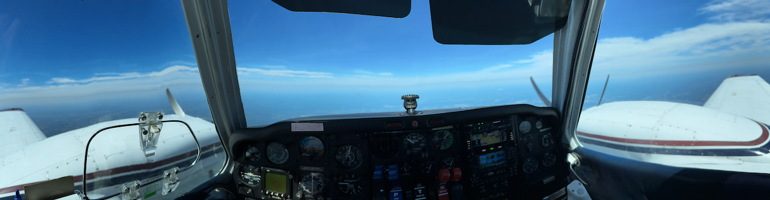
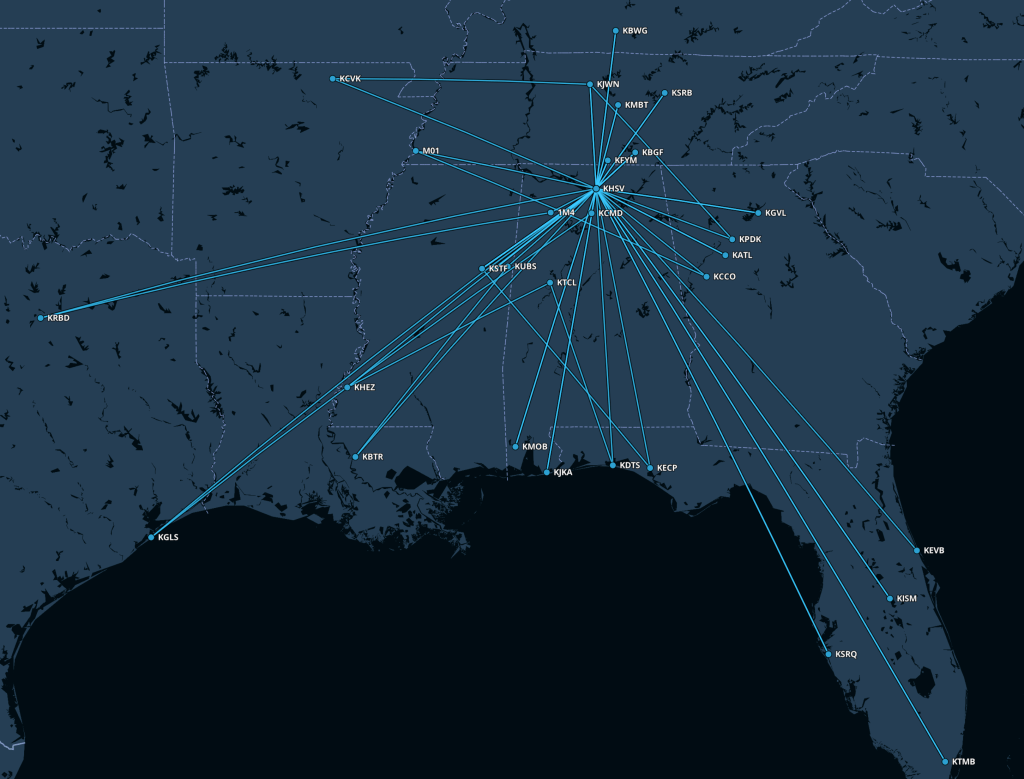


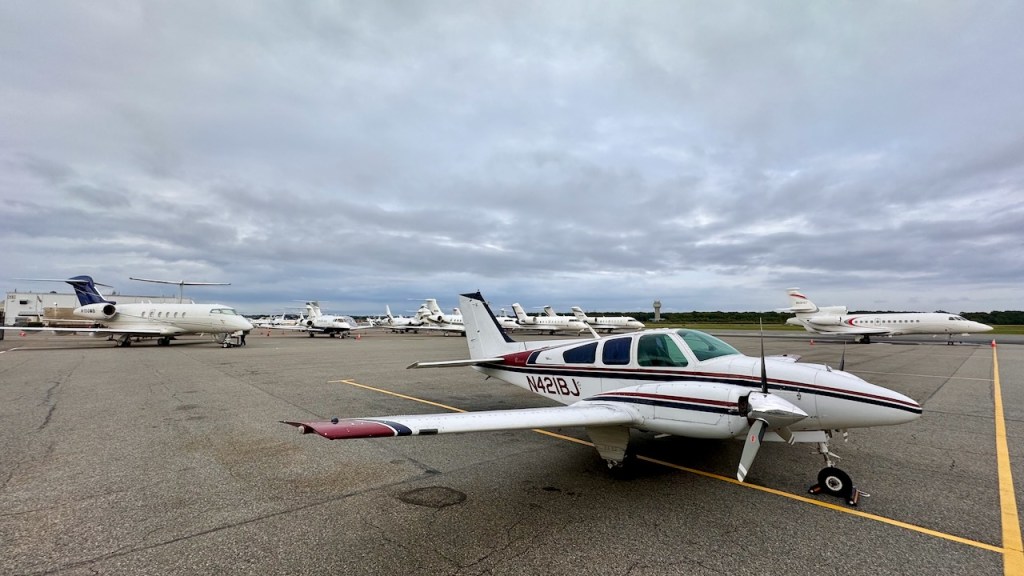

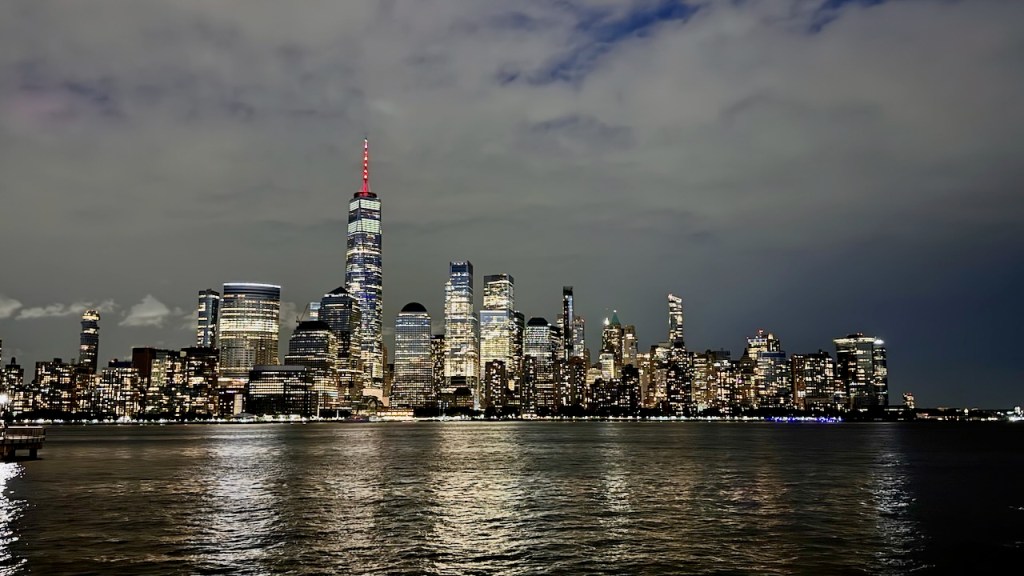

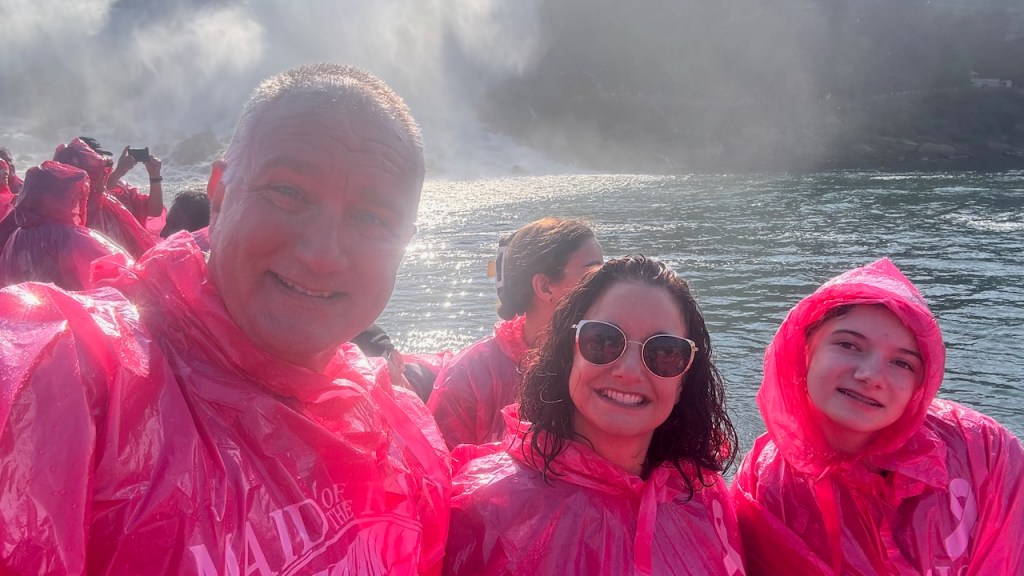
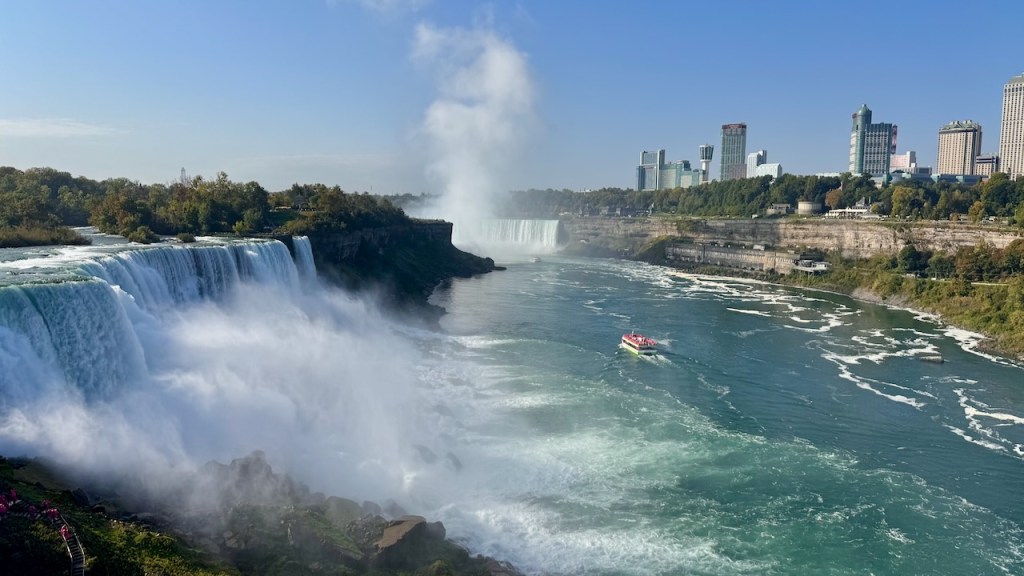

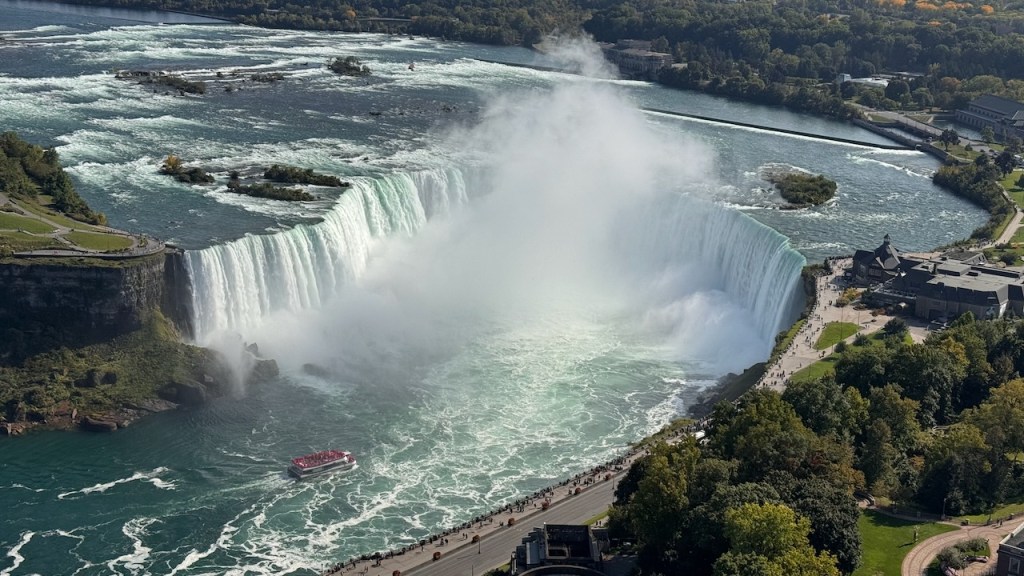


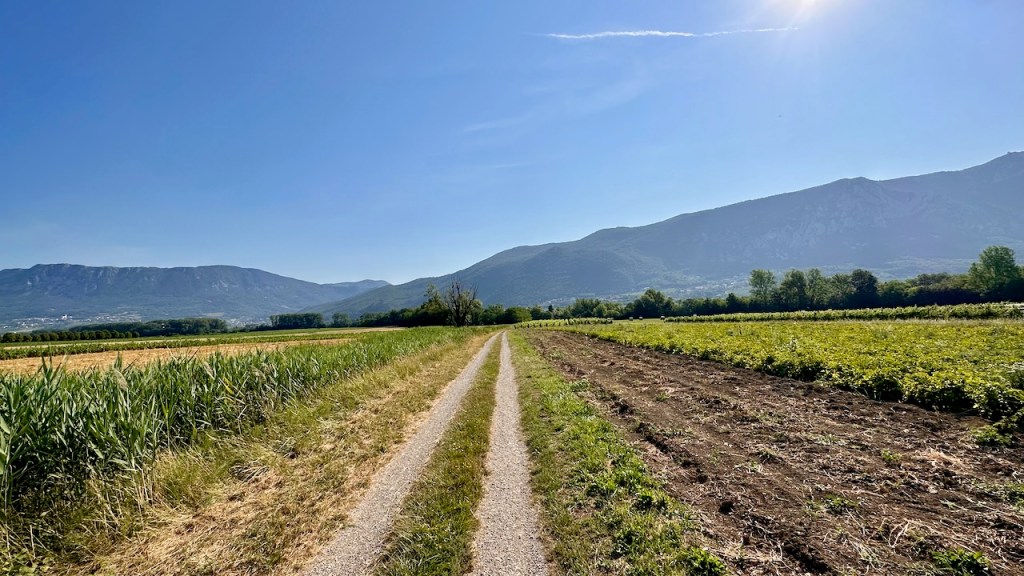


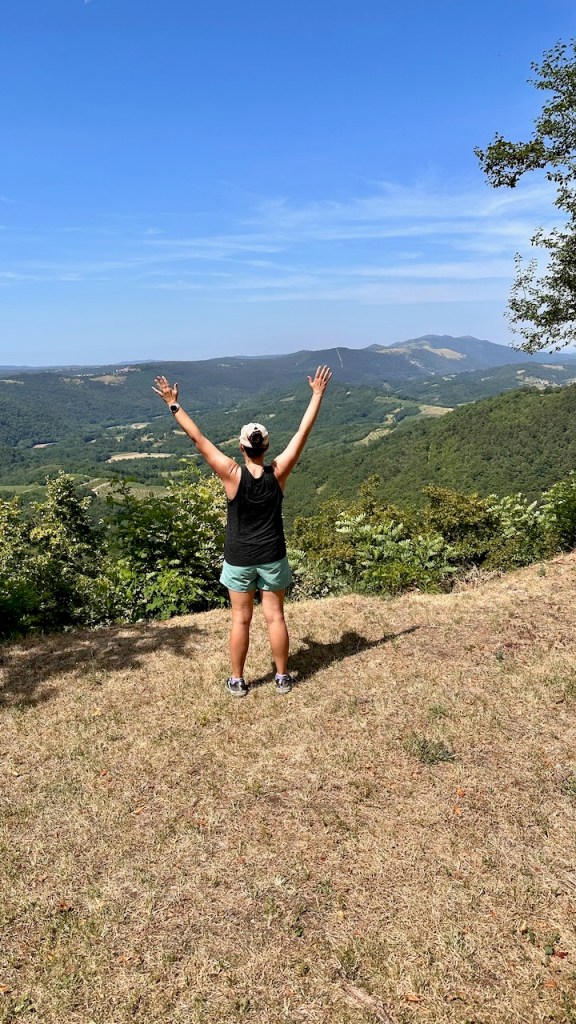
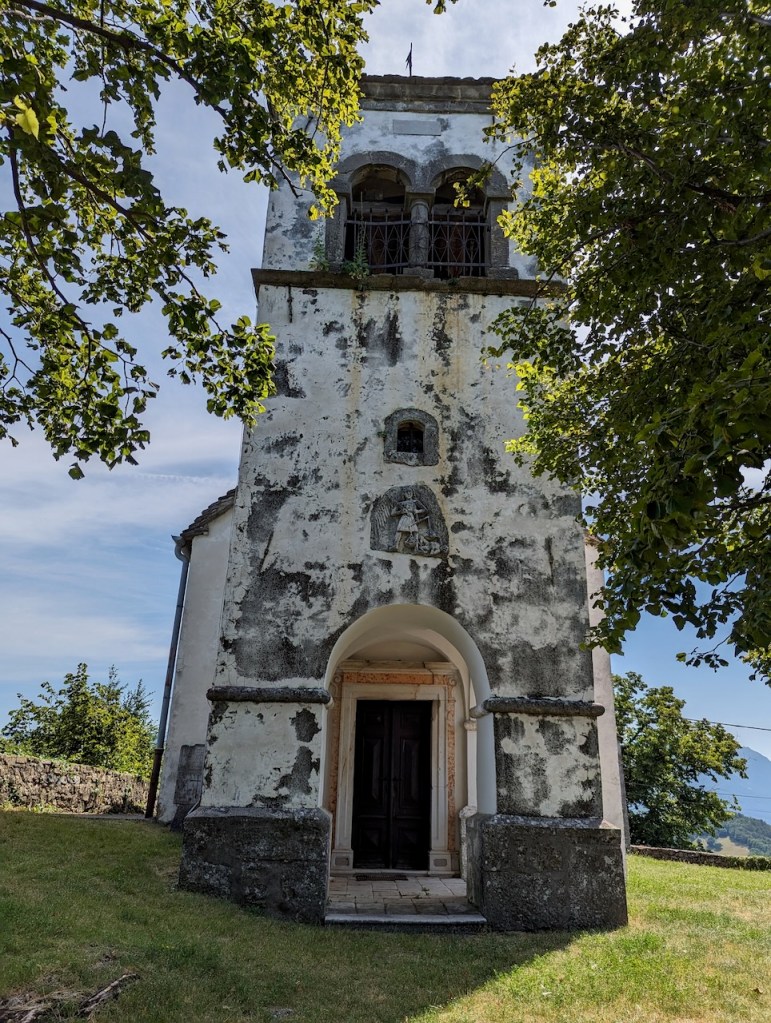
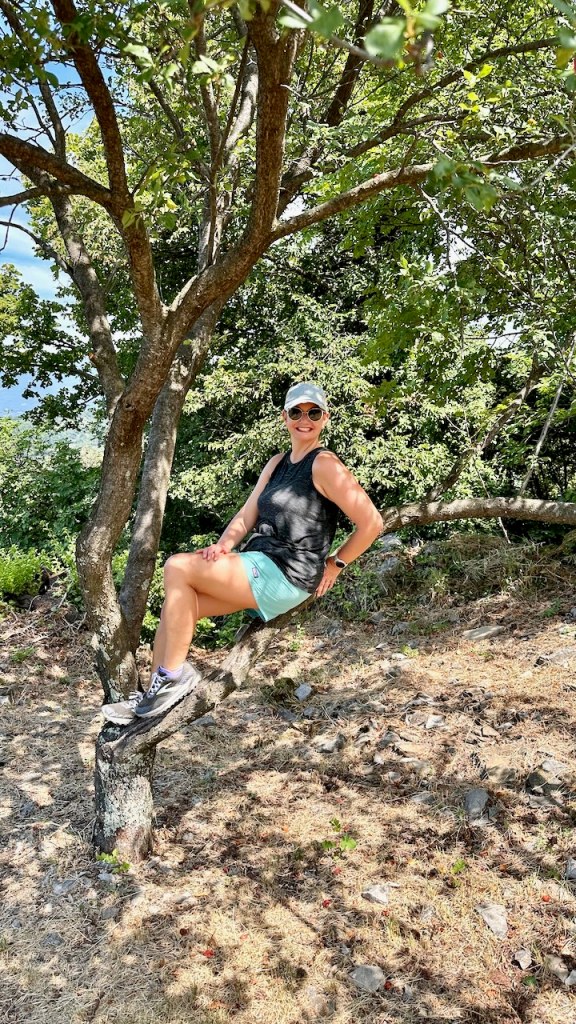

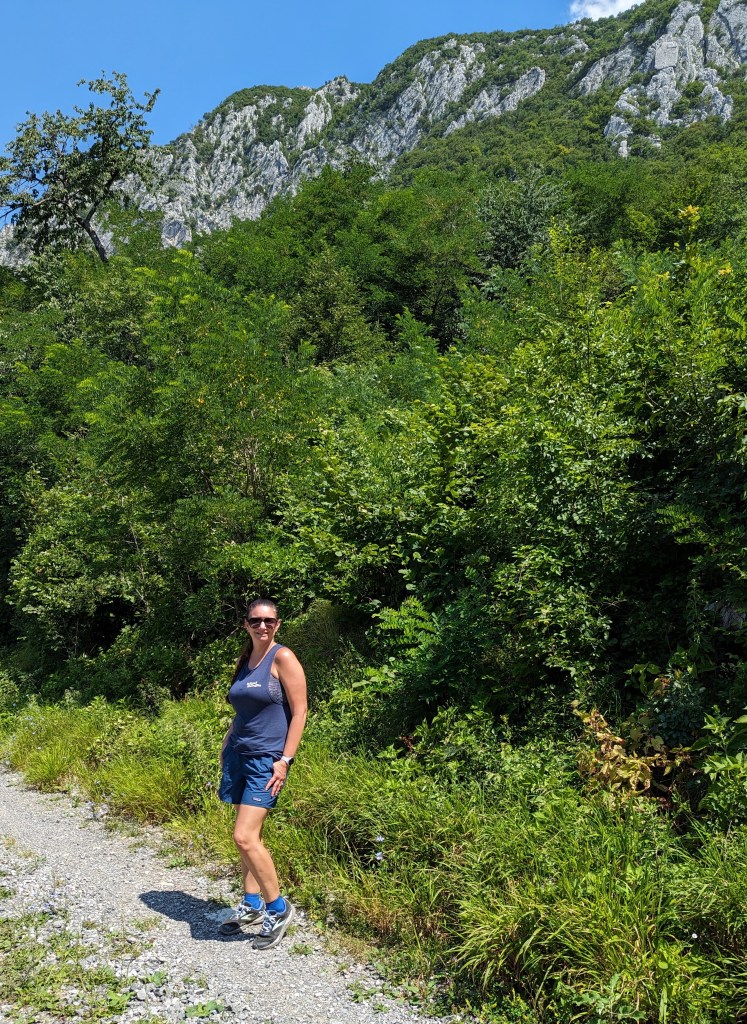
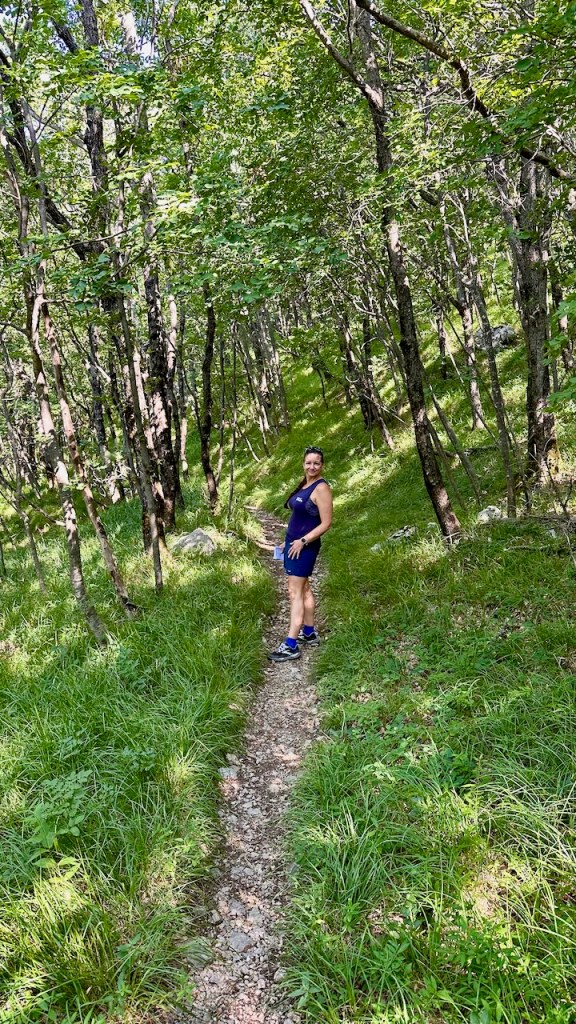
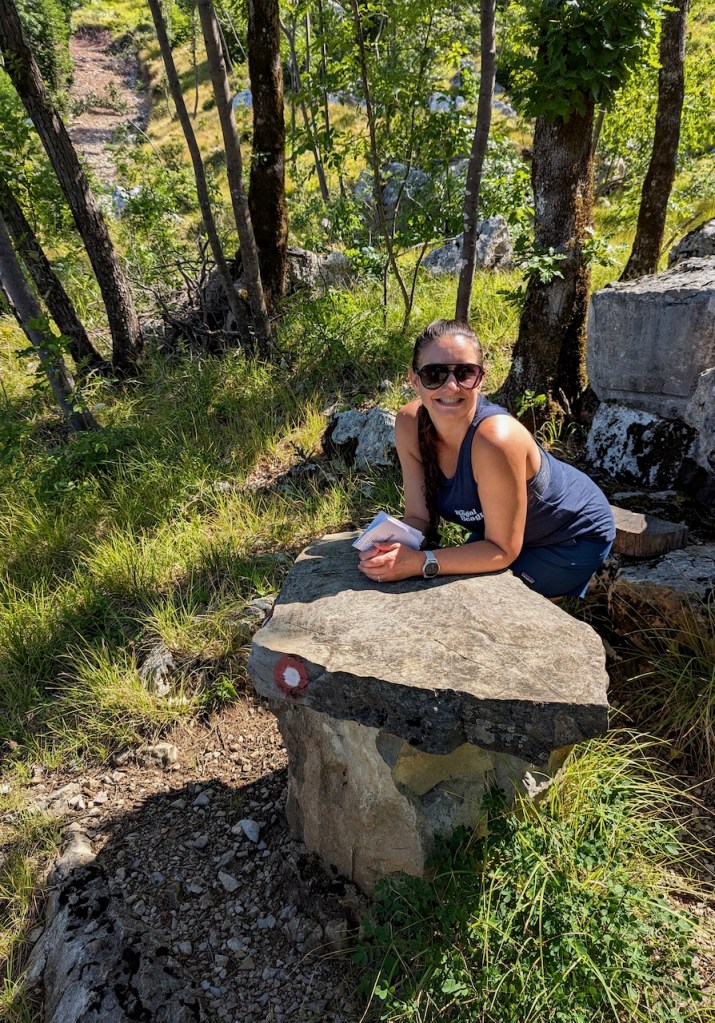
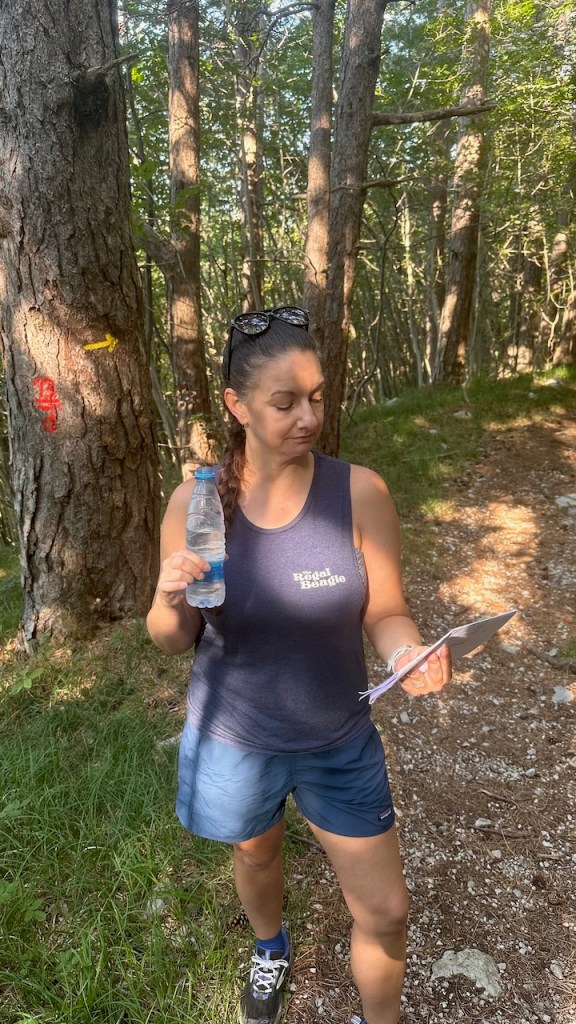
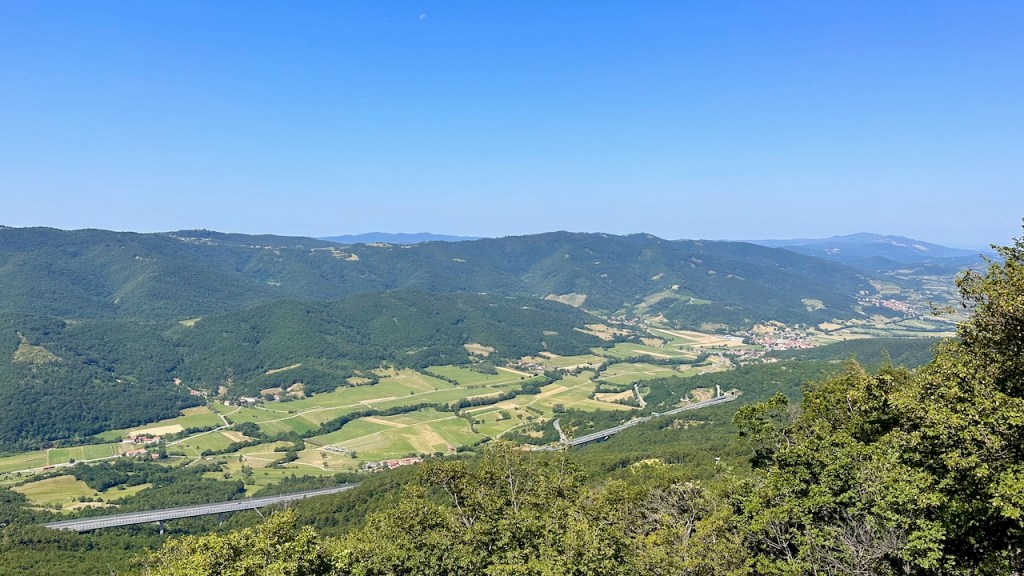


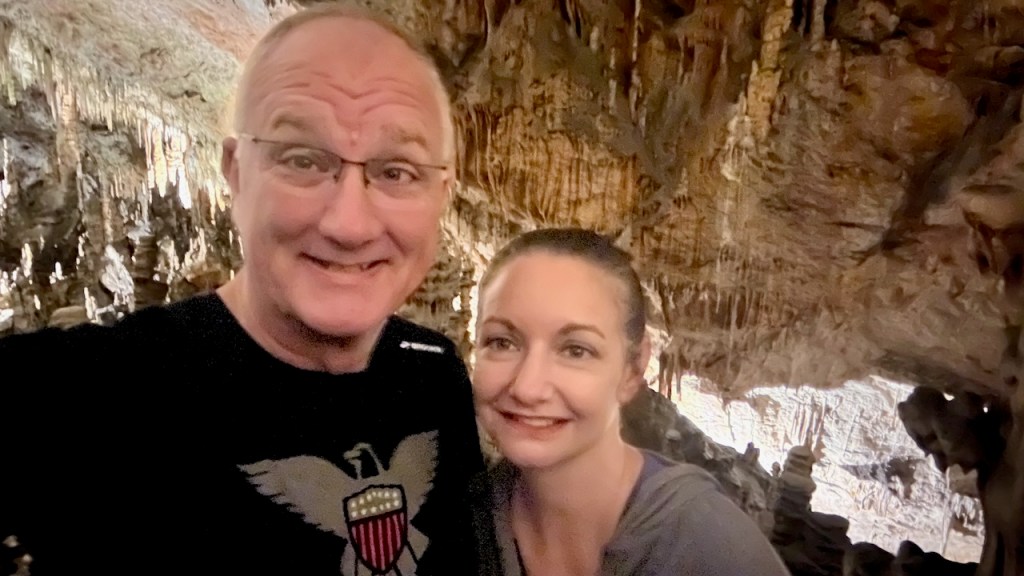
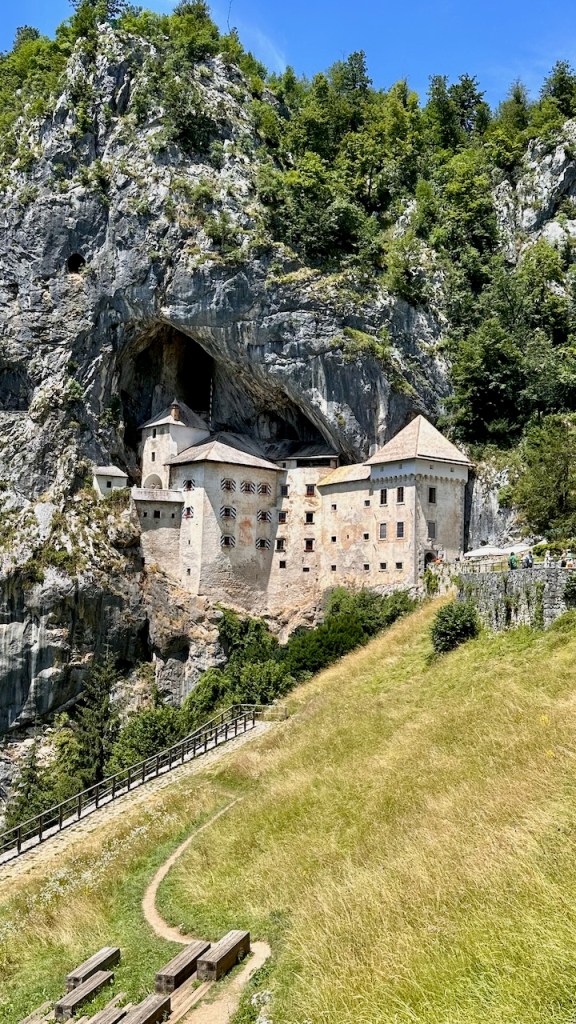
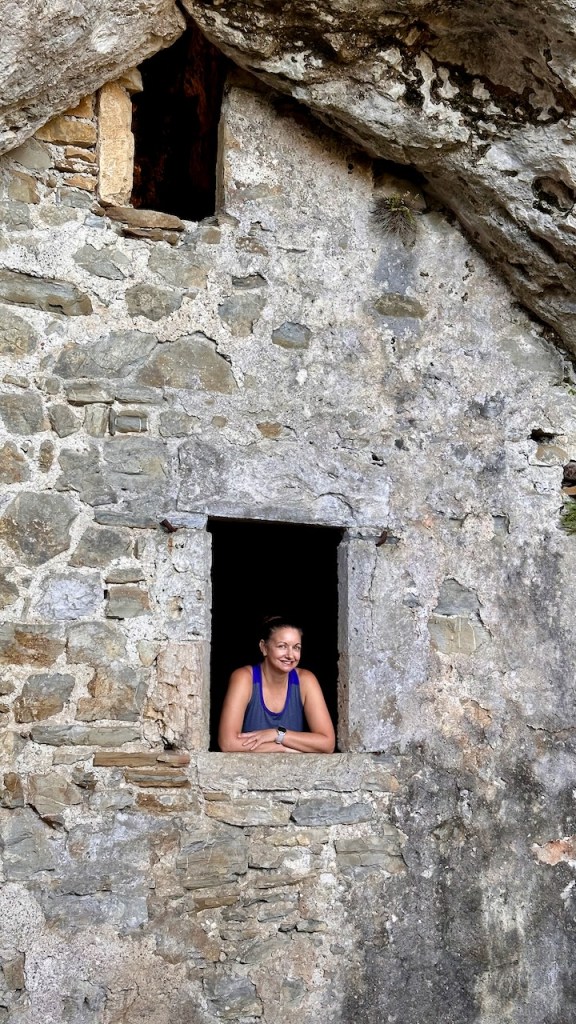

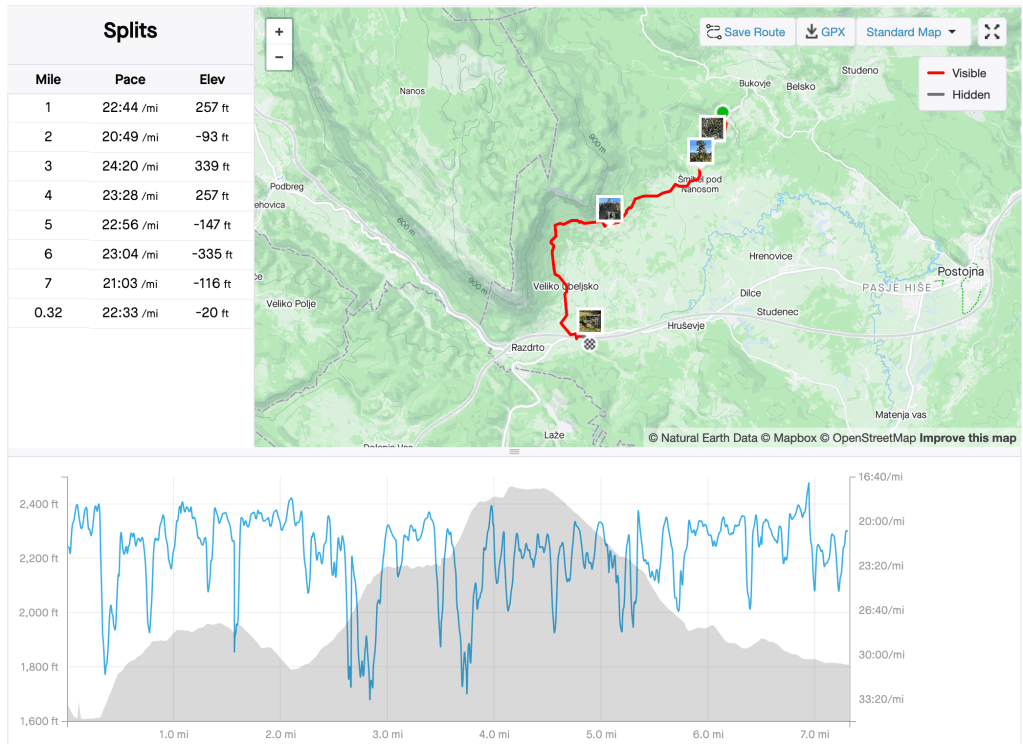

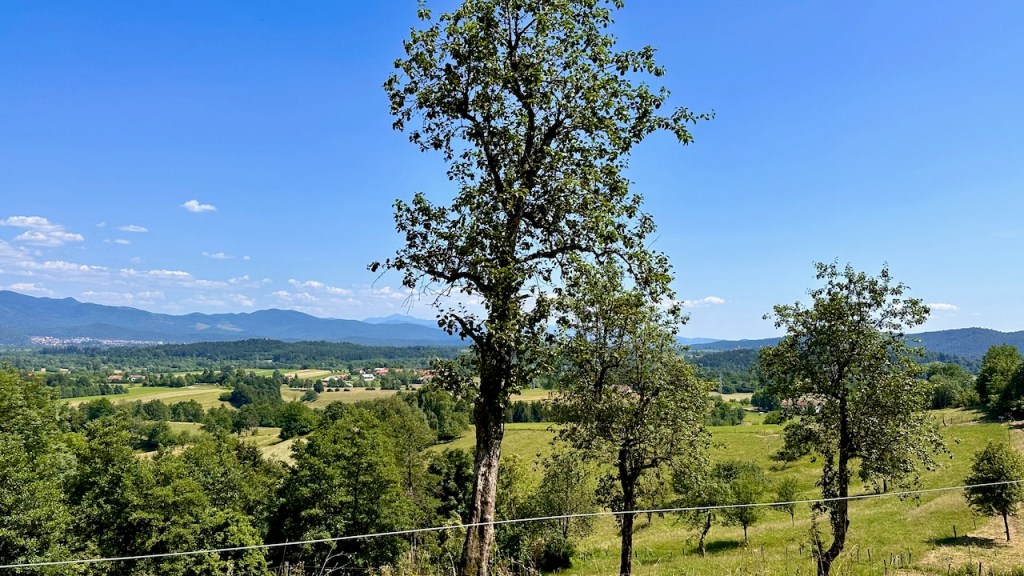


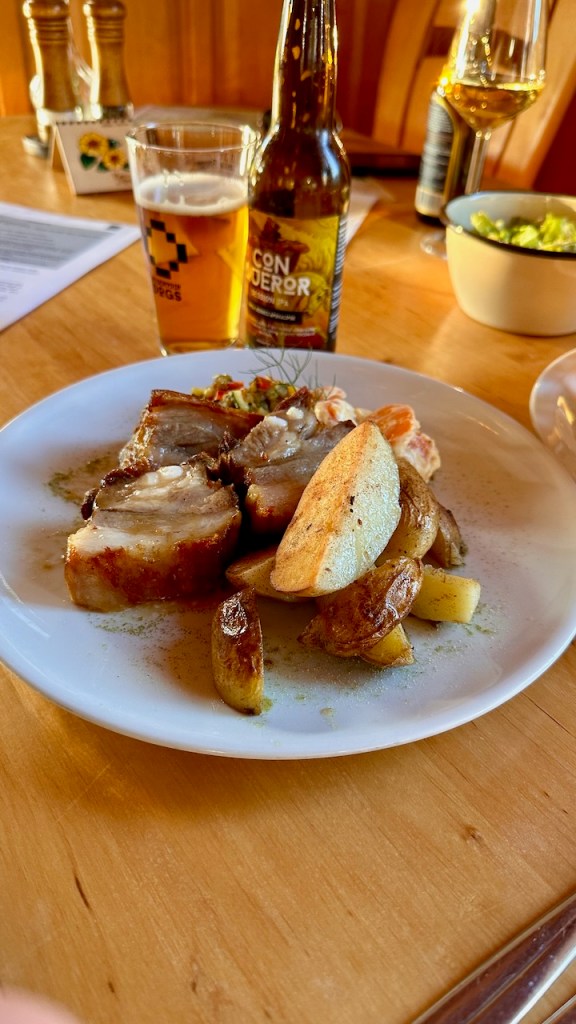


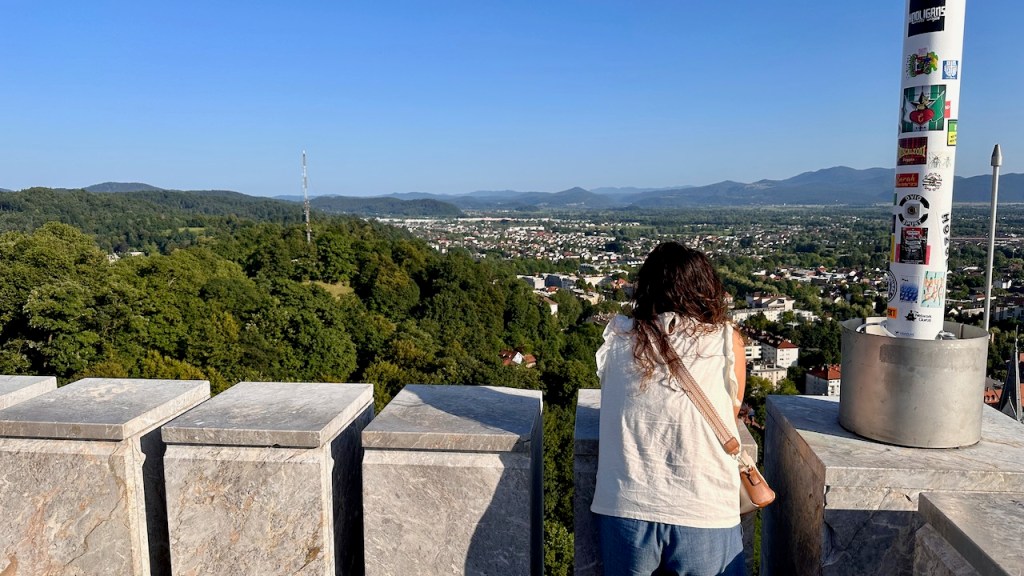


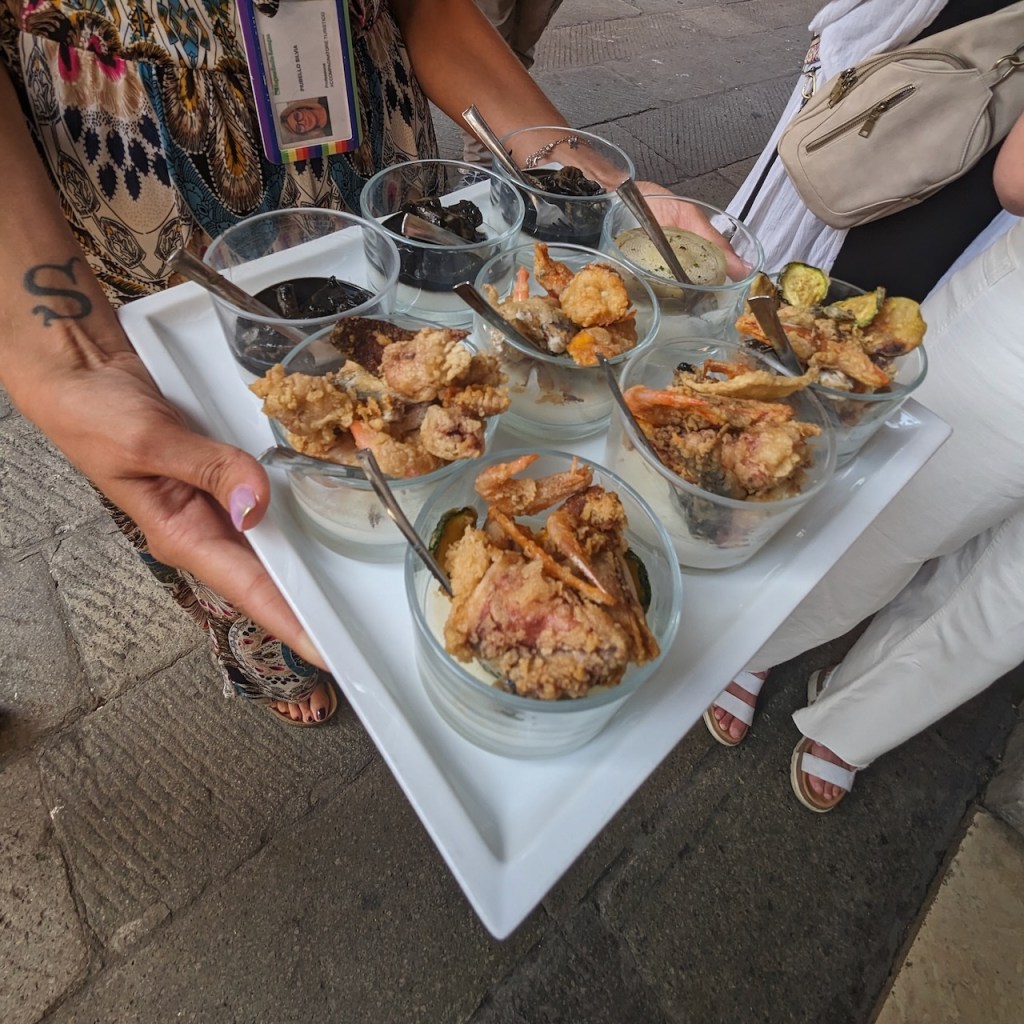


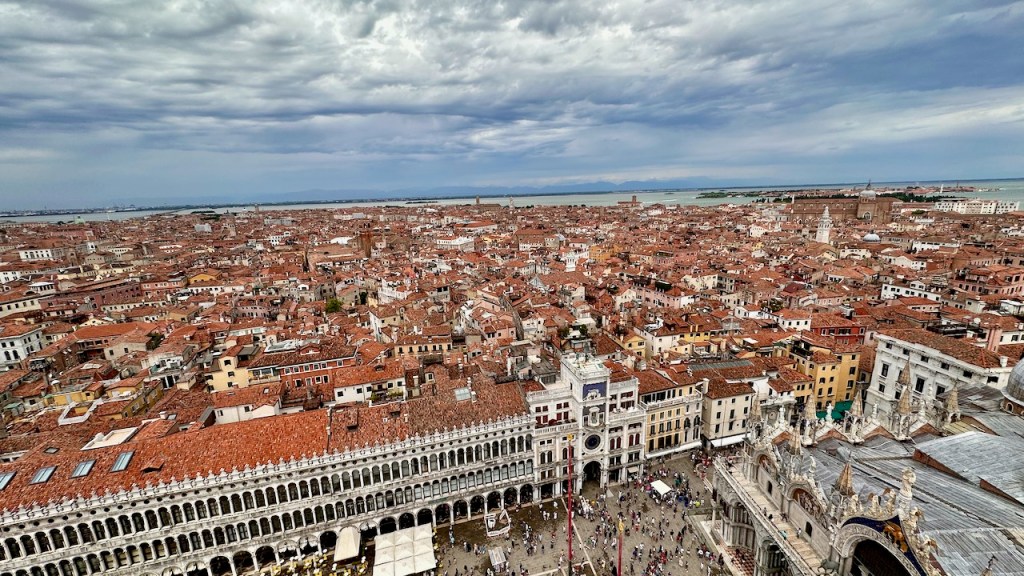
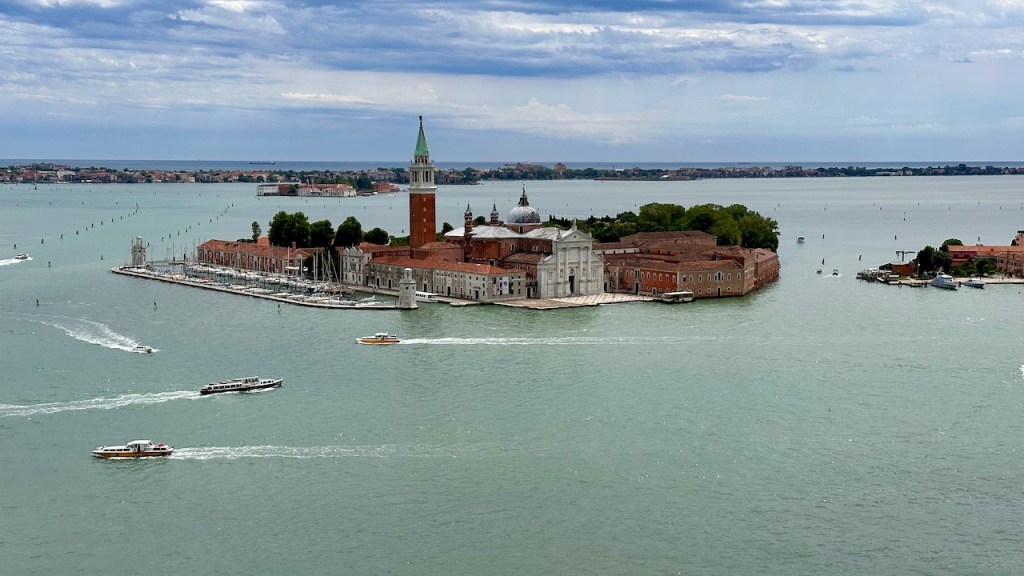
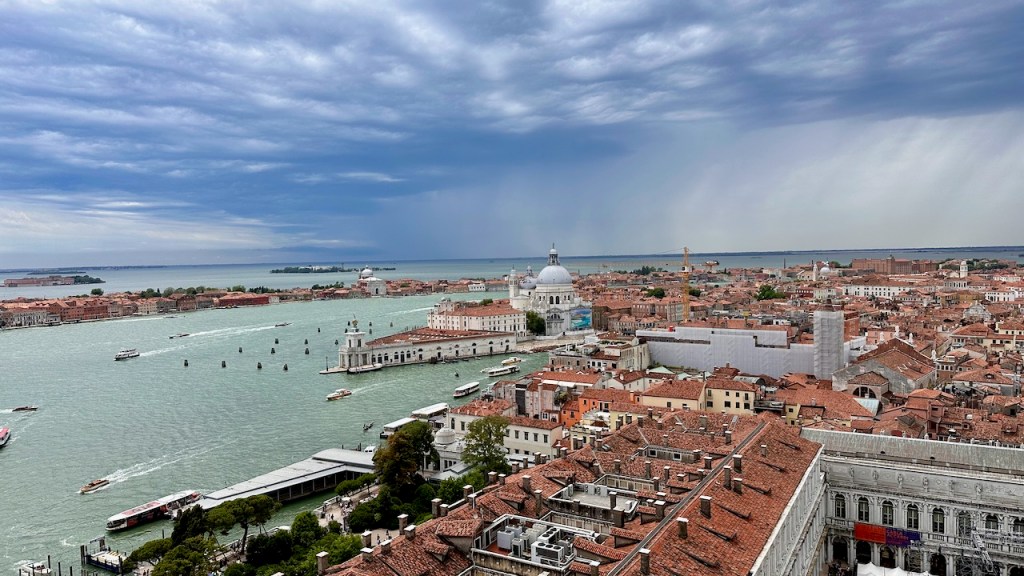

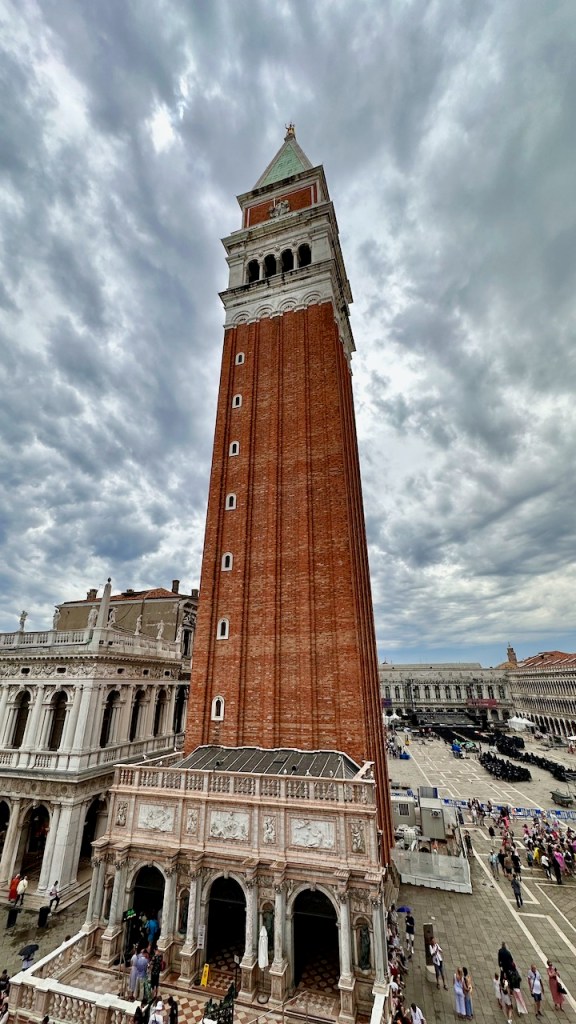
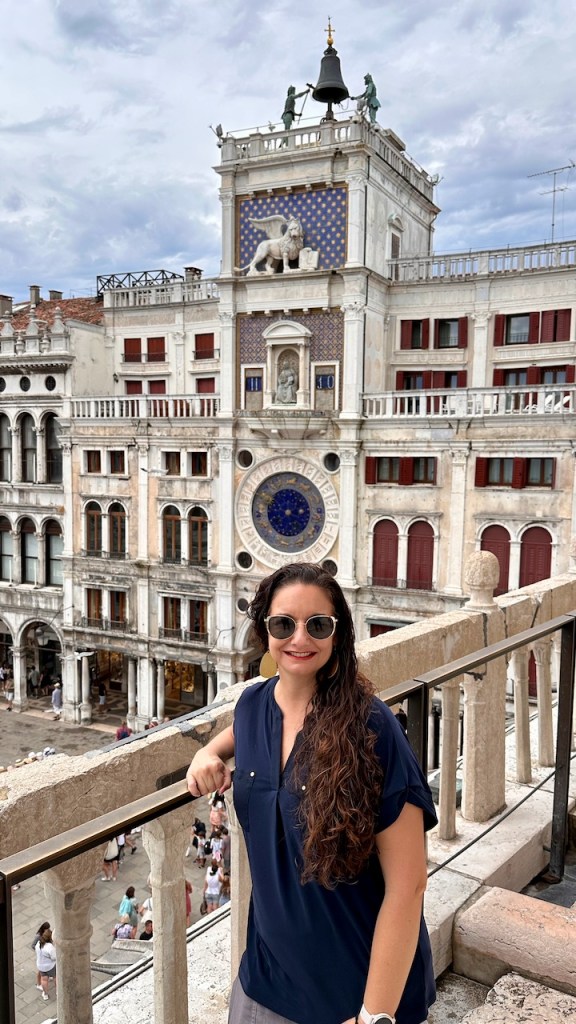
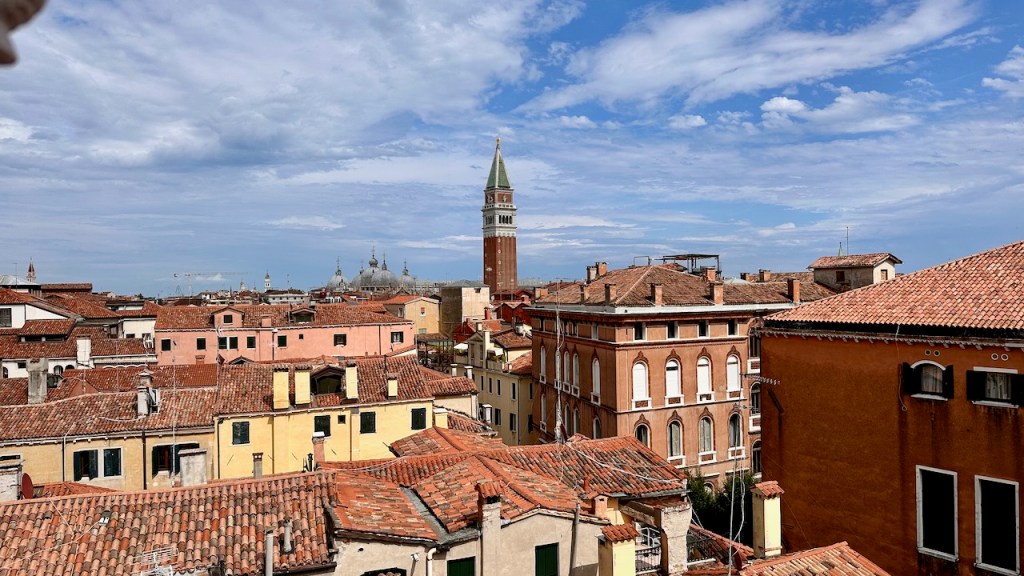


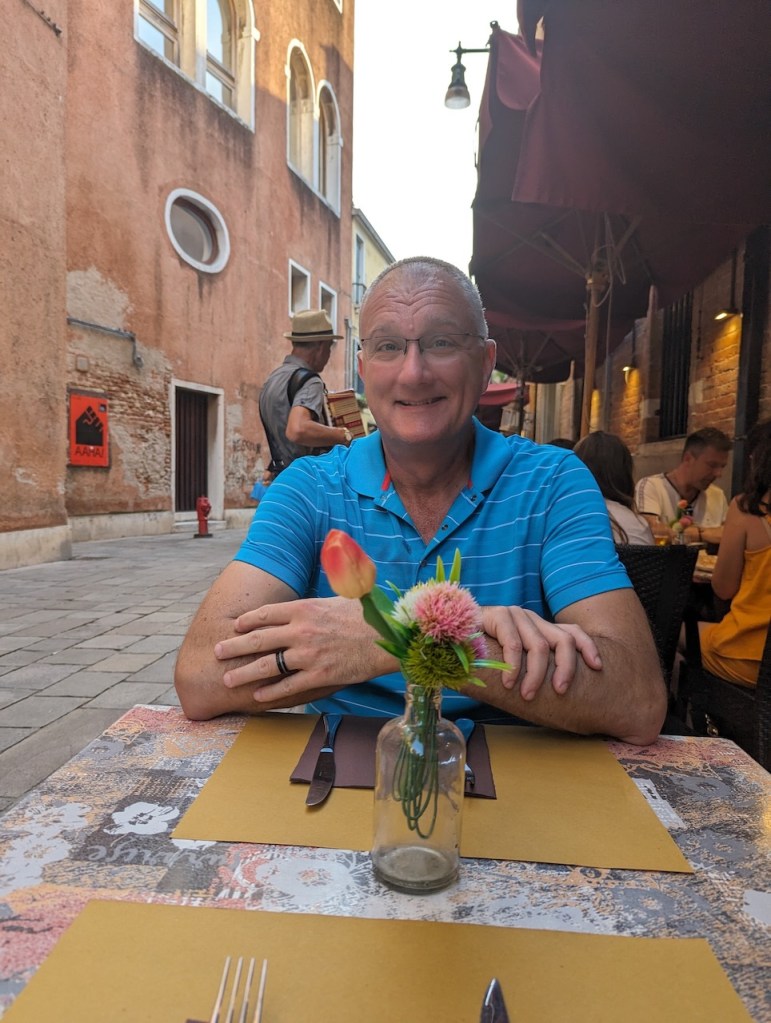


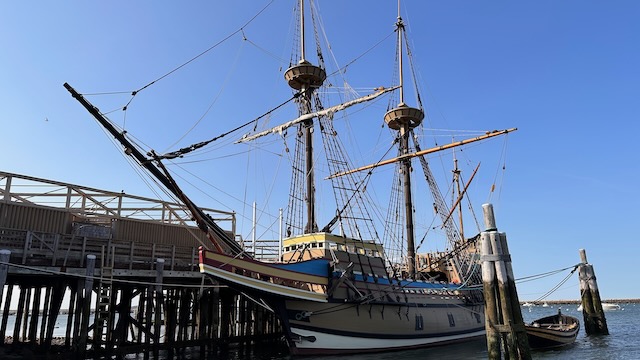


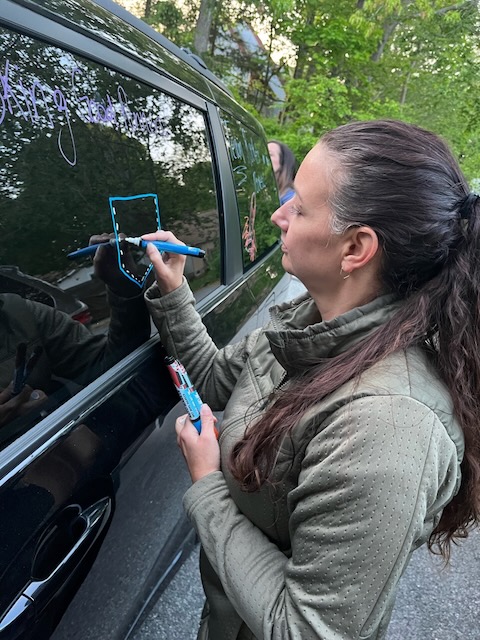


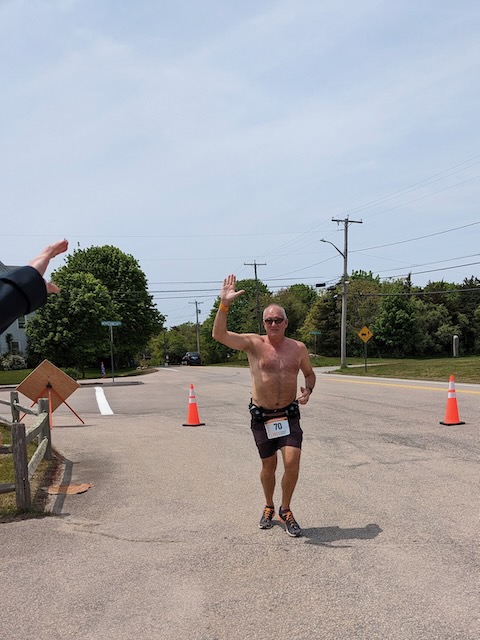

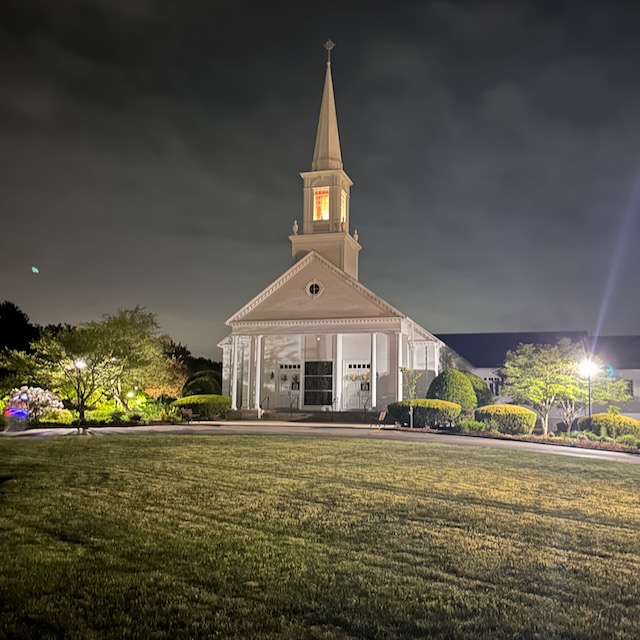
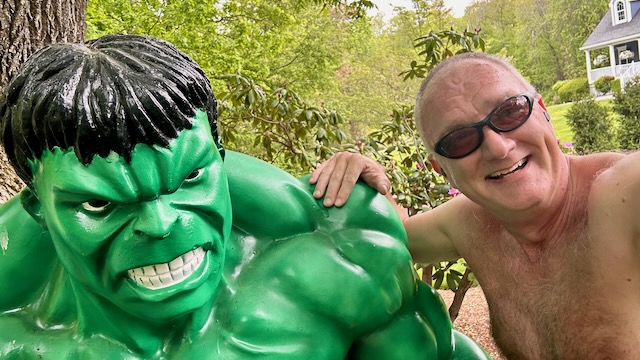


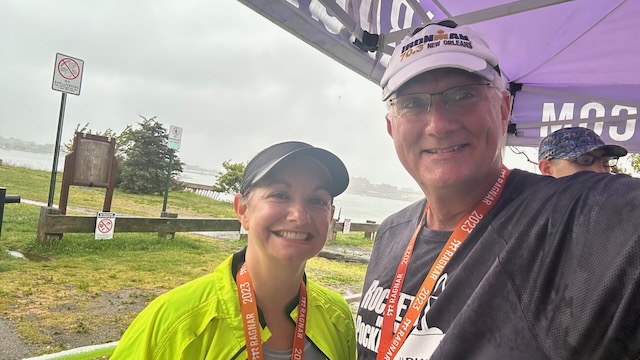

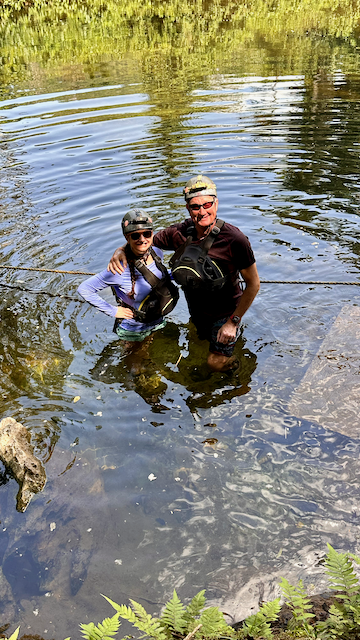


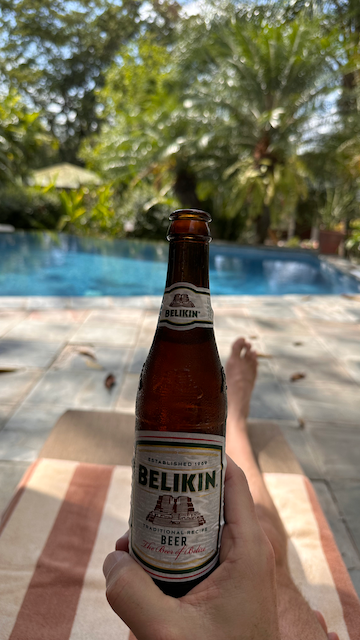

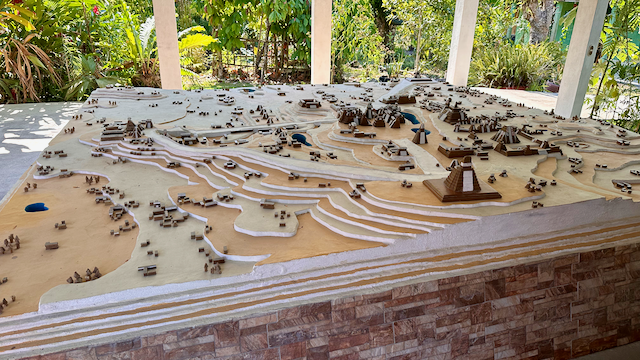

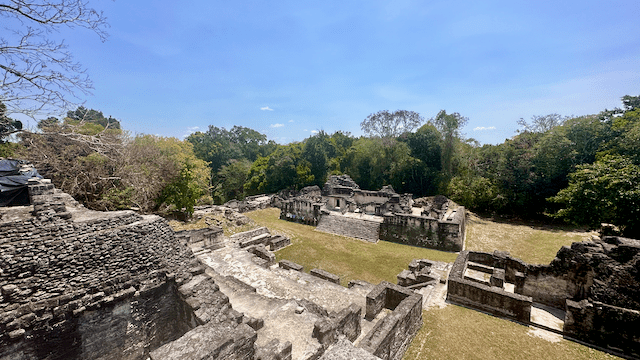


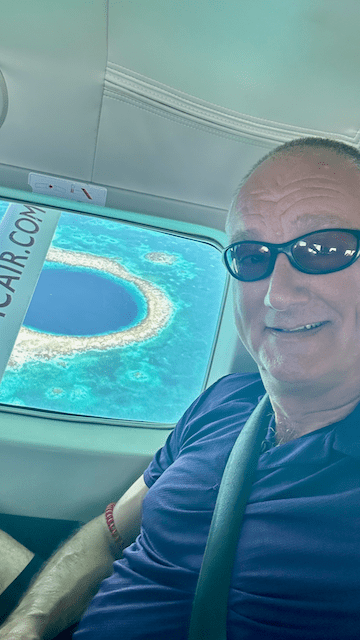
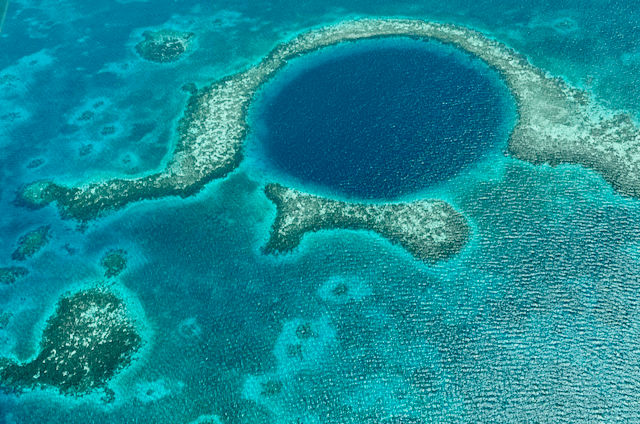


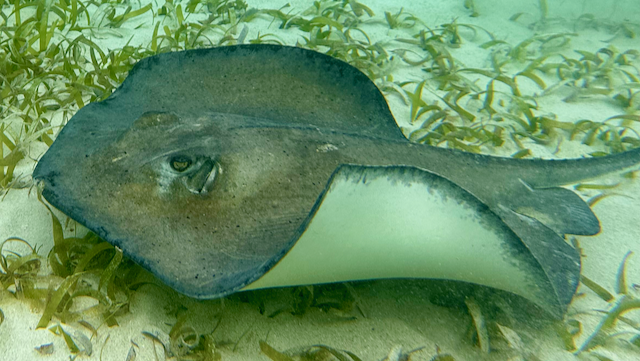


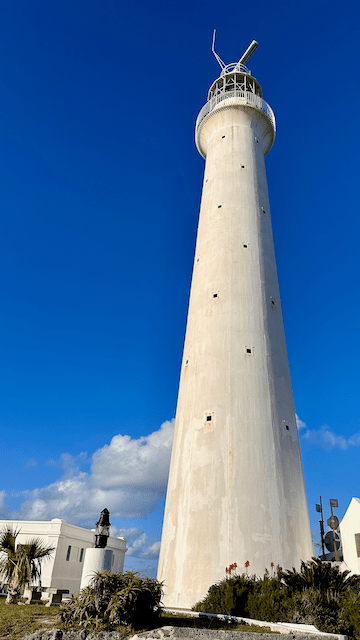
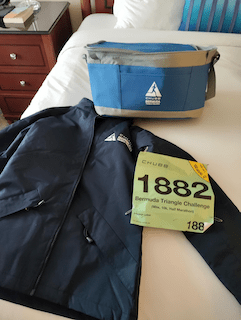
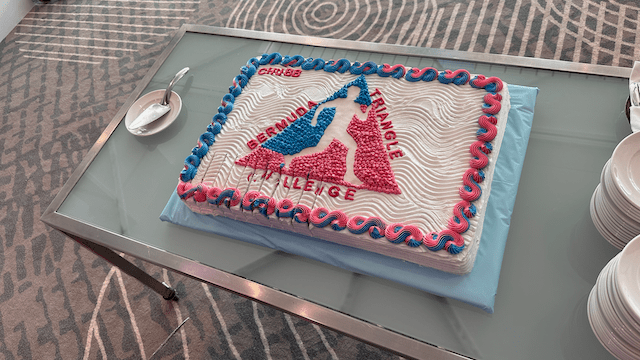
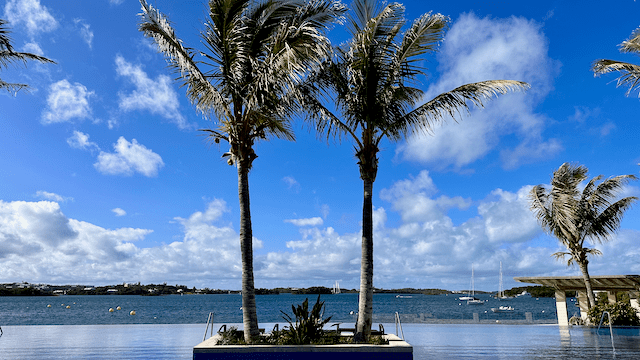

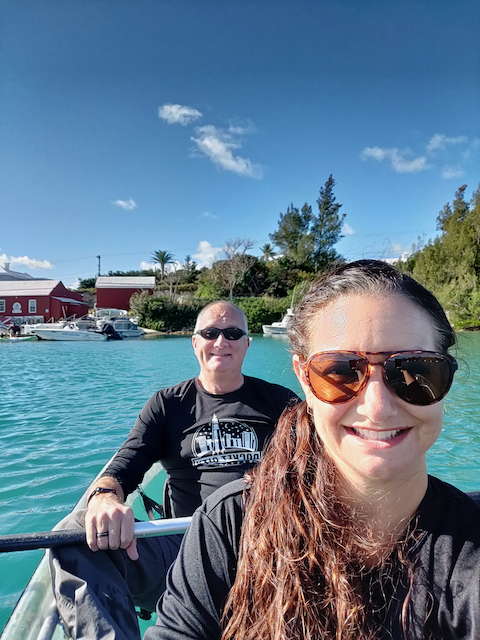
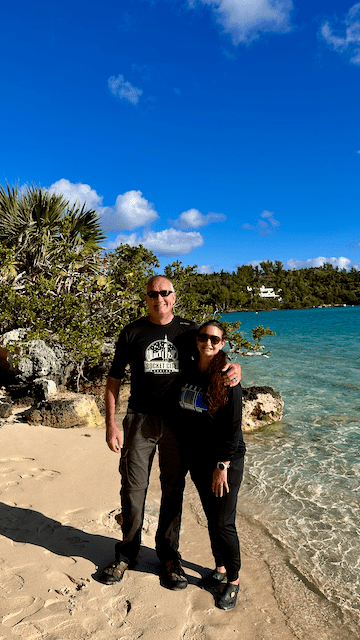

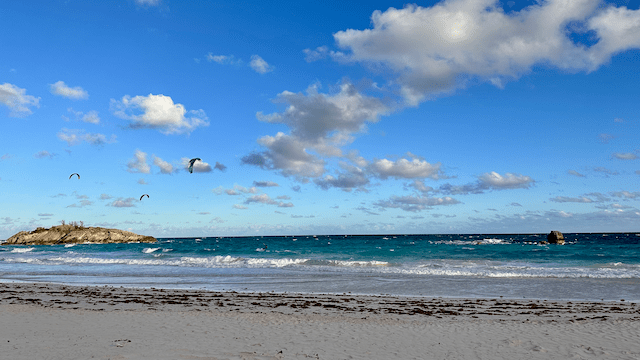


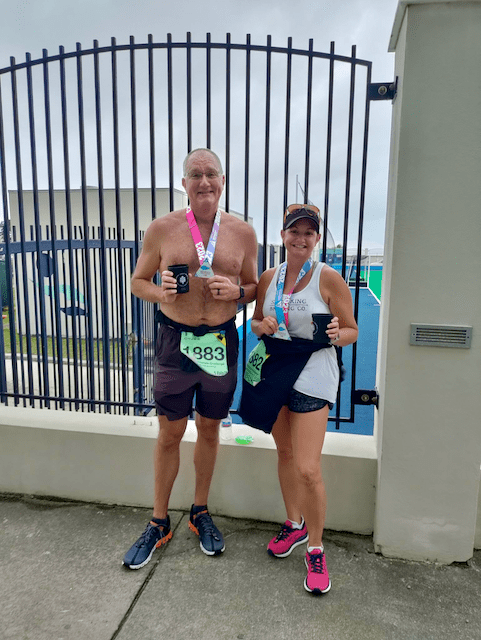
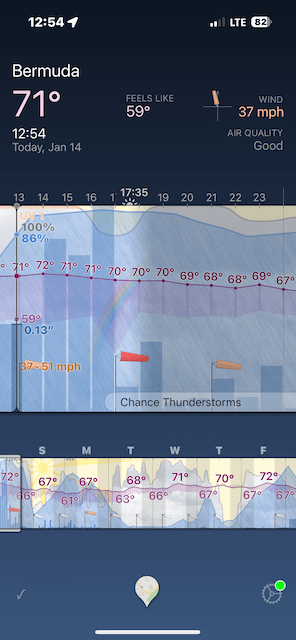
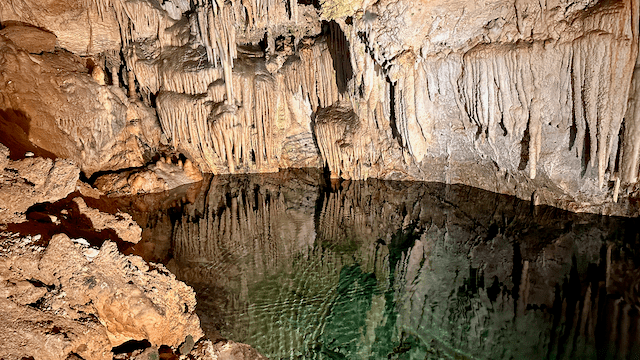
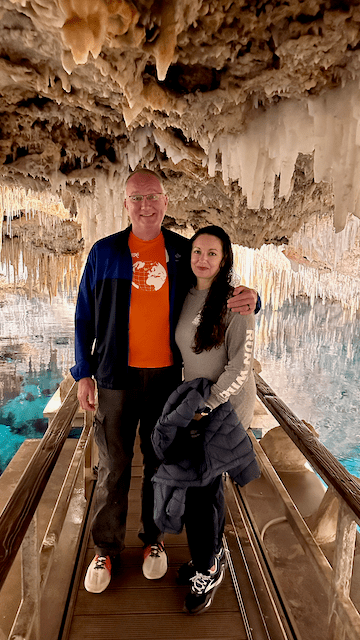


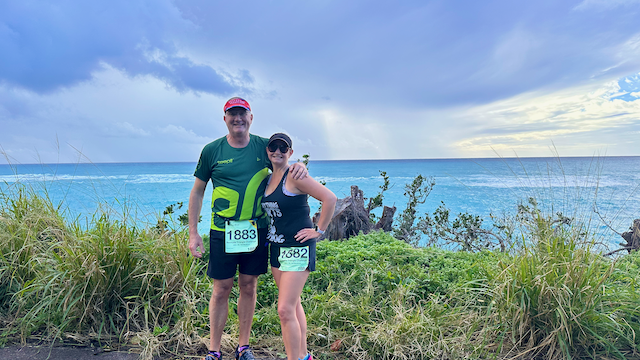
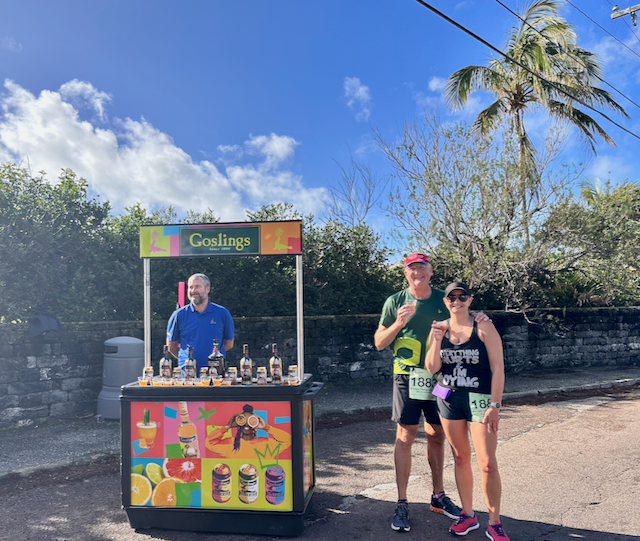


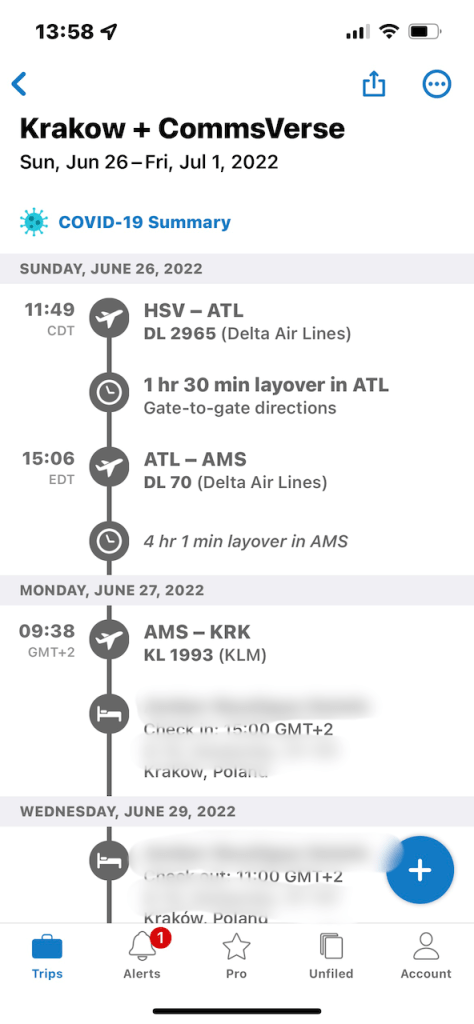






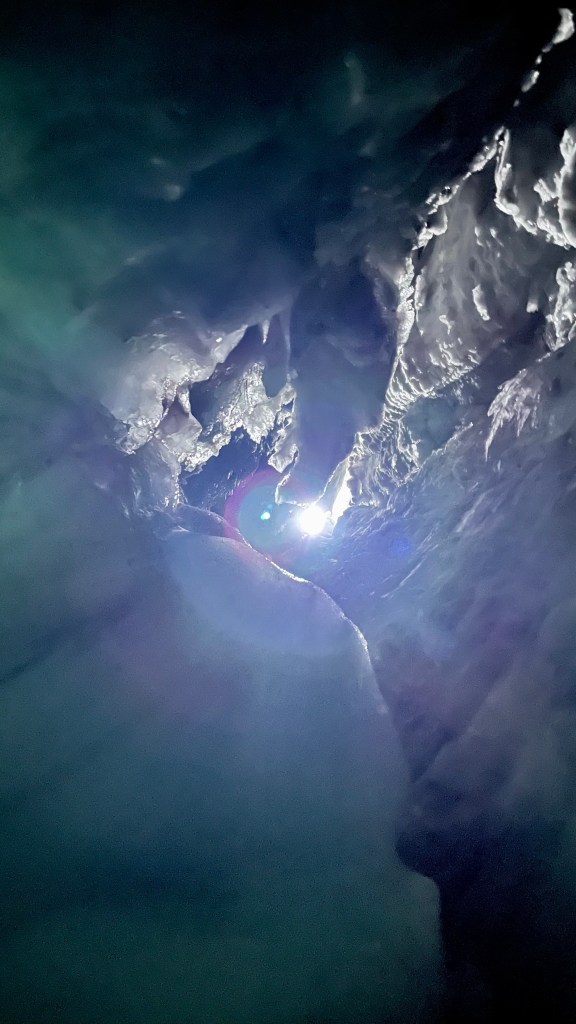


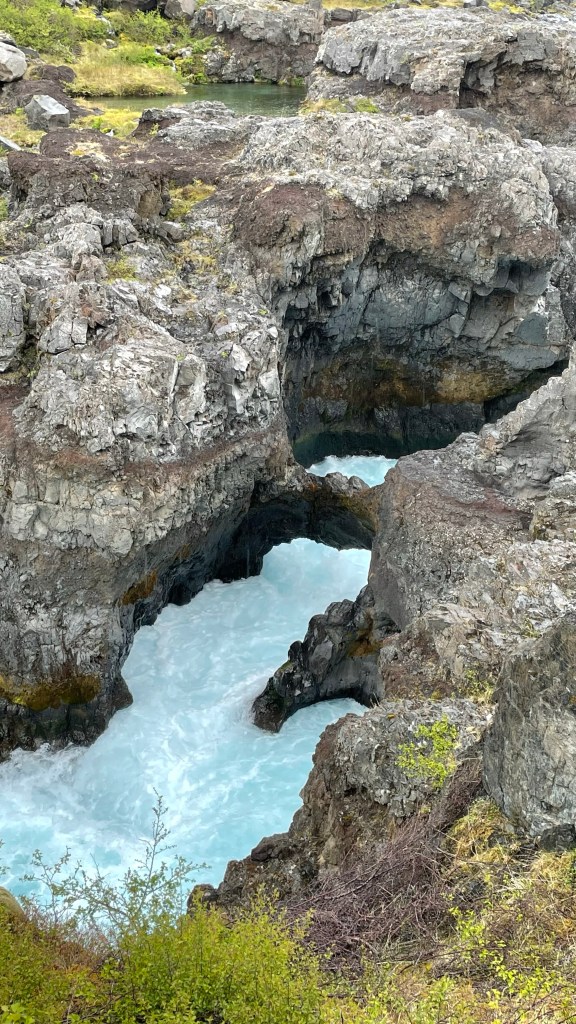


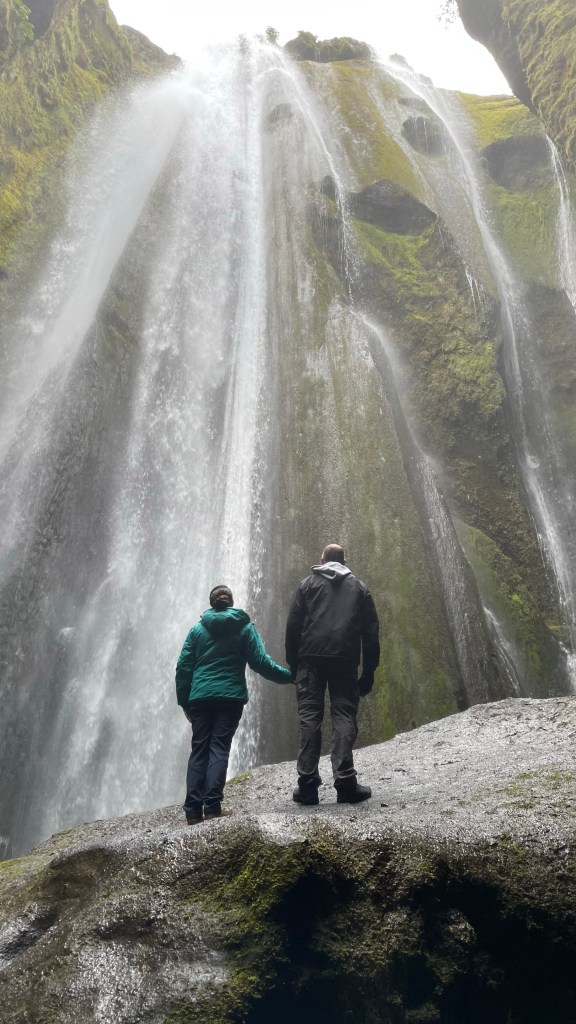


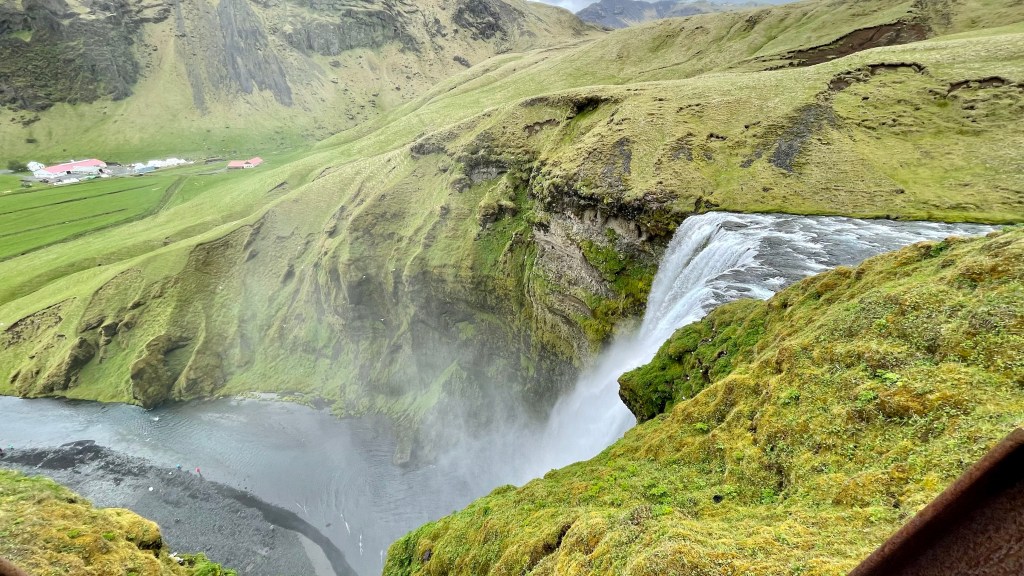

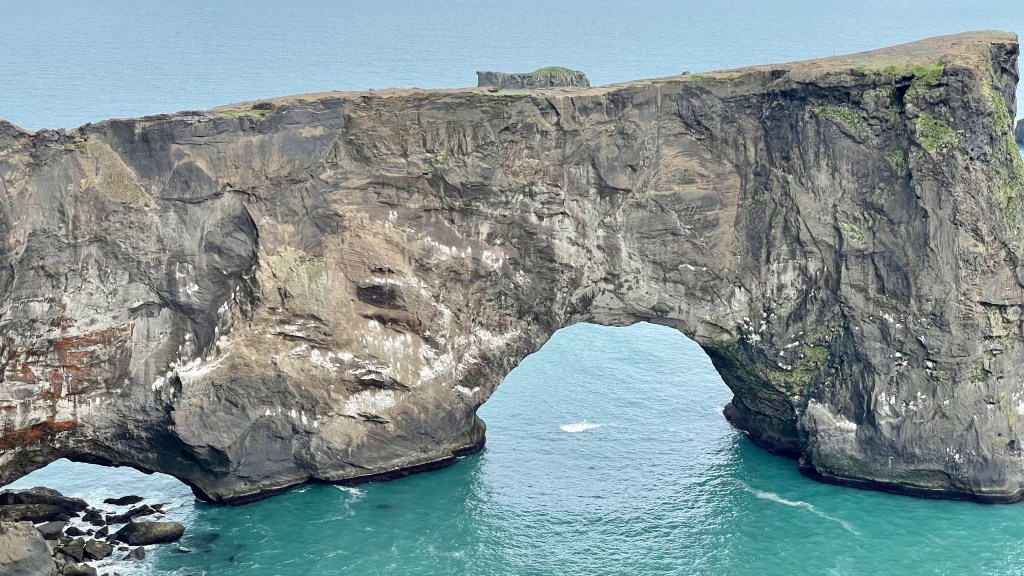


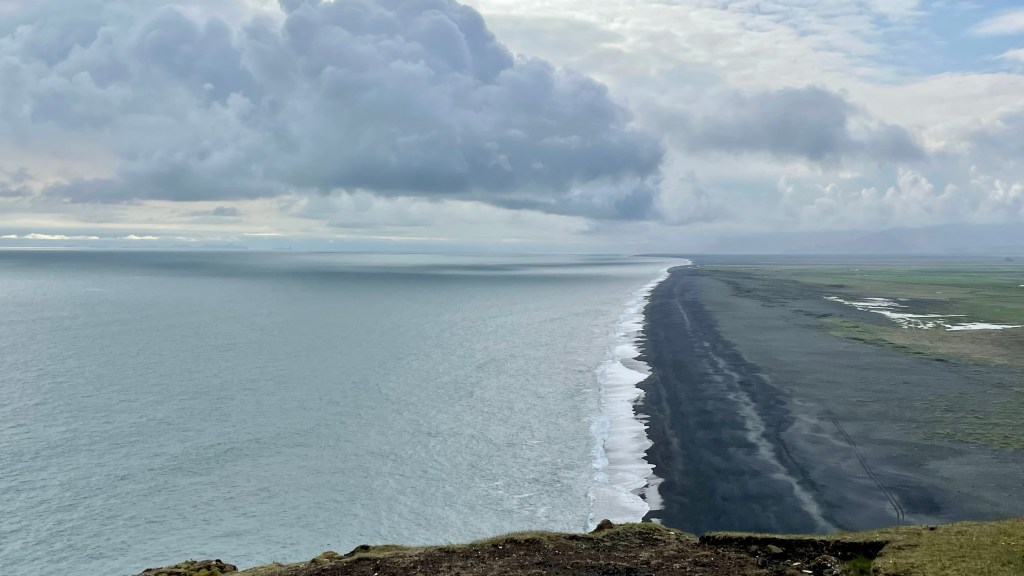

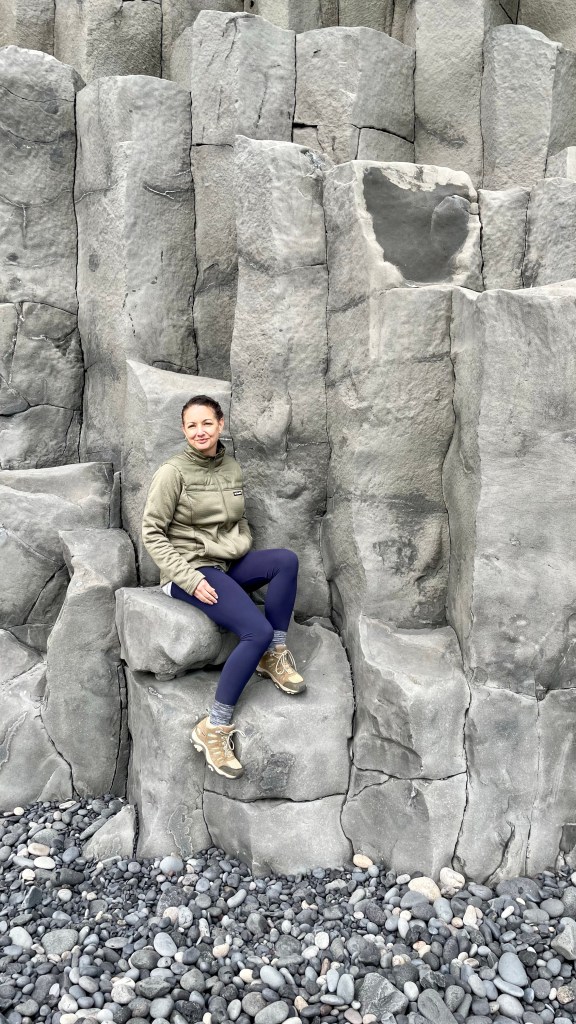




 Paul's Down-Home Page