Tag Archives: Flying Friday

PIREP: my first “real” cross-country

Last weekend I took my first “real” cross-country flight. Executive summary: this is the one of the major reason I got a pilot’s license: fast travel, on my schedule, to do things that otherwise would be prohibitive. It’s been a lifelong dream of mine, but one with a practical side.

I recently earned my high-performance endorsement and got checked out in the Redstone Arsenal Flying Activity (RAFA) Cessna 182. This plane is bigger and faster than the Cessna 172 I’ve been flying. RAFA’s C182 is an older model, and the interior shows it, but it is mechanically in great condition, and it’s nicely equipped with a moving-map GPS and a decent autopilot. It can travel at up to about 145 knots, and its endurance is about 5 hours when fully fueled… longer than mine!

All of my XC time so far has been within California (with the exception of two short legs in the Mobile/Pensacola area early on in my training). The longest leg I’ve flown so far was Palo Alto-Bakersfield and back, a distance of about 220 miles. However, all of my flying so far has been casual. This was my first “real” XC: I had a defined mission, a longer distance, a time window to hit, and all my sons aboard. I’d aborted a previously planned trip on a similar route because the weather was just awful, so I was eager to make this trip if possible.

We’d planned to depart sometime Saturday morning. The forecast was for IFR until around 11am, gradually clearing. Sure enough, the morning started with IFR here in Huntsville, with low IFR (meaning even worse weather) further to the west along our planned route: direct from Redstone Arsenal Army Air Field (KHUA) to Jackson, Mississippi (KJAN) and then on to Alexandria (KAEX). By about 1pm it had cleared enough for us to head to the airport, but actually getting there took 3 tries as various kids remembered that they forgot important things such as contact lenses.

By the time we got to KHUA, visibility had improved to around 5mi but ceilings were still 3500′, which is low but manageable. I’d planned the flight to take place at 6500′, but that wasn’t gonna happen; however, the forecast called for higher ceilings further west, and I had a brand-new Stratus aboard for inflight weather, so we fueled and launched. After takeoff, we turned west on course and climbed to 2500′, where there were a few light bumps but nothing too serious. I noticed right off that the Stratus was connected but not displaying GPS or ADS-B data. Turning the iPad’s WiFi off and back on fixed it; it did this periodically throughout the trip, so I’ll have to figure out what’s going on. About halfway to KJAN were were able to climb up to 4500′, and things smoothed out considerably. There was a line of storms about 45nm to the south of our course, but they were moving NNE fast enough so that they were never a factor. Being able to see radar and METARs for en route airports on this leg was absolutely invaluable. At every point I had a good picture of what my options looked like if I needed them. Here’s what the Stratus data looks like when displayed in ForeFlight; The airplane icon displays our position from the Stratus onboard GPS; the green and blue dots represent airport weather results (tapping on the dot displays the detailed information), and the weather radar data is just like you’d see from a NEXRAD display.

IMG 0029

We landed at Jackson, taxiied to Atlantic Aviation, parked, and went inside. Nice FBO, friendly people… but key learning #1: check fuel prices beforehand! I am used to flying out-and-back legs from a single FBO, where I rent wet, and it didn’t occur to me that there might be dramatic price differences. After filling up at $6.90/gallon (with a club rental reimbursement rate of $5.11/gal), I now know better.

After a quick snack and a pee break, we loaded back up and took off for Alexandria. We were able to stay at 3000′ until about Vicksburg, when we asked for higher. Our arrival and descent into KAEX was smooth, but I had a sterile cockpit problem: the kids were bantering and I got distracted enough to begin an approach to runway 36 when I was cleared to runway 32. I caught the mistake in time, went around, and was lucky to have an understanding controller, but key learning #2: shut your passengers up as part of your descent checklist.

We parked at Million Air. They treated us like we’d rolled up in a Gulfstream. I am now a huge fan.  Unlimited soft drinks, popcorn, and soft serve ice cream? Why, yes, thank you. We needed it because, like a doofus, I’d neglected to pack any water for the flight. Key learning #3: if you pack snacks, pack drinks too, duh.

Our visit with the family was superb; we had a feast of BBQ chicken, got some great visiting time in with my mom, grandmother, uncle, and cousins, then got a good night’s sleep. Sunday we just relaxed and visited, at least until the 32 pounds of boiled crawfish arrived. After a delightful meal underneath a big tree in the backyard, it was time to head back to Million Air.

I’d planned a single leg back, without the Jackson stop, but on preflight noticed that the oil was lower than I’d like, and none of the Alexandria-area FBOs had 15W50. That necessitated another stop, and since I was familiar with Jackson I planned to stop there. (Key learning #4: carry spare oil. ) This worked out OK because the kids all needed a bathroom stop. I had filled up with fuel at Million Air ($4.81/gal), so I didn’t buy any fuel at Atlantic… so they charged me $20 for stopping by. I don’t think I’ll be back.

Coming back we were able to fly at 3500′ to just east of Alexandria, then 7500′ from there on out. Great, smooth ride with a beautiful view of the Mississippi River crossing, the flooded bottomlands near it, and all sorts of farm and agriculture happening beneath us. I started teaching David how to work the radios, and he did a creditable job (although I think there are some guys at Memphis Center wondering what kind of aircraft a “Skyliner” is).

I used the return legs to get some practice in driving the 530W and the autopilot; I am used to flying a G1000/GFC700 172 so the knobology is quite different. This particular 182 doesn’t have electric trim so I had to do a bit of trim wheel judo to keep the autopilot happy in altitude hold mode but it was good practice. While I love hand-flying, learning to use an autopilot effectively, in the right modes at the right times, is critical to safe single-pilot IFR operations, so I want to start getting better at it ASAP.

The eastern approach to KHUA crosses several restricted areas (some for drone flights, some over propellant storage areas), so we had to turn north, fly past the Decatur airport, then remain north of I-565 until we passed Huntsville International. We landed, refueled, hit Taco Bell, and poof! A trip for the books. 

The 182 burned about 13gph and gave me an average groundspeed of 133kts over 7.5hrs on the meter. While this isn’t exactly exciting compared to faster aircraft, it beats the hell out of driving, and it let the four of us deliver a great Mothers’ Day surprise. The kids enjoyed the visit and tolerated the cramped quarters pretty well, so we’ll be doing this run again soon.
Leave a comment

Filed under aviation

Taking pictures in the air

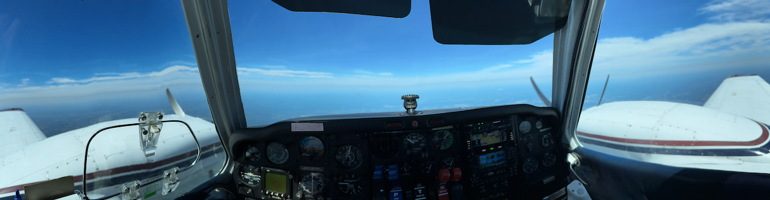
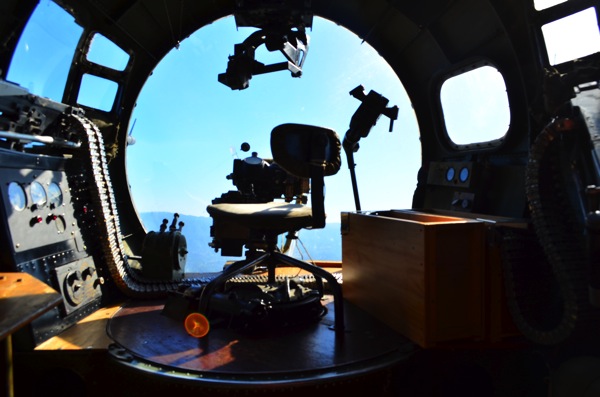
Last week, Doug Mahugh posted this great blog entry on taking pictures from commercial airplanes. He’s done some excellent work. I don’t usually take my real camera on commercial flights, but I think I’m going to have to start. In the meantime, here are two of my favorite airborne pics. I have some other great ones but my iPhoto library is so disorganized that finding them would take more time than I can spare at the moment.

DSC 0251 

the business end of a B-17


DSC 1188

en route to Petaluma; that’s Alcatraz in the foreground


Leave a comment

Filed under aviation

“There is always room for improvement” in aviation

Bonus double Flying Friday post today. Why? Because this article is too good not to share.

…these NASA pilots were always at 350 when needed. It wasn’t 349 or 351. They always flew on-speed. For me, sitting in the backseat for my first couple of missions in ACTIVE, a whole new skill level was revealed. They flew this way all the time. They were always on parameters. They were always on-altitude. No 34,900 ft or 35,100 ft for them. It was 35,000 ft and not a foot higher or lower.

The author goes on to talk about how this precision inspired him to fly more precisely– “Why not,” he asks, “endeavor to fly as perfectly as possible? In fact, why not endeavor to fly as well as you possibly can all the time, versus ‘just good enough’?”

Exactly. That’s what I want, and what I try to do.

1 Comment

Filed under aviation

Dealing with partial loss of power

Andy, my primary flight instructor, has always described a pilot’s license as “a license to learn”. This may sound trite, but it’s true… if you’re doing things the right way.

This week’s FLYING LESSONS newsletter contained an interesting factoid: the Australian Transport Safety Bureau says that partial loss of power is three times more likely than complete engine failure. After reading the report, I am forced to agree with Thomas Turner that partial-power operation is under-taught; I know that in my relatively limited experience none of the instructors I’ve flown with mentioned how to deal with it or even how to recognize it.

Recognition, of course, sounds like it should be pretty easy: is the engine making as much power as it should? In a car, you can tell by your forward speed and/or acceleration: does the car accelerate normally when you push on the accelerator? There are also audible cues that may tell you whether the engine is working normally. In an airplane, the same audible cues may exist, but airspeed and climb performance are just as useful as the sounds you hear. If you have fancy engine instrumentation, then it may give you information such as cylinder head temperatures that tell you what’s going on.

The ATSB report calls out a fairly straightforward procedure for dealing with partial power loss: lower the nose to maintain best glide speed, find a place to land, and do so as soon as practical. No turns under 200′, and no troubleshooting the engine unless you have sufficient altitude to do so. It also goes into some detail about potential causes of partial power loss, including spark-plug fouling, fuel contamination, and problems with carburetor heat. All of these are things I will be more mindful of as part of my preflight and in-flight operations.

Always something new to learn…

Leave a comment

Filed under aviation

Go or no-go revisited

Thomas P. Turner is a flight instructor and businessman who publishes an exceptionally useful weekly aviation newsletter called Flying Lessons. Recently he’s been focusing on trying to help pilots understand what’s truly risky about flying, and to provide some standards to help improve proficiency in those situations. As part of that process, in this week’s newsletter he linked to a matrix of go/no-go rules that I really like: the Categorical Outlook Flying™ matrix. The basic point of this matrix is to provide a simple, clear set of guidelines to help pilots of all experience and skill levels make good decisions.I don’t want to reproduce the entire matrix, but here’s a snippet:

If the outloook is… …and you’re flying… over   during… then suggest:
  VFR VFR   flat land   day GO  
        flat land   night GO  
        unfamiliar area day GO  
        unfamiliar area night GO  
        mountains or water day GO  
        mountains or water night NO-GO  
    IFR   flat land   day GO  
        flat land   night GO  
        unfamiliar area day GO  
        unfamiliar area night GO  
        mountains or water day GO  
        mountains or water night GO  

This doesn’t seem that instructive– after all, all but one of the suggestions are “go”. However, the real beauty of this approach is that it breaks down the go/no-go decision into multiple factors, including weather, time of day, terrain, and flight rules. These factors correspond pretty well with some of the major risk factors associated with flight. Night VFR over mountains is more risky than day VFR over mountains– not because of the airplane, which doesn’t know it’s dark, but because of the difficulty of finding a safe place to land if there’s a problem.

The full set of matrices is well worth looking at. I like this approach and plan to incorporate it into my own personal minimums; the matrix above is already pretty much how I plan, but the “marginal VFR” matrix, which I haven’t shown here, is where things start to get a bit more interesting…

2 Comments

Filed under aviation

Palo Alto-Petaluma and back

Tuesday afternoon I was working and decided to check out LiveATC.net, a web site that plays air traffic control audio for a huge range of airports worldwide. Soon enough I had fired up the Palo Alto tower, which led to looking out the window, which led to me reserving an airplane for a quick flight to Petaluma. Why there? It was just over 50nm away from Palo Alto, meaning that I could log the flight as cross-country time towards my instrument rating.

I got to the airport, preflighted the airplane, and enjoyed a smooth takeoff; departure had me do a right 45° departure and head towards the Oakland airport. I got on the radio with NORCAL Approach, who routed me over the runway 29 numbers at Oakland International and then cleared me further to the north. The sun was lowering in the western sky, which gave me a few pretty nice photo opportunities:

DSC 1167

Approaching KOAK rwy 29 from the south; the numbers are just out of frame on the lower right

DSC 1179

the city of San Francisco; that’s the Bay Bridge in the foreground

DSC 1192

the Golden Gate Bridge, with bonus freighter

DSC 1178

Both bridges, plus shafts of light through the city fog (you might need to see the full-size version to see them)


The Petaluma airport was easy to see, and I had a good landing on runway 29. Sadly, the diner there closes at 3pm, and I got there about 7:30pm. So, my key learning for this flight: verify the status of your proposed dinner destination before takeoff. I got out, stretched my legs, and fired the plane back up to return to Palo Alto; the night view was absolutely stunning, but I didn’t take any pictures.. maybe next time. Since it was dark, I went ahead and shot 3 landings to update my night currency; my last landing was a power-off, short-field squeaker that would have pleased even my  picky CFI.

An evening well spent…

Leave a comment

Filed under aviation

A beautiful meditation on flying

I grew up reading Flying magazine. There always seemed to be copies around the house, along with books written by stalwart columnists such as Gordon Baxter (“File IFR even if you’re just going to the men’s room.”) and Dick Collins. I learned a great deal (mostly about what not to do) from reading the “I Learned About Flying From That” series, and I’ve happily enjoyed the magazine as it’s evolved to its present form, with a few minor nits that I’ll talk about another time.

Dick Collins is still writing. A couple of years ago, Sporty’s relaunched “Air Facts,” a magazine once run by Dick’s father, Leighton Collins. It’s now a web site and not a print magazine, but I still read and enjoy it. Earlier this week, Dick wrote a beautiful piece on a lifelong romance. No, not him and his airplane… him, his airplane, and his wife Ann, who sounds like a marvelous woman.

Read it.

Leave a comment

Filed under aviation

Go and no-go decision making

(Yes, I know it’s not Friday. That’s because on Friday I was busy… flying. Not flying myself, you understand; rather, I was being flown by the fine folks at Delta from SFO to ATL and then on to HSV.)

I had already planned my weekend around the trip to Alabama to see the boys, but early Thursday morning received some bad news: my Uncle Edgar had passed away in Houma, Louisiana, and his funeral service would be first thing Monday morning. That seemed like a great opportunity to get some cross-country time; I could rent a 172 from the Redstone flying club, fly KHUA-KHUM in about 3.5 hours, and easily make both the Sunday night wake and the Monday service. I jumped online, reserved an aircraft, and went about my business… at least until I saw the weather.

AviationWeather.gov showed a strong chance of rain and scattered thunderstorms Sunday in Huntsville. So did the Weather Channel, but the WAAY-TV forecast called for scattered light rain. The local forecast for Houma for my arrival time looked good. What to do? I had a few options:

  • Adjust my flight time to get out of town before the bad weather. Of course, if I ran into any delays, that could be a problem.
  • Wait and see how the weather developed, planning on flying if there was no convective weather developing or forecasting.
  • Call Delta and book a flight to New Orleans.

As much as I wanted to fly down there myself, I chose option #3. That turned out to be exactly the right move, because the weather across southern Louisiana deteriorated Sunday morning. Here’s what the weather looks like right now, as I sit comfortably aboard my Delta flight. All that green crap in the lower right corner of the map has been forming and blowing up from the Gulf into north Alabama over the last 36 hours or so—but the forecast I saw on Thursday didn’t predict that.

wx

It might have been possible for me to adjust my departure time either earlier or later and still make the flight safely. However, the old adage that “it’s better to be down here wishing you were up there than up there wishing you were down here” certainly applies. At this time of year, convective weather can be unpredictable, and tackling it at night as a non-instrument-rated pilot in an aircraft without onboard weather display or radar would be foolish.

As WOPR said, sometimes the only winning move is not to play. So I sat this flight out, and I’ll build my cross-country time another day.

3 Comments

Filed under aviation

Heading to see Fifi!

Short entry today– I’m packing my bags and my charts to go see Fifi again. When the ATOP folks contacted me and said that they were offering a two-day advanced course, consisting of an instrument proficiency check for IFR-rated pilots or a line-oriented flight check (LOFT) for VFR pilots, I jumped at the chance. It’ll take me all night to get to Orlando, then a short nap before ground school, but it’ll be worth it to spend two glorious hours in the A320 sim on Sunday. More news when I return.

Leave a comment

Filed under aviation

The secret to emergency landings

Rule #1 in aviation, as recounted to me by my first flight instructor: Don’t hit anything.

Rule #2, of course, is If you have to hit something, pick the softest object you can find and hit it as gently as possible while going as slowly as possible.

It turns out that both of these rules are surprisingly applicable to the art of making good off-airport emergency landings.

First, I should distinguish between a forced landing (one in which you have no choice, usually because the engine has quit) and a precautionary landing. The latter are undertaken when something is wrong and you need to get on the ground ASAP, but where the issue isn’t yet a full-blown emergency such as an in-flight fire or a dead powerplant.

Forced landings are where rule #2 really comes into effect. There are really only two tasks in conducting a successful forced landing. First you find someplace to land, and then you land there. This, of course, obscures much of the real complexity of getting the job done, but it’s easy to let the other tasks you have to perform along the way overshadow these two major requirements.

What’s a good place to land? Well, it has to be within range of your aircraft, and ideally it will be a nice, flat, unoccupied, soft surface with no obstacles or bumps. The odds of finding something like that varies greatly according to where you are. For example, in the area around the Palo Alto airport, you have water to the east, with marshes and power lines to the immediate north and south of the runway, in a heavily urbanized area. On the other hand, out of Madison County Executive you have lots of nice soft farm fields. One key trick is to always be looking around while en route and thinking “OK, if I needed to land, where’s a good spot?” This is both a good habit and a fun game to play, especially in unfamiliar terrain.

“…then you land there” is the more challenging part. During my primary training, one of my major obstacles was my lack of airspeed discipline. Each airplane has a characteristic best-glide speed: maintain that speed and you will get the maximum forward motion per foot of vertical descent. If you go slower or faster than that speed, you’ll get less gliding distance. While your instinctive reaction might be to look around for a landing site, the very first thing you should do is grab the trim wheel, get some nose-up trim in place to reduce the control force required, and slow the airplane to its best-glide speed. Do that and then you’ll have more time to find an ideal landing spot. You have to use that time to do other things, like run through the emergency landing checklist, call Mayday, and so on, but those are all optional… maintaining the best-glide speed is not.

The other problem I had was my approach to the selected landing spot. Ideally you want to pick a spot and arrive abreast of it at about 1000′ above the terrain. In the diagram below, you want to be at the position labeled “2”. At that point, you’re in exactly the same position you’d be in if you were performing a normal landing, and one of the things you practice all the time is power-off landings from exactly that position. For some reason, though, it just didn’t sink in that I needed to approach the landing spot as though I were entering a traffic pattern; I was perpetually too close to, or too far away from, my selected landing spot.

airport traffic pattern

airport traffic pattern; diagram courtesy http://www.cfidarren.com

Why it took me so long to figure out, I don’t know. Once my instructor pointed that out to me, though, my emergency landings improved about 1000%. That’s what I would describe as the secret, at least for me: pick a spot and then navigate to it, at best-glide speed, just as though I was planning a landing on an ordinary runway. Doing that made all the difference in the world. Now I just have to keep following rule #1 and I’ll be in good shape!

3 Comments

Filed under aviation

Going NORDO

You may not realize it, but the commercial airliners we fly on have redundancy for virtually every onboard system. This, of course, is no accident—it’s a popular saying that the history of aviation improvements is written in blood, so the reason why we have redundant electrical systems, pressurization, and so on is because in the past, single points of failure have caused catastrophic accidents.

Even light airplanes often have more redundancy than the casual observer might suspect. For example, the engine ignition system in piston airplanes has two redundant magnetos, wired so that each magneto is independently providing spark to both cylinders. If one mag fails, no worries; you’ve got another one.

Luckily, the same is true with radios, as I found out on a recent night flight. My mission: leave Palo Alto, fly up to Napa to pick up my cousin, and continue on to Willows for dinner. I was in a fairly new G1000-equipped 172, one that I hadn’t flown before. When I listened to the ATIS broadcast on COM1 during my preflight, I noticed quite a bit of audio clipping, but I wrote it off as due to my position on the airfield– behind a large metal hanger with an electrical box that causes an audible squeal in the audio system as you taxi past it. I preflighted, started, and called ground; I could hear them OK, so I taxied to the runup area. Runup was normal, and then I switched to the tower frequency and called them for a takeoff clearance.

Silence.

I called them again.

More silence.

That’s odd, I thought. Even a busy controller will usually respond after a second call, and I’m the only guy out here anyway. A few seconds later the controller answered but his audio was unintelligible. I tried a couple more times, then switched back to ground and told them I was taxiing back to parking. When I got there, I started playing with the squelch controls on the audio panel while listening to the ATIS frequency and eventually got a squelch level that gave me clean audio… or so I thought.

Taxi back, runup, and takeoff were uneventful. I was talking to Norcal Approach the entire time; they vectored me over the San Mateo bridge, then over the runway 29 numbers at KOAK, then past the Nimitz Freeway, then VFR direct to the Napa airport. The trip was gorgeous, and I made a good landing at KAPC. Sadly I had forgotten my spare headset, and the local FBO didn’t have one, so Chris and I decided to have dinner in Napa instead of flying to Willows. We had a great visit while devouring burgers at Gott’s (where I had the best milkshake ever), then I dropped him back at the airport and got ready to fly back.

In the meantime, the Napa control tower had closed. This isn’t uncommon; many airports are towered only during part of the day. The normal procedure is to use the tower frequency (or another freq, if designated) to announce your position and intentions to any other aircraft in the area. I did so and had an uneventful takeoff. As I turned back towards the Bay Area, I tuned in the Norcal Approach frequency and called them.

Silence.

Uh oh, that’s not good, I thought. I knew I hadn’t gotten the frequency wrong because I used the G1000 to enter it directly from the airport  diagram, but I looked it up anyway and tried again.

Silence.

By this time I was getting uncomfortably close to controlled airspace, and I didn’t want to enter it without being in radio communication with ATC, so I started a nice, gentle standard-rate turn to keep me out of trouble while I troubleshot.

First I tried calling Flight Watch, the nationwide FAA enroute advisory service that uses the same frequency, 122.0 MHz, everywhere. No joy.

Next I switched over to COM2 and called Flight Watch again. “Four Lima Bravo, we could hear you a minute ago but you couldn’t hear us. How copy?”

Bingo! My primary radio had gone dead.

While this was a little disconcerting, it wasn’t a problem; I had another completely functional radio, so I switched back to Norcal’s frequency, called them, got cleared along my route, and went about my business. If my secondary radio had failed too, I wasn’t without options; I could have changed my transponder code to 7600 to indicate that I was NORDO, then I would have flown a route and altitude to keep me away from Oakland and SFO. In this case, that basically means about 1500′ straight down the middle of the Bay. The Palo Alto tower was closed by the time of my arrival, so I would have had to be very careful about entering the traffic pattern (and as it turned out there were a couple of other planes working the pattern there).

Although this wasn’t an emergency by any stretch, I was glad to have that second radio. Operating in busy controlled airspace at night is not a good time to be muzzled. It might be time for me to pick up a handheld nav/comm radio to keep in my flight bag as a backup. (Of course, then I’d need a bigger flight bag…)


Leave a comment

Filed under aviation

Drone strikes on criminals

For my first Flying Fridays post, I want to return to a favorite topic: drones. My first-ever published work was an article for the Georgia Tech Research Institute (GTRI) on some research work done there on unmanned aerial vehicles. I sure wish I’d kept a copy (their archives were no help, sadly). Ever since then I’ve had an abiding interest in the mechanics, ethics, and practical use of unmanned aircraft.

Anyway, here’s a little snippet from the New York Times this week:

China considered using a drone strike in a mountainous region of Southeast Asia to kill a Myanmar drug lord wanted in the killings of 13 Chinese sailors, but decided instead to capture him alive, according to an influential state-run newspaper.

Sound familiar? To put this in context: the publicly-disclosed criteria for droning a US citizen are that it must be infeasible for US or allied forces to capture or kill the target; the target must be a “senior member” of Al-Qaeda, and the target must pose an imminent threat of violent attack against the US. Non-citizens are subject to a different set of rules, detailed in this handy flowchart. In either case, the US government explicitly reserves the right to use unmanned aircraft to kill people who have acted against US interests.. and now the Chinese are copying us.

Thought experiment: imagine a search-and-replace of “Al-Qaeda” in the above paragraph with some other criminal or terrorist organization. Suppose a nearby country (say, Mexico, or Venezuela) becomes a base for violent, criminal-but-not-terrorist, attacks on US citizens. Internal governance is too weak to allow the local authorities to arrest the bad guys. Do you drone them? In other words, could this policy conceivably extend to pre-emptive strikes on drug lords or other violent criminals?

If so, who’s next? If not, why not, given the current legal framework?

If you think this is an unrealistic scenario,  here’s a question to ponder. Law enforcement agencies can, and have, used manned aircraft carrying snipers to fire on suspects. What practical difference is there between an FBI HRT helicopter carrying a sniper and an armed FBI HRT drone? If it’s OK for US to stage armed counternarcotics missions into, e.g.  Honduras and shoot people, why wouldn’t it be OK to just send a drone instead?

(nb. I am not arguing that it is a good idea for the US to be doing these things, merely positing a logical extension of our current policies.)

Meanwhile, the FAA is still trying to figure out how to integrate drones safely into the National Airspace System. There’s a ton of interesting commentary on this AVweb opinion piece that I commend to your attention; there seems to be an emerging consensus in the aviation world that mixing drones and manned aircraft is a recipe for disaster because current unmanned aerial systems (UAS) don’t implement the see-and-avoid behavior drilled into human pilots from day 1. Large, remotely-operated drones such as those operated by Customs and Border Protection are relatively safe: they are large (and thus somewhat easier to see), have elaborate command-and-control systems, operate in predictable areas, and generally fly at medium to high altitudes. What I’m more worried about are smaller, less-visible, less-well-equipped drones (such as the kind operated by police departments in Houston, Dallas, and various other locales). Small drones offer so much potential utility for surveying, traffic monitoring and control, crop monitoring, aerial application, and burrito delivery that their arrival is inevitable; I just don’t want to have to play dodge-a-drone when I fly.

1 Comment

Filed under aviation, Musings

Welcome to Flying Fridays!

One of my goals for 2013 is to continue my aviation education and skill-building. Another is to do more writing (and photography) on aviation-related topics. To do this, I’m kicking off a new habit: Flying Fridays. While it would be great if I could guarantee that I’d get to fly every Friday, that’s not likely to happen right now. I can, however, guarantee that I’ll have a new blog post every Friday on an aviation-related topic. This might be as simple as a trip report or a tip on how to use a particular feature of an app or avionics device, or it might be more involved. With that in mind, I’d love to hear what my readers are interested in knowing about aviation. I’ve gotten several private e-mails asking questions about various aspects of my flight training, and I’m happy to write about that, or any other topic that catches your interest– leave me a comment here or send e-mail and I’ll add it to my queue.

1 Comment

Filed under aviation