Flying Friday: smorgasboard

I’d be remiss if I didn’t post on National Aviation Day but I’ve been too busy to fly much lately. With luck I’ll get a few hours in this weekend though. Instead of a “real” article, enjoy this list of sentence fragments:

  • My cousin Steven, an aircraft mechanic, likes to point out that the Wright Brothers would have been grounded without Charlie Taylor. If you don’t know who he is, I strongly recommend reading McCullough’s biography of the brothers, which is superb in every way.
  • I’ve been playing with Seattle AvionicsFlyQ app. It definitely has some good points compared to ForeFlight; it will be hard to tell how it stacks up overall until I’ve used it more.
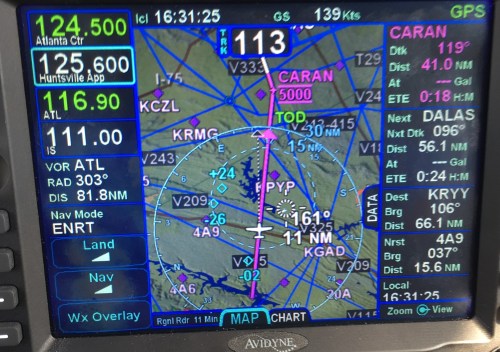
  • Michael Bauer just released a book on how to fly Avidyne’s IFD series of panel-mount GPS devices. It’s in my queue.
  • Want to fly left seat in heavy turbojet equipment? Maybe you should move to China.
  • The recent crash of a Piper Navajo in Tuscaloosa has fired up the speculation engine around these parts. I am glad that we have the NTSB, whose investigations are the undisputed gold standard for all sorts of transportation mishaps. I look forward to seeing the results of their investigation. Meanwhile, I’ll keep asking “what could I learn from that?”
  • Nflightcam still hasn’t sent the replacement audio adapter they promised me on July 8th.

Leave a comment

Filed under aviation

Flying Friday: O Canada! (KDCU-CYTZ and back)

Summary: fantastic trip with good weather; I enjoyed my first venture into Canadian airspace (which is operated and managed very similarly to US airspace, with a few procedural and vocabulary differences that perhaps will make for a good post later). Bishop Toronto City is a fantastic airport with lovely scenery; Toronto is worth another, more leisurely visit; and you should always pay careful attention to customs regulations.

When my boss told me that I needed to be at Microsoft’s Worldwide Partner Conference this year, I was excited, mostly because we were planning on demoing a cool new product to partners, but also because I hadn’t been to Toronto since a 7th-grade church choir trip. On that trip, we took Amtrak from New Orleans to Buffalo, an adventure in itself; this time I planned to fly.

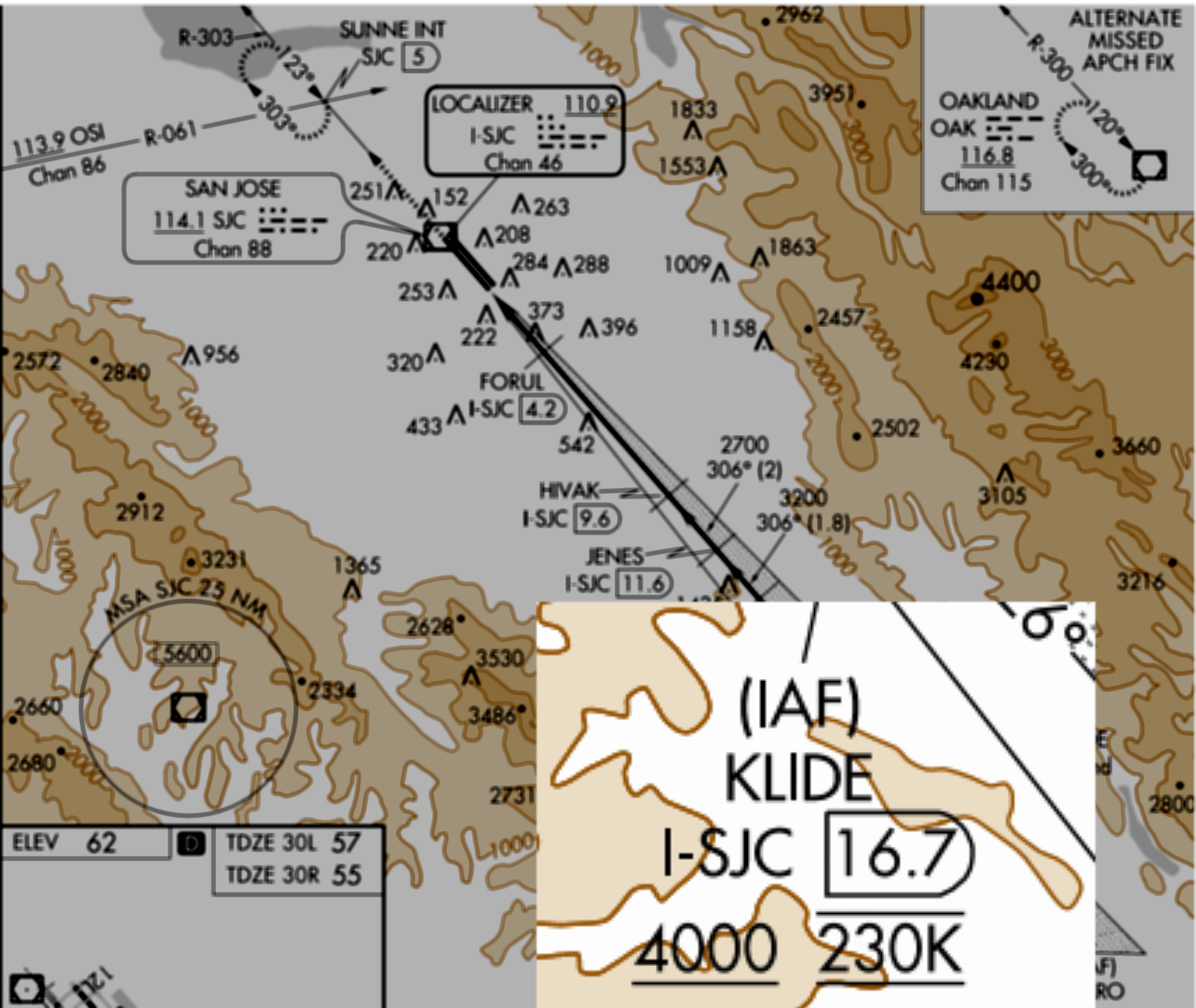
I started by researching the requirements to fly into Canada. AOPA’s list covers it all. I ordered the required Customs & Border Protection sticker, and I already had the required FCC radio station license and a valid passport. I had a bit of a quandary when it came to navigation charts: the Jeppesen charts required for the IFD540 are quite expensive, but the 540 goes completely stupid north of the border without them. I decided instead to add Canada coverage in Foreflight, which would give me georeferenced charts and approach plates, plus airport and frequency information– but on my iPad, not on the panel. With that done, a week or so before the trip I started watching the forecast, checking fuel prices, etc. Because the convention was at the Metro Toronto Convention Centre (MTCC), the nearest airport was the extremely cool-looking Billy Bishop Toronto City Airport, which is on an island in Lake Ontario. (Fun fact: you must either use a submarine tunnel or a ferry to get between the airport and the mainland, where the taxis etc are.)

I’d planned to fly from Decatur to New Philadelphia, Ohio (Clever Field, whose airport ID is PHD.. lol) for fuel, then overfly Erie, PA, then cross the lakes and land just before sunset, with a planned departure about 3p local. I may have failed to mention that I was running an Olympic triathlon that morning, but luckily I hit the airport on time and got en route as planned. Unfortunately, over Kentucky I developed a problem, or, rather, the airplane did: the oil filler door on the engine cowling popped open. It’s  hinged at the front (towards the propeller) so the slipstream was keeping it from opening fully, but it was flapping in the breeze and that made me nervous. I diverted to Somerset (KSME), latched it, and took off– only to have it pop open again.

After landing again, I discovered the problem: the spring that holds the latch button in place no longer generated enough force to keep the door latched. I borrowed some safety wire and pliers from the FBO, wired the door shut, and took off again– but that cost me some time I couldn’t afford to lose.

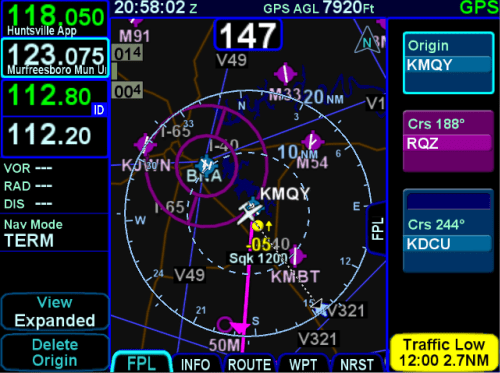
Once airborne again, I took a close look at the IFD540 to see what my fuel state looked like. The outer green ring represents the maximum range at the current fuel burn, while the inner dashed green circle shows range with the FAA-required reserve. Since my planned fuel stop was comfortably within the reserve ring, I knew I’d have enough fuel to get there or to Erie if needed– very comforting. The range ring is one of my favorite features in the IFD540 because it greatly reduces guesswork: either you have enough fuel, given the current conditions of wind and fuel burn, or you don’t, and this makes it easy to see which.

The fuel range ring is your friend

The fuel range ring is your friend

I landed as planned at KPHD, fueled up, and quickly called Porter, the FBO at Toronto City, to verify what time they closed. “10:30pm” was the answer, so I figured that would leave me enough time to get there just before they closed. This pleasant fantasy remained in my mind, with accompanying scenery…

…until about 9:50pm, when I was overflying the outskirts of Erie with about an hour to go. The city lights were gorgeous, there was a quarter moon, and I could see the dark lake water ahead when I called Porter again to advise my new arrival time of 1115p. (Thanks to the Bluetooth mode of the AMX240 audio panel, I can make in flight calls on my cell phone, provided I have cell service.) Their reply, paraphrased: no thanks, customs won’t allow arrivals after 11pm. I called Erie Approach, got vectors to the airport, landed, and headed for the local Comfort Inn.

After a decent night’s sleep, I fired up the engine and headed north. I’d filed for direct CYTZ, and that’s what I got. Before going to bed, I’d updated both my eAPIS and CANPASS border crossing permissions– the former signaling my departure from the US and the latter requesting permission to cross into Canada. More on that later.
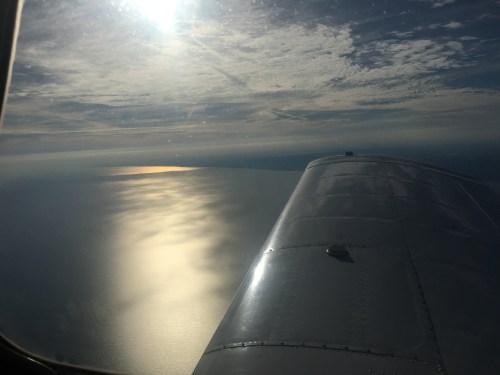
Sunrise + water = awesome

Sun + water = awesome

The first leg of the flight was uneventful, until I wanted to go direct LINNG at ATC’s instructions. The IFD540 didn’t have that waypoint, so I looked it up in Foreflight. That went fine– it was listed with normal degrees/minutes/seconds latitude/longitude, so I plugged it in as a user waypoint, then added the airport’s lat/long and created a route. I did notice one discrepancy: Foreflight defaults to decimal notation, which the IFD540 doesn’t accept. (Since the Nav Canada plate showed the notation I could use, I just went with it, but this will become important later.) The rest of the flight was flawless and beautiful– for example, check out this picture as I overflew the Long Point wildlife area.

DSC_3505

Long Point National Wildlife Area

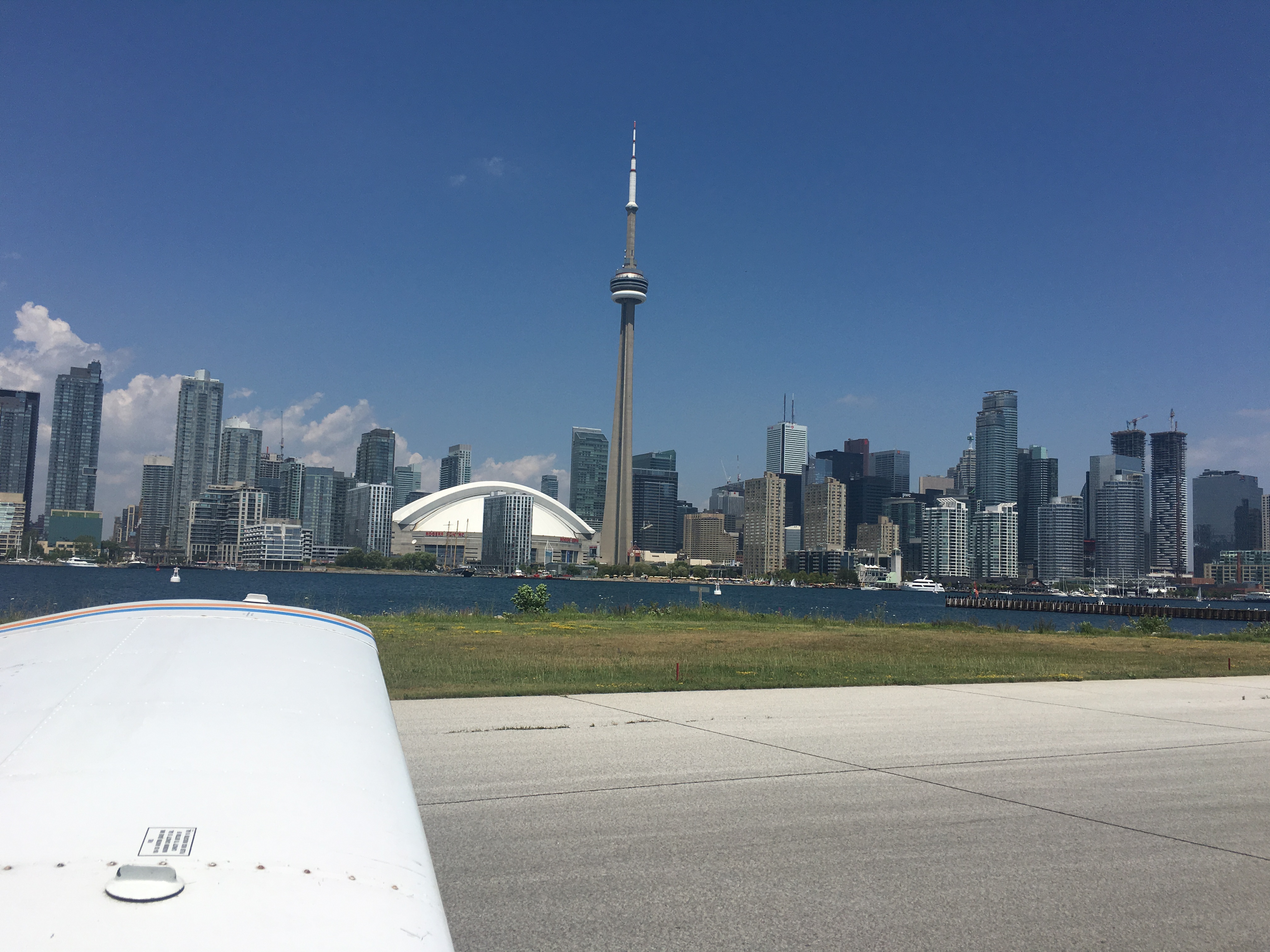
The weather was flawless, so I was expecting the visual approach to CYTZ, and sure enough, that’s what I was assigned. There was a significant volume of traffic going into the airport, as befits its status as Porter’s main hub, so I got vectored around a bit between a series of DHC-8s. This eventually led to a go-around for spacing, as the controller wasn’t able to slow the following DHC-8 down enough to keep me from becoming a hood ornament. The good news is that I was able to get some fantastic pictures of the Toronto skyline:

Beautiful Toronto

Beautiful Toronto

More beautiful Toronto

More beautiful Toronto

I made a great landing, taxied in to Porter, and called the CANPASS number. After a brief wait, they gave me a reference number (which I duly wrote down) and I was free to exit the airplane and go about my business. So I did.

Here’s where I’d describe all the other stuff I did in Toronto at WPC16, but since this is a Flying Friday post, let’s cut to the flight home… well, OK, maybe one picture first, this one looking towards the airport from the observation deck of the CN Tower.
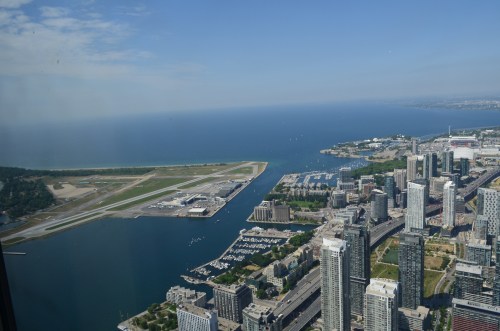
CYTZ and the National Yacht Club

CYTZ and the National Yacht Club

I’d planned for a 1330 departure on Wednesday, and I arrived right on schedule, but hungry. I had filed CYTZ-KCAK, with a plan to continue on to Jamestown, Kentucky (K24) for fuel, then home. Since I didn’t have any Canadian cash, I skipped buying food at the airport, reasoning that I could eat when I stopped for customers in Akron, Ohio. I picked up my clearance and found a bit of an unpleasant surprise: I was given the OAKVL.1 departure, which referenced the OAKVL intersection, whose lat/long I couldn’t put into the IFD because it was only shown in decimal notation. Since I knew its approximate location and the heading to fly to get there, and because I had Foreflight plates showing me obstacles and terrain, this wasn’t a big deal. I looked at the departure plate but it didn’t give any coordinates at all for OAKVL, so I manually created a waypoint and off I went.

(Brief digression: in the US, waypoints that are used as part of a standard instrument departure (SID) procedure are supposed to be listed on the SID chart. In this case, OAKVL was shown, but its coordinates weren’t. I later learned that the Canada Flight Supplement (CFS) manual has a list of all the enroute waypoints and their coordinates, but not waypoints that are only used for departure procedures. I would have needed to look at the “OAKVL ONE DEP (OAKVL1) DEPARTURE ROUTING” chart. Unlike US charts, in Canada the departure routing is a separate page that’s not included as part of the SID chart. I also learned, later, that Foreflight can toggle its display format (look at More > Settings Units > Time)  to match what the IFD can accept, which would have solved my problem.)
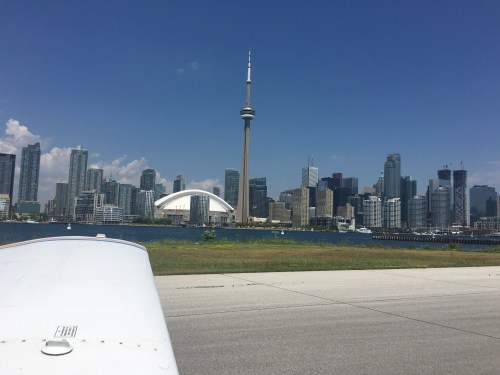
What I did while waiting for my IFR clearance

What I did while waiting for my IFR clearance

In any event, I found OAKVL and was cleared to continue on to Akron/Canton, my planned US port of entry. I had filled out an eAPIS manifest, but I didn’t call Customs and Border Protection (CBP) to advise them of my arrival time. As a result, when I landed at CAK, ground instructed me to taxi to the “penalty box” in front of customs, but no one was there, and it took a few minutes to find an agent. When he got there, I had a brief but thorough customs inspection, during which I learned that I’d made a serious error: you must call US CBP at the port of entry you plan to use, in advance, and advise them of your ETA. 

Somehow I missed that in the AOPA checklist. I mistakenly thought that filing an IFR flight plan and filing an eAPIS manifest was sufficient, but no. The agent who cleared me in was firm on that point and cited me. Now I have to wait to see if they assess a fine for the infraction– not my favorite. I had joked with friends that I’d have about 800lbs of usable weight to bring back stuff from Canada– suggestions included Cuban cigars and Timbits. Thankfully I resisted the temptation.

Anyway, after I sweated my way out of CBP, I refueled and bought a soda at the FBO, but their snack machine was out of order. “No problem,” I thought. “I’ll eat when I stop at Jamestown.” I waited for this guy to arrive and clear…
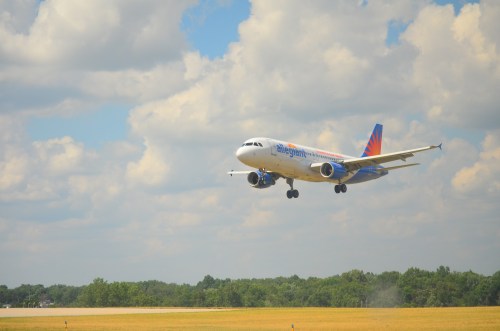
Hold short for landing traffic

Hold short for landing traffic

…then took off, found a protein bar in my flight bag to tide me over, and off I went. When I arrived at Jamestown, I was crushed to find only a single empty, dusty vending machine with nothing edible nearby (except maybe some dead bugs). I fueled the plane, took off, and let the reassuring noise of the big IO540 up front drown out my stomach’s complaints. After an uneventful flight, I landed at home base, transferred all my junk to the car, went home, and slayed an entire Domino’s pizza while catching up on Game of Thrones— a good ending to a long but fruitful day.
 

2 Comments

Filed under aviation, Travel

nFlightCam vs Squawk Shoppe cockpit audio adapters

First I bought this adapter from nFlightCam. It didn’t work properly— my phone didn’t recognize that it had a mic plugged in so all I got was loud propeller noise. After testing it, I sent three mails to nFlightcam customer support (since they don’t have a phone number) and got no response. 

Then I ordered this adapter from Squawk Shoppe. Immediately after placing an order, they offered to connect me with their Facebook bot for order status, which worked flawlessly. I got the adapter when promised and it worked perfectly.

Then, just before a cross-country plane trip, nFlightCam answered my support email and offered to send me a replacement. That was 13 days ago and, you guessed it, no replacement has arrived.

Executive summary: don’t buy anything from nFlightcam; despite their heavy advertising, their customer support is slow and unresponsive and (at least for me) their build quality suspect. I see from reddit that other users have been happy with their products so YMMV.

Leave a comment

Filed under aviation, FAIL

Renaissance Man 2016 Olympic triathlon (July 10, 2016)

Last year, I ran my first Olympic-distance race. Although I kept it mostly to myself, I was really disappointed in my performance. I had a goal to finish the race in 3:15 and straggled in at 3:39. This year, I was out for redemption.

First, a good laugh:

renman-overall

(If you don’t know why this is funny, you might not be a triathlete, but I’ll explain later.)

Pre-race

Saturday I packed all my trash. I am a firm believer in “nothing new on race day,” but this year Dana convinced me to try an optimization: a triathlon bucket. She bought me a simple orange Home Depot bucket to use as a stool, and I resolved to give it a try in hopes that it would speed my transition times a bit by helping me not fall over. For nutrition, I packed several bags of Bonk Breakers, premixed some Mercury, and made a Sufferlandrian pain shake (1 scoop Karbolyn, 2 scoops Optimum Nutrition vanilla whey), stuffed my bike into the back of the Soul (it barely fit), and tried to get to sleep early. Too bad Matt and Tom woke me up a total of 3 times between 1030p and 430a. I got up on time, got my stuff together (sorry, no picture this time), and headed out to Florence under about a 12000′ overcast with occasional spotty drizzle.

Once I got to the venue, I got everything staged in transition, got my timing chip, and so on. I hadn’t forgotten anything, for once, so setup was smooth and I had time to chat with some of the many other Huntsvillians who were there. I also got in a short warmup swim.

The swim

renman-swimThe swim went very well except for my perennial sighting malpractice.. and that I forgot to start my watch when I went into the water, so it’s probably 25y or so short. The swim used a rolling start, with predicted swim times governing order of entry. I was #160. At about #125, one of the buoys came unmoored and had to be chased down by a kayaker, but it was in place before I passed it so I can’t blame my course line on that. (The zigzag just under the “T” in “Tennessee River” is a GPS glitch, luckily). I got out of the water, went into T1, and did my business.

T1

Obviously I shouldn’t have had a 6+ mph average in T1. I was concentrating on a smooth toes-to-head flow of gearing up: socks, bike shoes, HR strap, jersey, helmet, glasses. I forgot to include “press the lap button” in my flow so it didn’t get done until I was on the way out.

Bike

I love this bike course. It has several long straights that reward steady cadence, which I am slowly learning to hold. Unfortunately, I dropped my chain on one of those straights and that cost me 5 minutes or so. I also had an unplanned stop to try to get my power meter back online– it was working fine on my shakedown ride Saturday but wouldn’t send any data race morning, so I don’t have cadence or power data. I’m not sure why the bike and T2 times in the picture above are so jacked up, because I didn’t restart or stop the watch (just my ELEMNT bike computer). Thanks, Garmin. I ate some Bonk Breakers and drank nearly two full bottles of Mercury on the ride, which was plenty. Overall the ride was overcast and cool-ish; I had maybe 20 minutes of partial sun and 30 of drizzle.

T2

T2 was blazing fast for me. Belt, snack, running shoes, hat, and boom, I was off. The run course starts off uphill, goes through the UNA campus (so I got to see the famous lions), travels through downtown, and then hits a mostly-downhill course through some pretty, treed neighborhoods for the back half. I was able to hold a fairly steady pace because it wasn’t diabolically hot– in fact, it rained steadily for almost the entire race. Thankfully I had a hat to keep the water off my glasses, since I HATE running with water spots on my lenses. I was completely soaked by the time I made it back to the finish line.

Bottom line

I finished in 3:17:15:

  • 38:22 on the swim
  • 3:13 in T1
  • 1:34:33 on the bike
  • 2:49 in T2
  • 58:28 on the run

That’s a whopping 22 minutes faster than last year, and, had I not dropped my bike chain, I’d’ve come in under 3:15. For me, that’s a stellar time. If I can get my sighting under control and build a bit more power on the bike, I can see myself getting under 3:00 late this season– I think I can pick up 5 min on the swim, a minute each in T1 and T2, at least 2min on the run, and 5+ min on the bike. Onwards!


3 Comments

Filed under Fitness

Microsoft releases updated Office 365 Visio stencil

Yay! Microsoft has updated their downloadable Visio stencil set for Office 365 to include the 2016 versions of the application icons, plus some other visual improvements. Now your Visio diagrams can have that fresh 2016 feel. (Thanks to Samantha Robertson, Dan Fraser, and Tony Smith of Microsoft for making this happen.)

Leave a comment

Filed under UC&C

When to declare an in-flight emergency 

From Thomas Turner’s excellent FLYING LESSONS newsletter, here is a simple guideline for knowing when you should contact ATC to declare an emergency. 

Should I declare an emergency?

If I’m:

  • Performing a task or procedure from the Emergency Procedures section of the Pilot’s Operating Handbook or Airplane Flight Manual;
  • Violating or in danger of violating an airplane Limitation;
  • Violating or in danger of violating a Federal Air Regulation (or international equivalent) with no way to rectify the situation; and/or
  • The safe outcome of the flight is in any way in doubt;

then I should declare an emergency. There is no question; it is not a judgment call. Get the help you need right away.

Clear, simple, and memorable. 

1 Comment

Filed under aviation

Appareo Stratus and planned obsolescence

Back in September 2013, I bought an Appareo Stratus from Sporty’s Pilot Shop. I thought it was expensive, but getting in-cockpit weather and ADS-B traffic data, displayed conveniently on my iPad, was highly valuable. I have used it on almost every flight I’ve made since and it’s proven its value multiple times— being able to see weather while in flight is a huge safety benefit.

Recently I noticed that it was running out of battery unusually fast. Even if I left it plugged in overnight, it would only run for a few minutes when unplugged. I sent Sporty’s customer service an email asking about repair cost. Here’s what they said:

I am sorry, but we are unable to repair the Stratus 1.

We are able to offer $100 off the purchase of a Stratus 1S or 2S.

This is infuriating. The device is not even 3 years old yet, and the manufacturer won’t even attempt to repair it. Offering to let me pay $449 ($549 for a Stratus 1S minus the $100 credit) to get a device that, when it dies, likely will suffer the same non-support is a complete non-starter. I don’t expect a $50 consumer device to have lifelong support, but an $800 aviation device is a completely different story.

So, no thanks, Sporty’s. I’ll keep my money and build a Stratux instead. If this is the level of support I can expect, I might as well save a few bucks and do it my damn self. And when my Foreflight subscription expires, I’ll have to give serious thought to whether I want to continue to support them given their interlocking relationship with Appareo and Sporty’s. Meanwhile, time to take apart the Stratus and see about replacing its battery pack.

(n.b. the avionics stack in our plane has ADS-B weather and traffic, and it will soon be able to push those to the iPad over wifi. However, when I fly rentals or in other peoples’ planes, having a portable device is still a big winner, as is having the redundancy of a second ADS-B receiver just in case… so although I don’t have a single-point dependency on the Stratus I’ll still replace it).

4 Comments

Filed under aviation, FAIL

Office 365 Exposed, episode 3

I recently had the opportunity to sit down with Tony at ENow World Headquarters (OK, it’s just a regular office, but that sounds better) to talk about the state of the Office 365 world. In this episode, we talked about the latest bit of ill behavior from Microsoft Learning, the best paths to take to gain practical Office 365 knowledge, and what to expect from the upcoming Microsoft Ignite and IT/DevConnections shows. Enjoy!


2 Comments

Filed under Office 365, Podcasts

Race report: IRONMAN 70.3 New Orleans

Summary: my first 70.3 showed me that I have a lot to learn about longer-distance racing.

Friday: flying and murder

The boys and I left Decatur on schedule and had a perfectly uneventful flight to New Orleans Lakefront, where the reported weather was 900′ ceilings with 2mi visibility and gusty winds. Sure enough, I got to hand-fly the ILS 18R approach with winds from 100° at 15-25 knots. Fun times. We landed and were met at the FBO by my mom and uncle, who had driven over from Alexandria. The FBO had arranged a rental Dodge Challenger for me (much nicer than I expected) so we convoyed over to our Airbnb rental in New Orleans East.

20160415_221521424_iOS

After a delicious dinner at The Joint, Tom and I went in search of an asthma inhaler for him. When we came back, we saw a huge array of police cars and ambulances blocking off the entrance to our street. Turns out two men had been killed and a third shot at a nearby business; one of the victims ran onto “our” street before expiring, thus all the police attention. That was a bit disconcerting but it explained the rental home’s window bars, security cameras, and alarm system.

Saturday

First thing in the morning I went for a short shakeout run around the neighborhood, then we set out to go sightseeing– we hit the French Quarter, Café du Monde, and the excellent New Orleans Museum of Art, which I’d somehow missed in all of my prior trips. They had just added a Vera Lutter exhibition, which was really striking, plus they had two new exhibitions of folk art that we quite enjoyed. Tom and I went to get me checked in at the race hotel, where we also attended the athlete briefing. Lunch was at Deanies‘ on Iberville (fried shrimp poboy, the ideal pre-race meal) and I honestly don’t remember what dinner was.  One highlight from the day was seeing this:

because why wouldn’t you do that if you were getting married?

After a quick trip home to grab my bike, I dropped it off in transition and shot this quick video of the water conditions– very similar to what I saw Sunday morning.

Pro tip #1: go to the race expo earlier in the day, not at the last minute, as much of the goods for sale are already well picked over by that time. I honestly don’t remember what we had for dinner. I mixed up all my race nutrition, double-checked my gear, and went to bed about 10p.

Race day: pregame

I got up about 430, loaded up all my stuff-n-junk, and headed over to the venue. Traffic was a bit of a challenge because of the road layout; there are two narrow, parallel, unconnected roads that front the marina and airport, so getting between them can be a bit difficult. I had plenty of time, though, so I was able to get in and get set up without having to rush.

The swim

The swim start was delayed about 20 minutes because the support team had to go move the swim buoys (or “nachos”) back to their assigned location. That’s because the wind was about 20mph, with occasional gusts higher. The diagram below tells the tale (see the wind indicator in the upper right corner?) My sighting skills are not great, and with the chop in the water I had a hell of a time keeping on course. I ended up swimming 2700 yards in almost exactly an hour (I think it was 1:00:07 or something). That was a 2:10/100 pace, which would have given me my “A” goal time for the swim. I just swam too much. So, lesson #1 from this race: swim more in choppy water. Lesson #2: practice sighting more. (These will both be hard because there aren’t many OWS location near me at all, much less ones with chop.)

IMNOLA swim

One note: there was a table at swim start where you could leave eyeglasses for pickup. I was told, by the race announcer no less, that glasses would be available in transition. (More on this later.)

T1

In T1, the plan was for me to grab a Stinger waffle, drink some Karbolyn, and be on my way. I was a little discombobulated after the swim so I took my time to make sure I didn’t forget anything for my bike setup… in the end, I forgot to turn on my new bike computer AND I had a nearly 10-minute T1 time. So definitely some room for improvement here. (Oh yeah, I also left the waffles at home so no waffle for me.)

The bike

Omitting all the boring details, in the last 3 weeks I ended up with a new bike frame, a new Redshift seatpost, a new saddle (since the old one didn’t fit the seatpost), and a new Wahoo ELEMNT bike computer. I’d had a couple of short shakeout rides but this was going to be the real test. The wind was from the east (almost 90°, in fact) and the course had us go out for a short western section, then a sharp U-turn and a run out to the turnaround point. I got hit by a gust in the U-turn that nearly knocked me over– that’s how I knew this was going to be a fun one.

My strategy was to try to hold about 80% FTP for the bike. I mostly did, although I had some bursts where I had to go over to keep moving– making 200+ watts just to go 8mph, wobbling, wasn’t my favorite. Because I hadn’t had much time on this setup, I found that about mile 25 I was getting cramps in my abdomen, like you do when you do too many crunches or sit-ups, from being in aero position. There was nothing I could do about it except say “ouch” and keep on trucking. I am a big believer in “nothing new on race day” but I think I might extend that to be “nothing new during race month”. I wish I’d had the bike changes made earlier so I could have had more time to get used to them. I was pretty tired by about mile 35 and was just trying to hang on and ride the tailwind. The bike leg took me 3:53:21. I was aiming for 3:15 or better, so this was a bit of a disappointment but I just couldn’t go any faster on the outbound.

One thing I did differently on this ride was to use Clif Shot Blocks on the bike, along with my normal Mercury. These gave me zero issues, and I had an assortment of flavors available. Some of the bike and run aid stations had them as well, which was nice.

Speaking of aid: this was the first race I’ve done that had a bike bottle exchange. For some reason I thought the drinks would be packaged in bike bottles but they were in original packaging. I purposely brought two crappy old bottles for the ride, figuring they’d get discarded; I ended up keeping one. For future reference I’ll just get a Gatorade or water bottle that fits my cage and leave “my” bottles at home.

Special note: see that wind icon in the picture below? It’s a damn lie. The wind report at Lakefront was 25kts gusting 30, and there were some spots (like right by the Textron plant at mile 20) where it was a direct headwind with gusts that had to be above that, coming right off the water.

SafariScreenSnapz003

T2

Nothing special here– a bit more sunscreen, slap on my lucky Rocketman visor (it came from the only race I ever DNF’d), and out I went.

The run

The run was miserable. For the outbound leg, I had a tailwind but I was still cramp-y from aero on the bike. As that dissipated, I suddenly grew a golf-ball-sized knot in my right quad– the first race cramp I’ve ever had. A kind passerby gave me some Base salt, which worked like a Harry Potter potion– it knocked the cramp out in about 90 seconds. (Key learning: get some of this and keep it handy!) I was just slow through the turnaround, and then I was fighting the wind all the way back. I ended up run/walking almost the entire return leg. My run time was an undistinguished 2:47:53. If I hadn’t had such a bike adventure, I think I could cut 15-20 minutes off that time.

Postgame

I crossed the line at a good clip but completely missed hearing my name– the announcer called names when runners entered the chute, and I just missed it. I reunited with Dan, Mom, and the boys, walked around a bit, and then hit the gear shop to get a hoodie and some other swag. Unfortunately, I got to the athlete’s tent at 4:15p and there was no food. This really pissed me off. It didn’t help that my glasses were gone! Instead of having them in transition, they were at a table at swim exit, which I didn’t know. They packed up the swim exit stuff about 11am, so my glasses went off to some warehouse somewhere. Very important learning: next time I’ll either put my glasses in a case with my name, race number, etc. or just leave the damn things in transition and deal with having to squint my way through swim start.

When we got back to the rental home, we found that the wind has dislodged one of the two electrical feeds from the pole, so we only had power in half the house. Surprise! After a long, hot shower, I packed everything up and we headed back to the airport.

Flight home

The flight home was delightful– a little overcast around 2500′ leaving KNEW, but virtually no one on the radio, no traffic, and clear skies all the way home. The wind was still at 90° so I wanted to use runway 9, but some of the taxiways leading to it were flooded so I elected to use 18R instead. Another 2.5 hours of night time in the books.

Wrapup

I crossed the line at 7:58:28, good for 133rd in my age group. There were 191 registered, and I think 137 or so finished. On one hand, running an 8-hour 70.3 is not really what I’d dreamed of. On the other hand, I spoke to multiple athletes who ran the same race last year and had times as much as an hour faster than this year, and I put in a solid effort, and I finished— so I hit my goals for this race. I’ve learned some things about longer-course races that will help me in future events, and I’m glad to have had the opportunity to start my 70.3 career like this.

9 Comments

Filed under Fitness

Nifty new auto-vacation feature for Outlook on the Web

This is a great example of Microsoft bringing useful innovation to end users by deploying new features in Office 365:

Outlook on the web now makes it easier to clear your calendar and automatically decline meetings before you head out for some time away from the office. When you set an automatic reply in Outlook on the web, Outlook will offer to do the following on your behalf:

  • Block your calendar so people know you’re away.
  • Clear existing meetings on your calendar by declining/canceling them.
  • Automatically send a response to incoming invitations while you’re away.

Of course, Outlook and Exchange have long had the ability to automatically send an out-of-office (or “OOF”, from “out of facility“) message when you specify the dates when you’ll be away. These new features extend the traditional OOF behavior by adding some business logic to the OOF process– after all, when you’re out of the office, it is logical to assume that you won’t be accepting appointments during that time, and that you want new invitations to be automatically declined. (There are exceptions, of course, which is why you can turn this business logic off.) I’m not in love with the fact that this feature requires you to set your  works in Outlook on the web, but I’m hopeful that it will make it into other versions of Outlook at some point.

Apart from the specifics of this individual feature, it’s really encouraging to see the Outlook team invest in innovation like this. Given the large feature gap between Outlook on the web and Gmail (the only real enterprise competitor to Exchange/Outlook) it would be easy for the Outlook team to coast. Part of the ethos of building software at cloud speed involves iterating rapidly, and that in turn means sometimes you build something that turns out to get a lukewarm reception because it’s not as useful as first thought. (Tony argues that this is the case for Outlook’s support for likes and @ mentions.) However, sometimes you build something that turns out to be really nifty, and I think this feature is a good example– I look forward to seeing it roll out more broadly.

(for another time: I know not every tenant admin will want this feature turned on for their users without prior notice or permission, and Microsoft has a lot of room to improve the way they deliver features so that administrators can control user access to them.)


Leave a comment

Filed under General Stuff, Office 365, UC&C

Training Tuesday: it’s 70.3 time

By this time next week, I hope to have had a unique experience: crossing the finish line of a “half-Ironman” triathlon: IRONMAN 70.3 New Orleans.

The half-Iron distance race gets its name because its distances (1.2 mi swim, 56-mi bike, and a 13.1-mi run) are half the distance of a “full Ironman”, but there’s nothing half-y about it. It’s a tough event. I believe that I’m equal to the challenge, though. My new bike setup is solid, I feel good about the run, and the swim will be wetsuit legal in a protected anchorage.

My plan for the rest of this week is to get in a couple of easy runs and bike outings, get my gear together, and pack up the plane Thursday night. Friday morning the boys and I will fly to New Orleans, meet Mom and Tim, get set up in our nifty Airbnb rental, and just relax. That leaves me all day Saturday to get my bike into transition, get to the athlete briefing, and so on, then Sunday it’s race day! Monday we’ll fly home.

USA Triathlon rules prohibit carrying music players on the course. Some refs interpret this to mean that smartphones (which of course can be used as bike computers or athlete trackers) are legal, and some say they are not. I plan to have my phone on the course, which means that (thanks to my triathlon watch) you’ll be able to follow my progress on the bike and run legs live. I’ll post a link to the tracking web site Sunday morning before the race starts.

Leave a comment

Filed under Fitness

On currency

True fact that sometimes shocks people when I share it: a pilot certificate never expires.

Sure, it can be revoked by the FAA if you do something stupid. I suppose you could ask the FAA to cancel it for you, sort of like resigning from a church. But once you obtain the certificate, it’s yours forever, even if you stop using it.

However, in order to legally exercise the privileges granted by that certificate, you need (at least) two things. First, you need a valid medical exam (a worthy topic for a future post). The type of exam you need varies according to the certificate, and the frequency at which you must have it varies both by the type of exam and your age.

Second, you need to be current. This is an interesting word. The FAA doesn’t say you have to be “proficient,” just “current.” What does that even mean? Glad you asked. To be legally current as a private pilot, you must have completed a biennial flight review within the preceding 24 months. That’s it. There’s no set structure for the BFR, other than that it must consist of one hour of ground training and an hour of flight. There’s no set syllabus or standard, as there is with almost every other type of flight training activity. The FAA’s guide to conducting BFRs likens the BFR to a checkup, where each individual doctor is supposed to tailor the specifics of the checkup to a specific patient. Many organizations, such as the Redstone flying activity, specify what they consider the minimum coverage for the BFR to be in order to use their airplanes, but that’s not mandatory.

The currency structure changes a bit if you want to fly under specified circumstances. To carry passengers, you also need 3 landings within the previous 90 days– so you can’t just get a BFR after being inactive, then load up your plane with your friends and head out. To fly with passengers at night, you need 3 landings to a full stop, at night, within the previous 90 days. To fly in instrument conditions, you need 6 instrument approaches (including course tracking and holds) within the preceding six months.

The purpose of these currency requirements is to force recency and proficiency. The idea is that if you fly regularly, you will stay proficient. If you don’t fly regularly, you need to regain currency before you can fly with passengers, thus forcing you to regain proficiency. However, the way the regs are written, you can not fly for 20 years, jump in an airplane and have a de minimus BFR, then do 3 laps around the traffic pattern to get your landings in and then immediately start flying with passengers. That might be legal, but it wouldn’t be either smart or safe.

One approach to keep proficiency is just to fly enough to stay current. If you never let your currency elapse, the theory goes, then you’ll be getting enough air time to stay proficient. This isn’t true for everyone; I know that after I’ve been away from the plane for longer than a few weeks, some skills need sharpening on my next flights. This is especially true for instrument flying, and even more so when you have an unfamiliar airplane, new avionics, and the like.

Last night, I went on a currency flight. I had lost my night currency and needed a couple of instrument approaches to keep my instrument currency. In order to log an instrument approach, you either need to fly in IMC or with view limiting devices, which means you need a safety pilot. Since I am super safety minded, I brought two (hi, Alex! hi, Greg!) Interestingly, when you are not current, you can’t take passengers with you, but you can take safety pilots and/or instructors. Anyway…

After a perfectly normal preflight, runup, and takeoff, we were in the air about 810pm, just over an hour after sunset. According to the FAA, that’s when night starts. The plan was to do an LPV approach at Huntsville Executive, an ILS at Huntsville International, and then another LPV at Decatur, landing at each. That would give me 3 night takeoffs and landings, plus three instrument approaches and a procedure turn (which counts as a hold for purposes of maintaining IFR currency).

Before takeoff, I programmed the IFD540 with the airports, but didn’t load the approaches. Once airborne and talking to Huntsville departure, I asked for the RNAV 36 at MDQ, got the clearance, and programmed the box, then engaged the AP. It flew us to the procedure turn, through the turn, and on course flawlessly. I had the AP in HDG mode, the GPSS in GPS mode, and all was fine. Inbound to the FAF, I armed the GS mode on the PSS, and shortly thereafter found that the AP had turned me about 30° to the right of course. I don’t know if it was the GPS or the AP, but I disconnected the AP and manually flew the missed procedure. This was a great illustration of why currency matters– with new avionics, I’m still learning how to set up and program approaches, and it’s a hell of a lot smarter to get that practice with two other pilots on board, in good weather, than to try to figure it out in the midst of an actual IMC approach.

For the second approach, I got vectors towards HSV for the ILS to runway 36R; the controller  put me between the ENIKY and UJOTY intersections, so all I had to do was turn inbound and intercept the localizer. I manually tuned the localizer frequency on NAV2, used the FREQ button to tune it for NAV1, and verified that I saw “GPS->VLOC” on the display– that’s the signal that the GPS is aware that I want to transition from GPS-derived guidance to guidance signals from the ground-based localizer and glideslope. I armed GS mode on the PSS just after the final approach fix (FAF); the localizer and GS both came in normally and the AP flew a flawlessly coupled approach down to about 1000’, when I disconnected and hand flew the rest. That was full-stop night landing #1. Because Huntsville has such long runways, I was able to land, stop, and take off again on the same runway, which is always nice.

On takeoff, I asked for vectors to the RNAV 36 at DCU and got them. This time, I wanted to check my proficiency at hand-flying the approach. I hand flew the climb, cruise, and approach, using the GPS only for reference, down to about 1300’ AGL and then landed (night landing #2) and a back-taxi, followed by 1 lap of the pattern and a visual landing for #3. Having the advisory glideslope on the approach was nice since DCU doesn’t have VASI or PAPI lights to indicate whether you’re on the right glidepath.

All in all, a good night; I am once again legally night current and have extended my instrument currency.  I still want to fly some fully coupled LPV approaches to make sure I understand the buttonology but my knowledge of the IFD540 is definitely coming along. Thanks to the latest Foreflight app update, Greg, Alex, and I were all getting GPS position and flight plan data from the IFD540 streamed to our iPads, which was cool. We also saw active weather and traffic on the IFD, which I loooooove. Avidyne announced last night that they’re about to start streaming traffic data to Foreflight as well, which will be really nice. Now to get ready to fly to KNEW in two weeks for my race!


Leave a comment

Filed under aviation

I’m coaching Tri201

I’m excited to announce that I’m going to be volunteering as one of the coaches for Fleet Feet Huntsville’s Tri201 program. It’s designed to take people who are already at an intermediate level of fitness (including people who haven’t done a triathlon yet but have completed 10K or longer races and meet the de minimus swim and bike distance requirements) and prepare them to successfully complete the Rocketman Olympic triathlon in August. After completing Tri101 in 2014 and Tri201 last year, I’m really looking forward to share what I’ve learned in my short triathlon experience with a new group of athletes. If you live in metro Huntsville and are interested in triathlon, come check us out!

Leave a comment

Filed under Fitness, General Stuff

Training Tuesday: just call me Sir Paul

A couple of weeks ago, I wrote about my plan to seek Knighthood. That’s how I spent Saturday, March 19th: on a bike, communicating with my fellow CHP athletes (including Rafe, who wrote his own Knighthood recap) via Skype and Facebook, and pedaling. A lot.

(Side note: if you don’t know what I’m even talking about, you might want to poke around the Sufferlandria web site, which explains the culture, customs, and traditions of that mysterious land.)

I set up my bike on the trainer in my living room, using a dog crate to hold my laptop (for communications), my iPad (for streaming video from the Sufferfest app), and snacks. It was cool outside, so I opened several windows and turned on the ceiling fan; one of my gripes about riding indoors is that you don’t get the cooling breeze from forward motion because there isn’t any.

The Sufferfest videos are organized into a few general categories: racing, endurance, climbing, and so on. They feature a mix of sustained riding at a predetermined pace, intervals at specific power levels, and race simulations (which include both). There are attacks, breakaways, climbs, and all sorts of goodies.

Here’s what happened, as best as I remember.

I got up, had a cup of coffee, checked all my equipment, and had a banana and a protein shake. The night before, I’d laid in a huge cache of supplies, including Oreos, beef jerky, M&Ms, and a bunch of other stuff I wouldn’t normally eat. I weighed in at 199.3 pounds, got dressed, and headed towards Sufferlandria.

(n.b. Cyclists take note: each of the video links below includes a description, a short trailer, and a ride profile showing the intervals and intensity levels.)

We started promptly at 0730 my time with The Rookie (55 minutes). This video’s theme is that you are the newest rider on the Giant/Shimano team, so you start riding as a domestique but actually get to lead a breakaway by the end through 3 10-minute race intervals. I rode this scaled to 75% of my FTP, so my threshold was 146W, and the app was smart enough to scale my performance targets accordingly. The ride went well– I felt good when I was done. Refreshed, you might say.

Next up was 48 minutes of The Wretched, the overview of which starts with “Perhaps one of the most difficult Sufferfests, The Wretched is the tale of a Sufferlandrian who has fallen from Local Hero to Zero.” The conceit here is that you’re simulating a stage of the Tour de France, so there are attacks galore. This one went well too; after finishing I had a few handsful of trail mix and a few Oreos, along with another shake (consisting of 1 scoop of Karbolyn and 1 scoop of Optimum Nutrition vanilla protein powder; I nicknamed this a “pain shake” after the famous Sufferlandrian beverage).

Video 3 was A Very Dark Place (51 minutes). I definitely felt this one.  It featured 5 4-minute high-speed intervals, each with a different theme (solo breakaway, holding onto the race leader’s wheel, etc), which provided pleasant variety in the midst of the pain. I hadn’t done this or The Wretched before, so it was fun experiencing them for the first time while watching Rafe, Todd, and Torrey suffering on Skype.

Power Station, video 4, is 50 minutes of climbing– low cadence, high-power climbing that will burn your quads to a crisp. I’d ridden it before so I knew what to expect. It’s a tough workout, especially after the preceding three, but I am lucky in that I have really big quads and hamstrings relative to the rest of my legs (or my entire body for that matter). That makes me a crappy sprinter and a comical rider at 100+ rpm cadences, but I can handle hard low-cadence work.

I had some more snacks. In fact, you should assume that I snacked in between each video because that’s exactly what I did.

Video 5 was Angels, which I hadn’t ridden before: 3 8-minute climbs, which were not fun even a little tiny bit. I had just saddled up when Dana came over with the kids… and more snacks. They kept me company through both Angels and Nine Hammers, the following video. Both were tough but the company made the time pass much faster than I would have expected. Lilly drew me two signs, one for each video, and Dana made me what I must say was the best PB&J I have ever eaten.

Coach Alex prophetically said “this will be the worst part of the day” about video #7, Hell Hath No Fury… 75 minutes in which you race 2 20-minute race intervals against professional female cyclists. a 20-minute race interval is no joke; two of them back to back even less so. I was certainly feeling the burn by the end of this one. By this point, I was starting to have some persistent discomfort in the IT bands of both knees, as well as an occasional twinge in my left ankle. My legs were burning more or less constantly. I’d been taking Sportlegs, in which I am a firm believer, and they helped, but I found myself muttering Jens Voigt’s famous mantra: “shut up, legs.”

Video 8 was Do As You’re Told (47 minutes), which I think was the first Sufferfest video I ever rode. Familiarity didn’t make it any more pleasant; this video is all intervals / sprints, so it was punishing. I hung on, grimly, and used every second of the 10-minute break to refill my bottle, snack up, and stretch out my aching quads.

Video 9 was The Best Thing in the World (48 minutes). This is a flat-out lie, as it contains two 13:30 race simulations, which are not even close to the best thing in the world.

We closed with Blender (1 hour and 40 minutes). That’s right: 100 minutes of various intervals at the end of the quest. Many of the folks in the Knighthood-attempt Facebook group were horrified that we finished with this instead of doing it earlier, but that’s how Alex rolls. I was really dragging during some of these intervals; the recovery intervals weren’t nearly long enough to suit me. However, I managed to struggle through, finally dismounting the bike after successfully completing Blender, to loud cheers from the cat.

I staggered around the living room for a bit, then sat down. This was a bit of a mistake, because it was mighty hard to get up again. Luckily Dana and her kids brought me a pizza, which I gleefully consumed along with a Belgian beer I’d been saving for the occasion. After dinner, I filled out the Knighthood submission form, and earlier today I was rewarded with mail from the Minions containing this beauty:

PreviewScreenSnapz001

I’m eagerly looking forward to the rest of the Knighthood swag I’ve earned, including some custom bike decals. More than that, I’m thankful to have had the opportunity to raise nearly $3,000 for charity along with my CHP posse, and to have completed the single most challenging athletic event I’ve ever attempted. Many thanks to all who donated or who supported us with moral support, snacks, drawings, or PB&J sandwiches.

On to my 70.3!


1 Comment

Filed under Fitness, General Stuff

Training Tuesday: get knighted or die tryin’

I have become a big fan of the cycling training videos from The Sufferfest. They provide high-intensity workouts with a nifty backstory: you are a citizen of the nation of Sufferlandria, a cycling-obsessed country with a completely unique culture. The videos present various entertaining scenarios, such as riding high-power intervals for an hour and forty minutes or trying out for the Giant-Shimano cycling team. The videos are well-produced, feature great music, and are damn challenging.

One feature of Sufferlandrian culture is their titled nobility: Knights of Sufferlandria earn that title by completing 10 of the videos, back to back with no more than a 10-minute break in between. This totals out to between 10 and 13 hours of riding, depending on which videos you choose. There are some other rules, explained at the link above, but the bottom line is that you have to Suffer, ideally while raising money for charity, in order to earn the coveted title. Only about 600 people worldwide have done so… so naturally, when Alex Viada suggested that we do a group Knighthood attempt at CHP, I was all over it.

On Saturday, March 19, I will undertake to earn my Knighthood (along with Alex, Kelly, my lifting buds Derek and Rafe, and about a dozen coaches and athletes). Our team is spread all over the US and UK, and we’ll all be riding at the same time. As a team, we chose two charities: Oxfam and Puppies Behind Bars. “Who?” you ask. Here’s what PBB does:

Puppies Behind Bars (PBB) trains prison inmates to raise service dogs for wounded war veterans and explosive detection canines for law enforcement. Puppies enter prison at the age of eight weeks and live with their inmate puppy-raisers for approximately 24 months. As the puppies mature into well-loved, well-behaved dogs, their raisers learn what it means to contribute to society rather than take from it. PBB programs bring the love and healing of dogs to hundreds of individuals every year. The dogs bring hope and pride to their raisers, and independence and security to those they serve.

I am excited by this opportunity and look forward to Suffering for a good cause. Hopefully we’ll be able to get a live stream put together, too. I invite you to consider donating– 100% of the proceeds are going 50/50 to our two target charities.

For more details on the event, and to donate, please visit this page.

Leave a comment

Filed under Fitness, General Stuff