(see previous parts: part 0, part 1, part 2)
Not surprisingly at all, we both woke up before the alarm– neither of us wanted to be late to meet our driver. Our B&B had the convenient feature of allowing you to pre-order breakfast, so promptly at 0730 we went out to the terrace and had an amazing breakfast of fresh-baked bread, local meats and cheeses, local honey, and locally-farmed eggs. This set the pattern for our hiking, where I can only think of one store-bought or processed item (a pot of fruit yogurt) that we were even offered. Plus, the coffee was delicious.
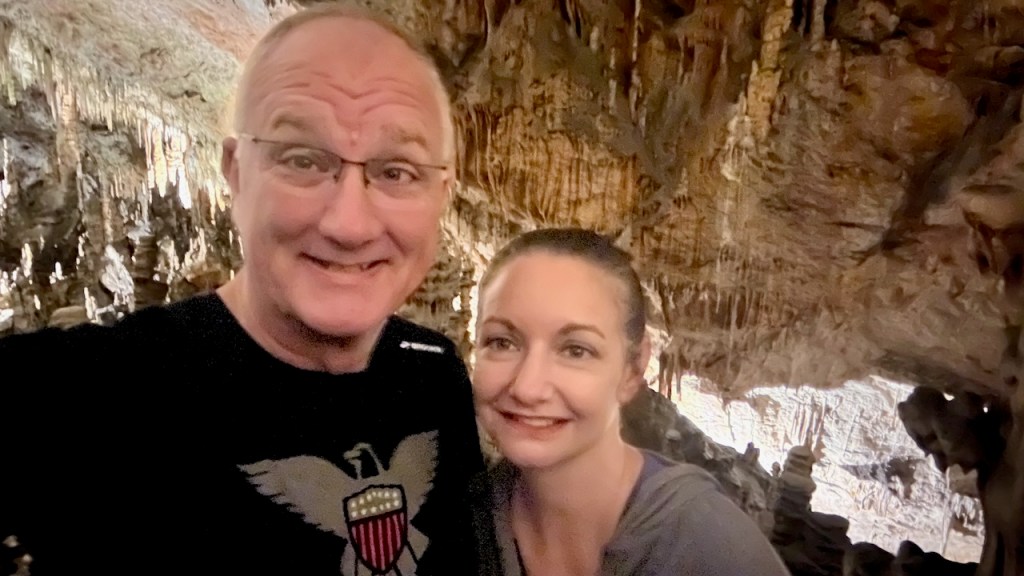
For this hiking route, On Foot had arranged a driver to take us to Landol, the first waypoint on our hike. We’d prearranged with the driver to divert and stop at the famous cave system at Postojna. To tour the caves, you ride an underground railway for 10 minutes or so, then take a walking tour through the cave system itself. I do love a good cave, and this one was fantastic– the cave system itself goes on for kilometers, as a result of the limestone terrain that’s easily infiltrated and undercut by water. As with our other cave visits, cellphone pictures don’t really do justice to the sights, so I didn’t take a lot of pictures.

From our dropoff point in Landol, our first waypoint was the castle at Predjama, which was good because we both wanted to see it. Predjama is about 10km from Postojna and maybe 4km from Landol, so the first leg was pretty easy. Predjama literally means “in front of the cave,” and when you look at the pictures you can see why. The castle itself is built into the side of a cliff and extends into a pre-existing cave system.
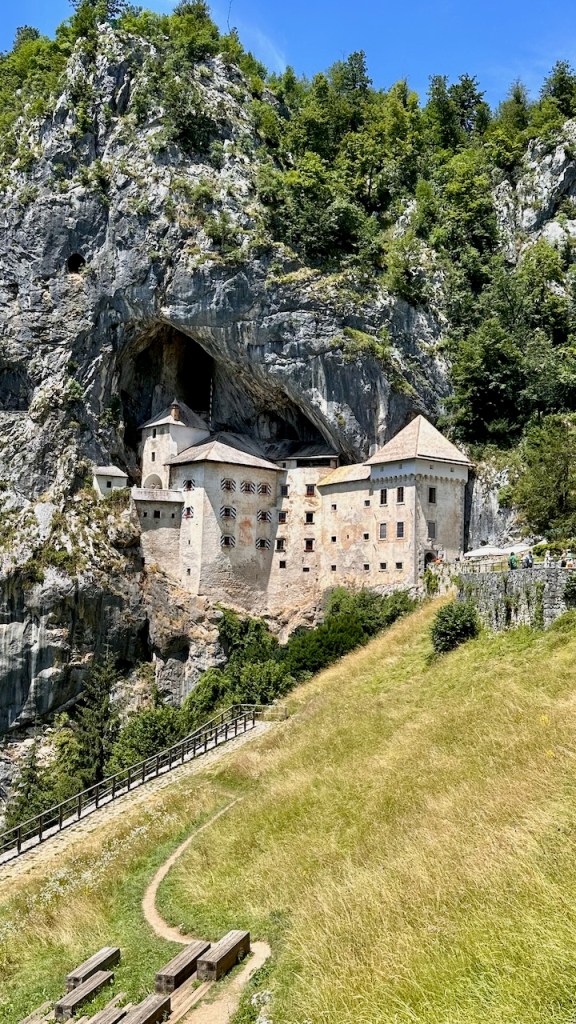
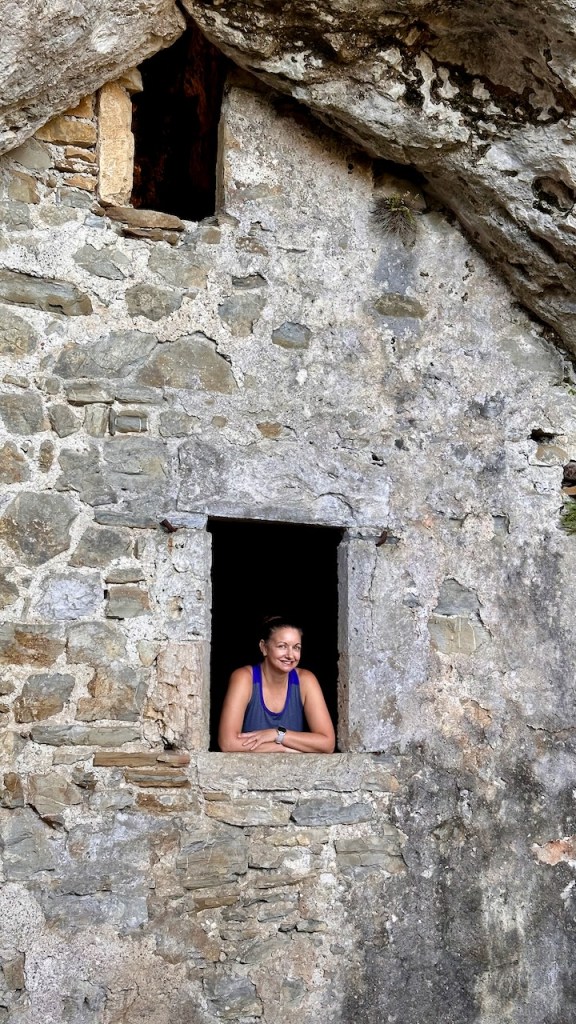
The castle definitely has a tourist-y vibe; there’s an available audio tour, lots of placards, and some samples of armor, weaponry, etc. The presented history emphasizes the role of Erasmus, the robber-baron-knight of the area, which was a nifty story I didn’t previously know.
After the castle visit, we had lunch at one of the restaurants– I had a giant schnitzel and a half-liter of Union beer, just to make sure I was getting enough salt, fat, and alcohol on board before the real hike started. Then… we started walking.

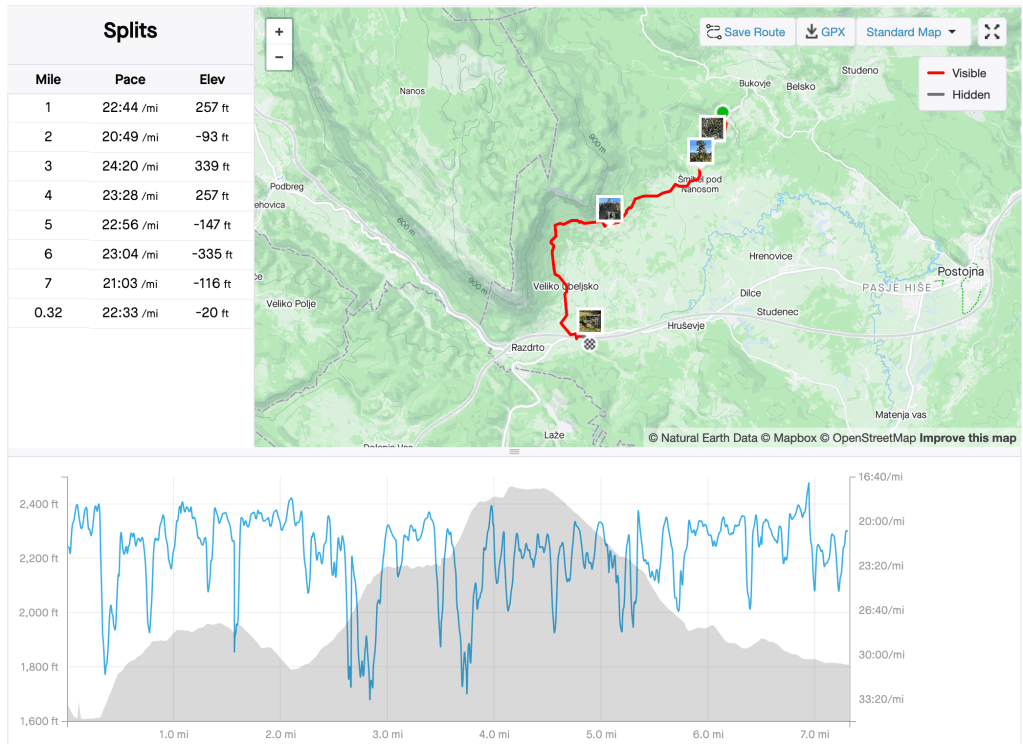
The hike itself was just under 7.5 miles, all over mixed terrain: some meadows, some wooded trails, some climbs, a few descents, a little gravel. The below route map from Strava should give you some idea; this was a relatively flat course that didn’t have a lot in the way of stunning views, but it did have some lovely scenery.

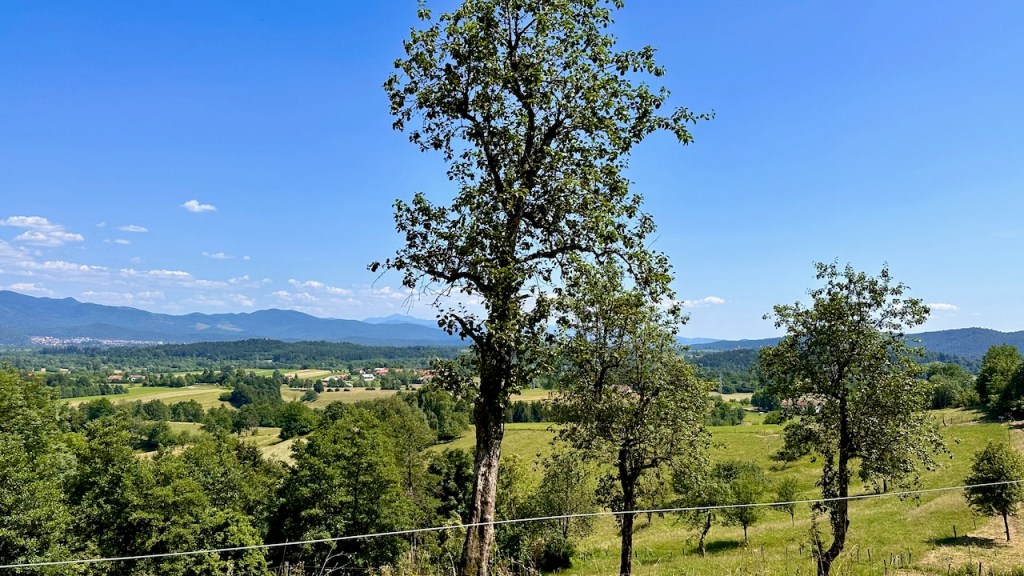
One thing the On Foot guide had prepared us to expect was the presence of monuments in each village. When you think “village” you may be assuming something larger than the typical Slovenian village– the entire country has only about 2 million people, half of whom live in Ljubljana and other cities. A village there might be no more than half-a-dozen houses clustered near each other, but I think every one we went to had at least one shrine, plus a monument to partisans killed resisting the Nazis in World War II.

Another welcome feature of the villages: they usually had someplace to refill our water bottles. Erica had gotten us a pair of collapsible LifeStraw bottles for our Belize trip, and they were perfect for this trip. We didn’t need the filtering, since Slovenian tap water is as safe to drink as in America, but being able to collapse them was handy. Our day pack weighed maybe 15 lb and contained the two LifeStraw bottles, an extra 1.5L of bottled water, our lunches, snacks, a small first aid kit, rain jackets, maps, and a few other odds and ends.
On the drive to Postojna, our guide said that Slovenia is famous for having more tractors than cars. I can’t assess whether that’s true but we did see rather a lot of tractors, including this beauty. We saw plenty of them, both parked in barns but also working in the fields.

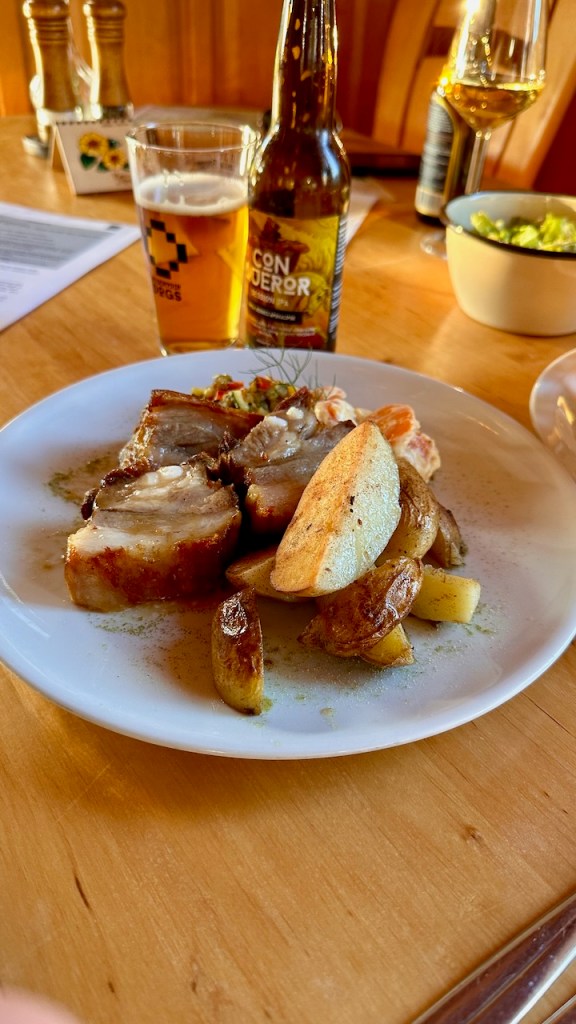
After a pleasant, but hot, hike, we made it to Hudičevic, which means “the hidden devil.” There’s a local legend about a mean old washerwoman who was taken ill. As she lay on her deathbed, the local priest dressed up as the devil to try to frighten her into accepting last rites. Thinking he was the actual devil, she shot him. (coolStoryBro.jpg) Hudičevic is a tourist farm operated by the son and daughter-in-law of the original founders, the Simčič family, who opened in 1970 as an inn to feed the workers who were building the nearby motorway. The couple’s 10 kids all live and work at the farm, which was pretty neat. Our room was small and nicely furnished; although it didn’t have air conditioning, as the evening cooled it was quite nice. Dinner, and the next day’s breakfast and lunch, were all locally produced. Although the menu offered both donkey salami and horse salami, we decided to stick with more traditional fare. I had pork loin stuffed with cheese and plums, along with a thick vegetable soup and a delicious berry dessert with fresh homemade ice cream. Erica had lamb.

We both slept very well and enjoyed a fantastic breakfast buffet; whichever kid was working in the kitchen also packed us each a sack lunch, then Klara drove us into the village for the day’s route.


 Paul's Down-Home Page
Pingback: 2023 Italy / Slovenia: Hudičevic – Vipava | Paul's Down-Home Page
Pingback: 2023 Italy / Slovenia: Vipava to Kodreti | Paul's Down-Home Page